
Dr Adam Bruton
Senior Lecturer in Sport and Performance Psychology
- Sport, Health and Exercise Sciences
- Department of Life Sciences
- College of Health, Medicine and Life Sciences
Research area(s)
My research interests span the fields of sport psychology, experimental psychology, cognitive neuroscience, and movement science. I adopt a multidisciplinary approach to understand interactions between neural, cognitive, psychological and behavioural factors associated with the following topics:
- Simulating actions via motor imagery and/or action observation.
- Movement control and (re)learning in individuals with movement difficulties.
- Implementation of immersive technology to facilitate perceptual-cognitive and motor development.
Research Interests
Simulating actions through action observation and/or motor imagery to:
- Enhance learning of new motor skills / sequences
- Improve performance under pressure
- Increase task- and situation-specific confidence
- Develop mental representations of action in the long-term memory
- Understand joint actions and interactions across multiple persons
Understanding the neurophysiological mechanisms underpinning action simulation:
- Using single-pulse transcranial magnetic stimulation to assess corticospinal responses to action simulation
- Using repetitive transcranial magnetic stimulation to probe the roles of different brain areas during action simulation
Testing immersive reality technologies as alternative forms of perceptual-cognitive, and/or action training:
- Investigating the efficacy of virtual- or augmented-reality for perceptual-cognitive, and/or action training
- Utilizing virtual- or augmented-reality to test possible transfer of perceptual, cognitive or movement outcomes after action simulation training
- Exploring the validity and reliability of immersive technologies as a training tool in high performance contexts
Research grants and projects
Research Projects
Grants
Funder:
Duration: May 2026 - December 2026
Funder: The Waterloo Foundation
Duration: May 2025 - September 2026
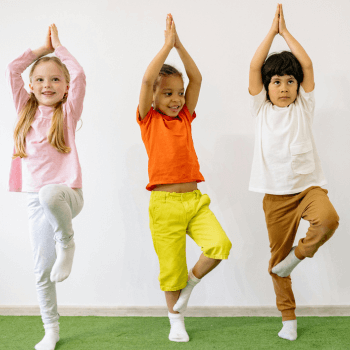
Children with DCD often have difficulty balancing and are more likely to trip or fall during everyday activities such as walking and running. AOMI training, a mental practice technique that involves a person watching a video demonstration of a movement whilst simultaneously imagining the physical feelings associated with the movement, has the potential to help these children improve their balance. Our research shows that AOMI training improves performance and learning of upper-limb tasks in children with DCD, and whole-body tasks in healthy adults. Recently, we showed that delivering AOMI training in VR (VR-AOMI training) enhances these benefits. This approach is promising in children with DCD as it is low-cost and combines enjoyable elements of VR gaming with targeted training methods to improve movement competence. However, the effectiveness of VR-AOMI training has not yet been tested in DCD populations. This project aims to address this gap by determining how children with DCD respond to VR-AOMI training designed to improve their balance. This will provide a scientific basis for the development of at-home balance training that could be recommended to improve balance and reduce fall risk for children with DCD.
Funder: Biotechnology and Biological Sciences Research Council
Duration: January 2025 - June 2025
Funder: Biotechnology and Biological Sciences Research Council
Duration: February 2024 - November 2024
Funder: Optibiotix Ltd
Duration: July 2023 - March 2024
Funder: The Prebiotic Company
Duration: -
Funder: British Psychological Society, Research Working Groups Scheme
Duration: December 2020 - January 2023
Funder: Experimental Psychology Society, Small Grants Scheme
Duration: January 2019 - April 2023
Funder: Knowledge Economy Skills Scholarship (KESS 2) PhD Award.
Duration: May 2018 - September 2022
Funder: Health Innovation Network, South London Innovation and Diffusion Awards
Duration: October 2016 - May 2018
Funder: Wellcome Trust
Duration: July 2015 - September 2015
The overarching purpose of this project was to examine individual differences in eye movements when observing positive team performance as a means to understand the cognitive processes underpinning collective efficacy development. Specifically, we investigated whether fixation metrics across two observation conditions (still images/video footage) varied as a function of familiarity (i.e., familiar/unfamiliar with the observed content) and individual’s collective efficacy beliefs (i.e., high/low).