In addition to our commercial services for materials characterisation, we also offer a selection of educational activities and networking opportunities. This includes a variety of workshops for you to actually get hand-on practical experience with our core instrumentation that we have here in the Experimental Techniques Centre at Brunel University. We offer these courses around a series of areas that are outlined on this page.
These are run over the course of several days, though we also do single day compressed versions if required. However, we do recommend the standard course offerings for the most complete experience.
To find out more click or tap on one of the boxes below, or scroll down this page for further information about each of our offerings.
Practical Electron Microscopy Course
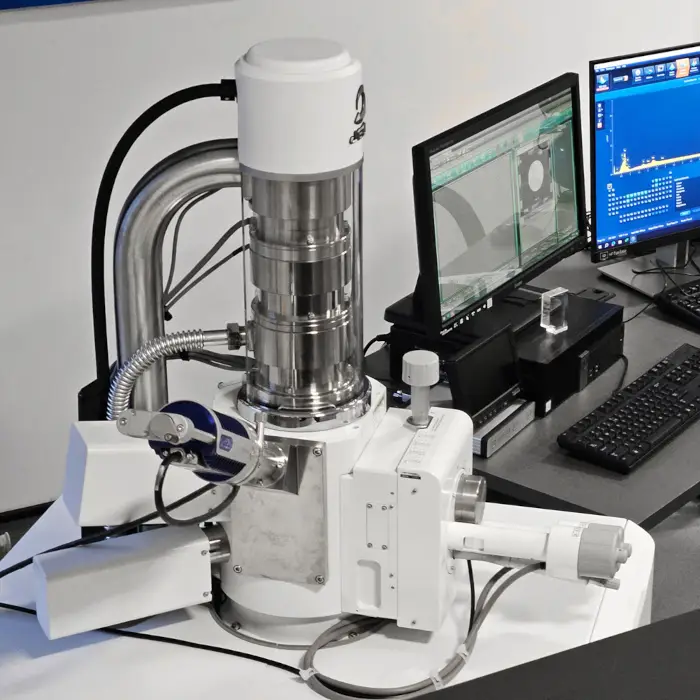
Practical Electron Microscopy Course
A popular technique amongst our researchers and commercial clients, this electron microscopy course will give you hands-on practical experience with our advanced instrumentation.
On this course you will learn the theory behind the technique and the practicalities of how this is done, understanding how to operate a microscope to obtain the best images for a variety of different sample types. Plus, how to explore the elemental composition of surface features from point analysis to mapping.
Click for more information about our Electron Microscopy course
The electron microscopy course comprises of a series of lectures followed by the practical hands-on sessions. These practical sessions will take up a significant portion of time on the workshops, to maximise your experience with the instrumentation. In these you will learn the optimal methods of sample preparation for best imaging or elemental analysis, plus the best conditions for operating the microscopes for different sample types. The topics broadly covered in the lectures and practical sessions are:
- The basics of electron microscopy: Microscope types (SEM vs TEM) and details of how they operate, including factors such as magnification vs resolution, electron surface interactions and sample considerations
- Practicalities of electron microscopy: Electron emitter types, making adjustments to the electron beam and sample chamber configurations, plus choosing the best detectors for different analysis scenarios and considerations in using high resolutions
- Performing elemental analysis: The fundamental theory, spectrometer types and capabilites, sample considerations, types of analysis and interpretation
Practical X-Ray Diffraction Course
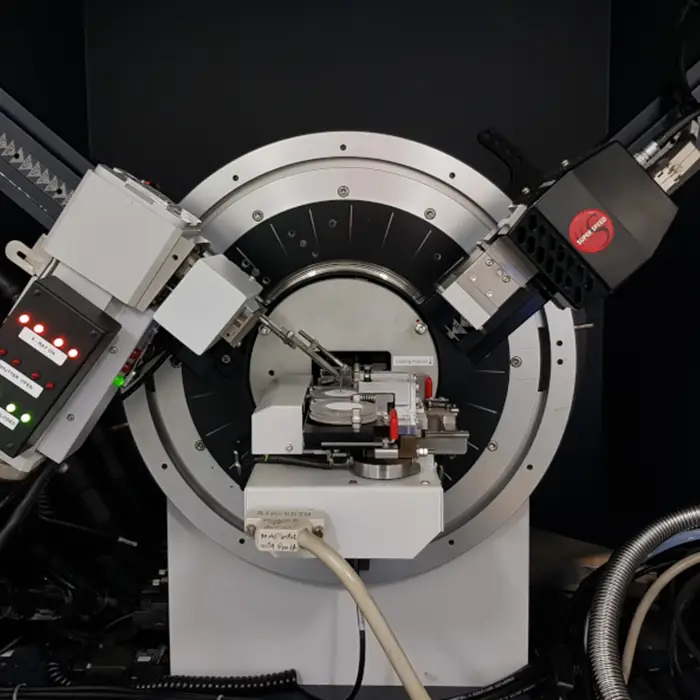
Practical X-Ray Diffraction Course
X-Ray techniques provide a powerful non-destructive method for the investigation of a materials composition and surface structure.
On this course you will gain practical experience using our advanced X-ray diffractometer, including the key knowledge required to analyse and interpret the results obtained from experimental setup to determining crystallographic information using common XRD software.
Click for more information about our X-ray Diffraction course
Much of the XRD course will be spent on the interpretation of the data obtained by such a technique. The practicalities will still be covered, from the sample preparation to loading a running the instrumentation, though actually operation of a diffractometer is relatively simple. The key to getting the most out of the technique is in that interpretation, matching the peaks to crystalline phases and what the spectra obtained tells you about your material. There is much to potentially be learned from the results and giving you the core considerations in understanding XRD spectra is at the heart of this workshop. Broadly the areas that will be covered are:
- X-ray diffraction basic concepts: Fundamental theory of crystal structures and types, how they are defined included Miller indicies, plus diffraction phenomenon, Bragg's law and typical applications of XRD
- Practicalities of X-ray diffraction: Sample preparation and loading, analysis considerations, influence of sample morphology, obtaining diffraction patterns and getting good data
- Interpretation of spectra: Using common software such as TOPAS, GSAS 2 and MAUD, tips and tricks
Practical Optical Spectroscopy Course
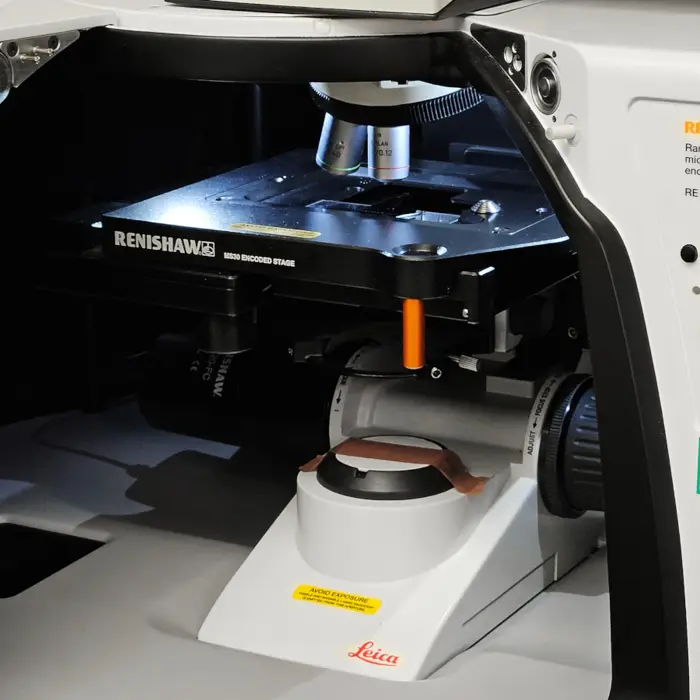
Practical Optical Spectroscopy Course
The interaction of light can tell you an almost surprising amount of information about materials and here in ETC we have the three of the most popular spectroscopic characterisation techniques: FTIR, Raman and UV-vis.
On this course you will learn the theory behind these methods and gain practical experience in using all of them. Theoretical lectures will be mixed with practical sessions in which you will apply the knowledge learned.
Click for more information about our Spectroscopy Course
The course will begin with a lecture laying the foundation of the theory regarding light interaction with materials. Before then splitting off into instrument specific topics. However, much of the time on the course will be spent in the lab to actually see how these concepts are put into action in producing spectra. You will learn to what to expect for a variety of different materials and understand what the peak positions and intensities mean for a particular sample. Areas that are covered include:
- General concepts: How light interacts with materials, the electromagnetic spectrum, the Beer-Lambert law and introduction to the instrumentation
- Electronic transitions and the UV-vis: Wavelength range, fundamental concepts of electron configurations and bonding, anatomy of a UV-vis spectrophotometer, sample types and preparation and using an integrating sphere
- Vibrational transitions in infrared spectroscopy (FTIR and Raman): Wavelength range, basics of bond vibrations, peak positions and functional groups, spectra interpretation, anatomy of an FTIR vs Raman, practicalities of analysis and sample considerations
Practical Cross-Sectioning Course
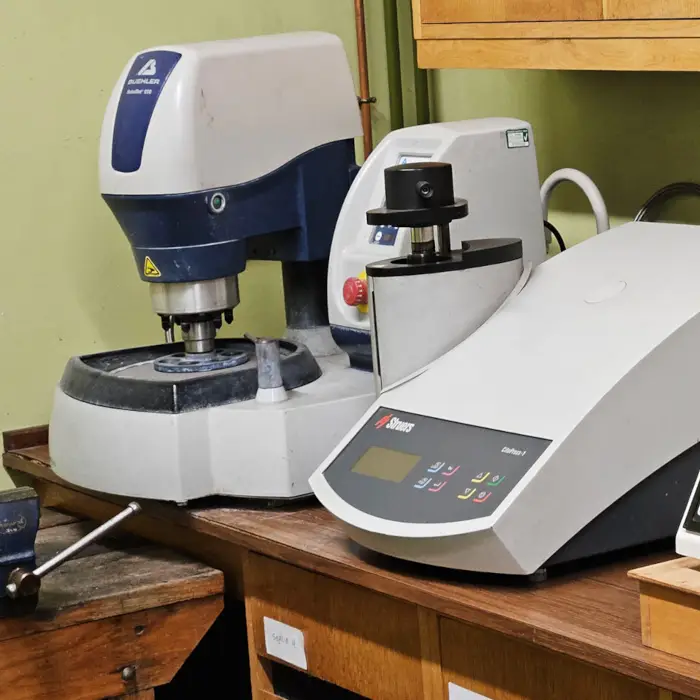
Practical Cross-Sectioning Course
Many characterisation techniques, such as the ones we have here in ETC, involve studying the surface of materials through electron, X-ray or optical beams. Cross-sectioning is essential if you want to know what is going on beneath the surface and this workshop will teach you the basics of it.
From encapsulating your material in resin, then sectioning and polishing it down to the area of interest. The practicalities and considerations required for getting the best our of your sample.
Click for more information about our Cross-Sectioning course
Working with our in-house highly experienced cross-sectioning expert, you will learn the art of producing the most optimal sample mountings. From the considerations when embedding in resin to the care needed in sectioning and polishing, you will be shown how to achieve the best results in cross-sectioning materials. From this workshop you will be better able to produce samples for effective analysis, for example by electron microscopy.
This is a mostly practical workshop, getting hands-on with the facilities we have here at Brunel University of London.