Why is there a need for this type of research?
Composite aerostructures in the global aerospace market demand advanced lightweight materials capable of withstanding harsh environmental conditions. Moreover, the aerospace industry is under increasing pressure to enhance aircraft performance and cost-efficiency while meeting ever more stringent environmental sustainability requirements. The PLEIADES project aims to address these needs, taking significant steps towards meeting the industry’s requirements through its proposed solution.
PLEIADES is bringing together different disciplines and key technologies to advance composite aerostructures and promote the digital transformation of aviation. The project’s multiple disciplines span a wide range, including the formulation and characterisation of new composite materials, the automation of induction welding processes for composites using integrated sensing, the disassembly of composite joints, and the development of healing and maintenance schedules. These efforts will be complemented by the development of embedded sensors, a unified QA–SHM methodology, extensive modelling for induction welding, and the creation of material, healing, damage propagation, and de-icing models. All of these disciplines will be pursued within PLEIADES and demonstrated through tangible aerospace use cases, in synergy with the Clean Aviation partnership.
The technological advancements of PLEIADES will address the need for high-volume sustainable manufacturing with enhanced integration, inspection, recycling, and circularity in the aerospace industry. By fully exploiting new technologies that promote sustainability and circularity, considerable cost savings are expected. Within the project, a maintenance and repair protocol will be developed, alongside an innovative SHM methodology. Finally, the Digital Twin developed through PLEIADES will contribute to the advancement of digital research infrastructure, in alignment with Clean Aviation.
What this research will change
PLEIADES addresses the sustainable and cost-competitive manufacturing of composite assemblies, as well as maintenance and end-of-life solutions, in several ways. The outcome of this project will pave the way for cleaner, more sustainable aerospace transportation.
Role of the Brunel Composites Centre in this research
The PLEIADES project is structured around 13 Work Packages (WPs), including 9 technical WPs. BCC is leading WP10, which focuses on multiphysics modelling of the induction welding process enhanced with smart algorithms. This task, led by BCC, will develop a comprehensive multiphysics model that simulates the thermal and mechanical aspects of the induction welding process, including a finite element (FE) workbench to represent the heat transfer mechanisms (conduction and radiation) across material interfaces during welding. Additionally, the model will incorporate stress analyses to predict the mechanical integrity of the welded materials during and after the process, in collaboration with ML/AI algorithms. Beyond WP10, BCC is also leading the Life Cycle Assessment (LCA) activities in WP12 and WP13 of the PLEIADES project.
Project Partners
- TWI Ltd (Coordinator)
- BRUNEL UNIVERSITY LONDON
- EREVNITIKO PANEPISTIMIAKO INSTITOUTO SYSTIMATON
- INTERUNIVERSITAIR MICRO-ELECTRONICA CENTRUM
- Talos Analytics IKE
- ENGINEERING TECHNOLOGY SOLUTIONS
- POLITECNICO DI TORINO
- EVEKTOR SRO
- POLITECNICO DI MILANO
- COLLINS AEROSPACE IRELAND
- CRANFIELD UNIVERSITY
- ASSOCIATION EUROPEENNE DE LINDUSTRIE DES COMPOSBE
Meet the Principal Investigator(s) for the project
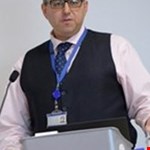
Dr Mihalis Kazilas - Dr Mihalis Kazilas is the Director of the Brunel Composites Centre. He has more than 20 years of experience in the composites processing area. He received his PhD in Advanced Materials from Cranfield University back in 2003. His main field of expertise are polymers characterisation and polymer composites manufacturing and joining processes. He is author of several refereed scientific publications in the area of advanced composites manufacturing and process optimisation. Mihalis is a creative thinker who enjoys problem solving and able to work with different stakeholders to achieve the optimum results in both technical and managerial environments.
Work experience:
Sep 2019 – present: Business Group Manager, Polymer and Composite Technologies, TWI, UK
June 2019 – present: Director of the Non-Metallics Innovation Centre, a joint initiative between TWI, Saudi Aramco and ADNOC
Oct 2016 – present: Centre Director, Brunel Composites Innovation Centre, Brunel University London, UK
Feb 2012 – 2019: Section Manager, Adhesives, Composites and Sealants (ACS) section within the Joining Process Group at TWI, UK
May 2006 – Jan 2012: R&D Consultant, Project Engineer, Collaborative Projects Operations Manager at INASCO, Greece
Dr Nithin Jayasree - Head of BCC / Research Reader
Lead research on non-metallics, composites, and multiphysics modelling, with focus on structural integrity, sustainability, hydrogen economy (storage and infrastructure), CCUS applications, and advanced manufacturing for defence, aerospace, energy, and automotive sectors.
Related Research Group(s)
Brunel Composites Centre - Shared research and technology capabilities, specialising in novel composites processing and joining technologies applied to industrial environments.
Partnering with confidence
Organisations interested in our research can partner with us with confidence backed by an external and independent benchmark: The Knowledge Exchange Framework. Read more.
Project last modified 18/09/2025