Why is there a need for this type of research?
The aviation industry is under increasing pressure to reduce noise pollution and improve fuel efficiency, particularly for propeller-driven aircraft. Traditional propeller designs have reached a point of limited optimisation, constraining further improvements in energy efficiency and acoustic performance. At the same time, the emergence of electrically driven platforms, including unmanned aerial vehicles (UAVs) and small-scale experimental passenger aircraft, has brought aircraft operations closer to urban environments. This proximity has intensified environmental concerns and prompted stricter regulatory requirements on noise and emissions. Without innovative approaches to propulsion, these emerging platforms may struggle to meet both operational and environmental standards. Additionally, the reliance on conventional materials and manufacturing techniques limits the sustainability, performance, and lifecycle efficiency of current propeller systems. The industry therefore requires new designs, materials, and production methods that can deliver significant improvements in thrust efficiency, noise reduction, weight reduction, and recyclability, while maintaining structural integrity and operational safety.
The TorPropel project addresses these challenges by developing toroidal (loop-shaped) propellers using advanced carbon composites and robotic manufacturing processes. The research scales propeller designs from centimetre-scale demonstrations to 1.7-metre diameter aerospace-grade components. Reprocessable, Repairable, and Recyclable (3R) vitrimer-based composites are employed to enhance sustainability, while Rapid Tow Shearing (RTS) enables precise, defect-free manufacturing. Integrated embedded sensor networks provide real-time structural health monitoring, enabling predictive maintenance and enhanced safety. Together, these innovations are expected to improve thrust efficiency by over 25%, reduce noise by more than 15 dB, cut propeller weight by 10%, and achieve 95% material recyclability.
What this research will change
TorPropel technology has the potential to transform propeller-driven aviation, from UAVs to electric vertical take-off and landing (eVTOL) aircraft and conventional propeller aircraft. The results will benefit aerospace manufacturers, urban air mobility operators, and regulators by providing quieter, more efficient, and sustainable propulsion solutions, while supporting compliance with environmental standards and reducing operational costs.
Role of the Brunel Composites Centre in this research
Brunel Composites Centre (BCC) contributes to the TorPropel project by leading the development and testing of advanced composite materials and structural components. BCC is responsible for evaluating material performance, optimising manufacturing processes, and integrating embedded sensors for structural health monitoring. Additionally, BCC provides expertise in simulation and testing to ensure that the scaled propellers meet aerodynamic, mechanical, and operational performance targets.
Project Partners
- University of Ioannina (Coordinator)
- Technical University of Munich
- Aristotle University of Thessaloniki
- Brunel University London (Brunel Composites Centre)
- iCOMAT Ltd
- Evektor
- CIDETEC
- GMI Aero
- Limmat Scientific
Meet the Principal Investigator(s) for the project
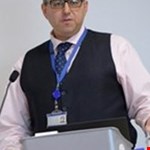
Dr Mihalis Kazilas - Dr Mihalis Kazilas is the Director of the Brunel Composites Centre. He has more than 20 years of experience in the composites processing area. He received his PhD in Advanced Materials from Cranfield University back in 2003. His main field of expertise are polymers characterisation and polymer composites manufacturing and joining processes. He is author of several refereed scientific publications in the area of advanced composites manufacturing and process optimisation. Mihalis is a creative thinker who enjoys problem solving and able to work with different stakeholders to achieve the optimum results in both technical and managerial environments.
Work experience:
Sep 2019 – present: Business Group Manager, Polymer and Composite Technologies, TWI, UK
June 2019 – present: Director of the Non-Metallics Innovation Centre, a joint initiative between TWI, Saudi Aramco and ADNOC
Oct 2016 – present: Centre Director, Brunel Composites Innovation Centre, Brunel University London, UK
Feb 2012 – 2019: Section Manager, Adhesives, Composites and Sealants (ACS) section within the Joining Process Group at TWI, UK
May 2006 – Jan 2012: R&D Consultant, Project Engineer, Collaborative Projects Operations Manager at INASCO, Greece
Dr Nithin Jayasree - Head of BCC / Research Reader
Lead research on non-metallics, composites, and multiphysics modelling, with focus on structural integrity, sustainability, hydrogen economy (storage and infrastructure), CCUS applications, and advanced manufacturing for defence, aerospace, energy, and automotive sectors.
Related Research Group(s)
Brunel Composites Centre - Shared research and technology capabilities, specialising in novel composites processing and joining technologies applied to industrial environments.
Partnering with confidence
Organisations interested in our research can partner with us with confidence backed by an external and independent benchmark: The Knowledge Exchange Framework. Read more.
Project last modified 18/09/2025