Why is there a need for this type of research?
Designing and developing a new aircraft requires a thorough certification process that involves expensive and time-consuming physical tests, carried out according to the pyramid building-block approach throughout the design phases (Figure 1). This process starts with coupon testing and proceeds through components to full-scale structural integrity and flight tests. However, it presents two main drawbacks: (i) interactions occur only between adjacent levels of the testing pyramid, following a bottom-up, sequential, and unidirectional scheme, and (ii) there is limited insight into how coupon-level properties affect overall performance. If modifications are needed at the component level, changes can only be made at the element or component levels. Proposing changes at the coupon level is difficult due to the high cost (more trial-and-error testing) and the lack of knowledge about interactions between non-adjacent levels. Similarly, if a change is required at the coupon level, most of the certification pyramid must be repeated from the beginning.
Accelerating the entry into service of new aircraft designs requires reducing the extent of physical testing by increasing the use of virtual testing through numerical modelling and simulations. However, despite the accuracy of physics-based models, current simulation tools have notable limitations, including high computational cost and their inherently deterministic approach. At present, simulations are primarily used to study isolated problems or mechanisms identified in experimental campaigns, while random variables and probability distributions are rarely considered.
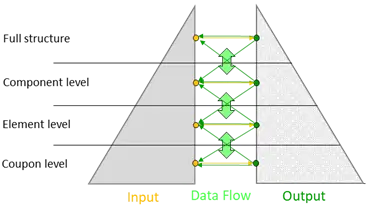 Figure 1: Traditional pyramidal framework
The pAIramid project proposes a revolutionary approach to accelerate the development of composite aerostructures by creating a decision-making tool that enables users to define designs and process guidelines from any level of the certification test pyramid. To achieve this, the project aims to replace some physical tests with high-fidelity virtual tests and to interconnect the different levels of the pyramid using data-driven simulation methods powered by reliable Artificial Intelligence (AI) tools.
This AI-driven, interconnected, multi-level, and autonomous hybrid pyramid approach (Figure 2) breaks current certification barriers by generating links between different levels and creating knowledge for rapid decision-making through an AI layer based on Deep Neural Networks. AI learns from physics-based simulations, thereby reducing computational time by several orders of magnitude (from hours to seconds) without compromising accuracy.
To develop and validate such a powerful tool, the pAIramid project focuses on the development of functionalised composite aerostructures that meet the stringent, multi-dimensional requirements of the aerospace industry in terms of performance and sustainability. In this context, pAIramid introduces several innovations in thermoset and thermoplastic composites as well as in manufacturing processes. Cost- and energy-effective alternatives, such as Liquid Resin Infusion (LRI) and Fused Deposition Modelling (FDM), are emerging due to their potential to manufacture high-quality composite components with reduced capital costs and production cycle times.
However, challenges remain. LRI is still largely a manual process, despite recent progress in quality-control solutions. Conversely, FDM adoption is hindered by the limited availability of large-scale manufacturing facilities, complex processing requirements, and insufficient knowledge of composite behaviour. Therefore, advancements in thermoset and thermoplastic materials, manufacturing, and simulation technologies are essential to enable the production of larger and more complex aerostructure components using LRI and FDM processes.
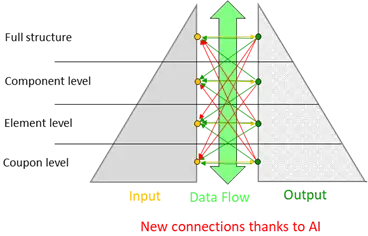 Figure 2: AI-powered digital framework
What this research will change
Aircraft manufacturers
Solve technical / regulatory / market barriers to introduce the improved aircraft aerostructure components designs and manufacturing methods.
Policymakers
Promote policy makers dialogue towards reinforcing the Aviation value chain by the implementation of virtual certification according to the industry needs and acceptability barriers.
Society and environment
Reduction in CO2 emissions and energy consumption
Role of the Brunel Composites Centre in this research
BCC is responsible for the electrical and thermal characterisation of the advanced functionalised composites. The thermal property characterisation campaign aims to evaluate temperature-dependent thermal transport properties, such as specific heat capacity, thermal diffusivity, and thermal conductivity of the composite formulations. Similarly, the electrical characterisation includes measurements of electrical conductivity, sheet resistance, as well as electromagnetic permittivity and permeability. BCC is also responsible for conducting multi-physics simulations of lightning strikes and generating synthetic data for the development of AI models.
Project Partners
- IKERLAN
- Institut de Recherche Technologique Jules Verne (IRTJV)
- Institute of Science and Innovation in Mechanical Engineering and Industrial Engineering (INEGI)
- Analysis and Advanced Materials for Structural Design - University of Girona (AMADE - UdG)
- Fundación GAIKER
- Brunel Composites Centre - Brunel University London
- MECA S.A.R.L.
- LKS NEXT
- Turkish Aerospace (TAI)
- POTEZ AERONAUTICS
- Collins Aerospace
- Sofitec Aero S.L.
- Zabala Innovation
Meet the Principal Investigator(s) for the project

Dr Mihalis Kazilas - Dr Mihalis Kazilas is the Director of the Brunel Composites Centre. He has more than 20 years of experience in the composites processing area. He received his PhD in Advanced Materials from Cranfield University back in 2003. His main field of expertise are polymers characterisation and polymer composites manufacturing and joining processes. He is author of several refereed scientific publications in the area of advanced composites manufacturing and process optimisation. Mihalis is a creative thinker who enjoys problem solving and able to work with different stakeholders to achieve the optimum results in both technical and managerial environments.
Work experience:
Sep 2019 – present: Business Group Manager, Polymer and Composite Technologies, TWI, UK
June 2019 – present: Director of the Non-Metallics Innovation Centre, a joint initiative between TWI, Saudi Aramco and ADNOC
Oct 2016 – present: Centre Director, Brunel Composites Innovation Centre, Brunel University London, UK
Feb 2012 – 2019: Section Manager, Adhesives, Composites and Sealants (ACS) section within the Joining Process Group at TWI, UK
May 2006 – Jan 2012: R&D Consultant, Project Engineer, Collaborative Projects Operations Manager at INASCO, Greece
Dr Nithin Jayasree - Head of BCC / Research Reader
Lead research on non-metallics, composites, and multiphysics modelling, with focus on structural integrity, sustainability, hydrogen economy (storage and infrastructure), CCUS applications, and advanced manufacturing for defence, aerospace, energy, and automotive sectors.
Related Research Group(s)
Brunel Composites Centre - Shared research and technology capabilities, specialising in novel composites processing and joining technologies applied to industrial environments.
Partnering with confidence
Organisations interested in our research can partner with us with confidence backed by an external and independent benchmark: The Knowledge Exchange Framework. Read more.
Project last modified 18/09/2025