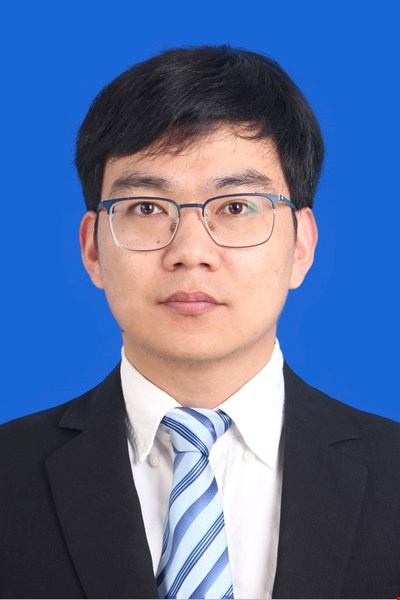
Book a meeting with meI am a lecturer in the business school of Brunel University London. I earned my PhD degree in Management Science and Engineering from Beihang University, China. During my academic journey, I had the privilege of being a visiting PhD student and a visiting scholar at the University of Edinburgh for two separate years. I am passionate about coding and mathematics. In recent years, my primary research has focused on cash-flow inventory management, demand prediction and inventory routing, where I apply mathematical modeling, stochastic programming and machine learning to solve the problems. My research publications appear in leading operational research journals such as European Journal of Operational Research, Omega, International Journal of Production Economics, International Journal of Production Research and so on. At present and in the coming years, my research will center on the inventory routing problem, with particular emphasis on data-driven methodologies (such as deep learning) and stochastic programming to address the following supply chain problems: demand prediction inventory routing joint prediction and optimisation in the supply chain More detailed information about me is available on my personal website: chen1024.com. Office Hours (Book a meeting with me): Mondays 14:00 -14:30 Fridays 14:00 -14:30
This research looks at a common type of company that manages both production and distribution while dealing with fluctuating customer demand.
It runs its own production facilities and distribution centres (DCs) and offers a wide range of stock‑keeping units (SKUs). At the same time, it must adjust its production and routing schedules to meet increasingly strict environmental regulations. Demand for many SKUs is highly volatile due to random factors and unexpected events, such as store promotions or holiday periods. This makes supply chain planning particularly challenging.
Using real data from a large company, this research aims to:
1. Build an advanced demand‑forecasting method
We will design machine learning and time‑series models that can handle historical data with high randomness and volatility. Alongside predicting future demand, we will use maximum likelihood estimation or multi-quantile recurrent neural networks to estimate the full stochastic distribution of demand across SKUs. This distribution is essential for modelling uncertainty in production and routing decisions.
2. Develop a data‑driven safety stock and replenishment approach
We will propose a safety stock calculation algorithm and production replenishment policy based on real data with uncertain demand and lead times. Instead of estimating a distribution first and optimising afterwards, we will integrate forecasting and optimisation using techniques such as deep learning, empirical risk minimisation and reinforcement learning. This lets us use all available historical data directly in the optimisation model, giving decision‑makers robust and practical solutions.
3. Create a data‑driven vehicle scheduling strategy
We will design a transportation scheduling strategy that reduces total costs and fuel consumption. To do this, we will build a multi‑stage mathematical model that accounts for uncertain demand and lead times. We will then apply stochastic programming methods such as sample average approximation, stochastic dual dynamic programming and robust optimisation. Because the problem may be large in scale, we will also develop tailored techniques to improve computational efficiency. Simulations based on real business scenarios will help us evaluate our models and assess the impact of different environmental policies.
How to apply
If you are interested in applying for the above PhD topic please follow the steps below:
- Contact the supervisor by email or phone to discuss your interest and find out if you would be suitable. Supervisor details can be found on this topic page. The supervisor will guide you in developing the topic-specific research proposal, which will form part of your application.
- Click on the "Apply here" button on this page and you will be taken to the relevant PhD course page, where you can apply using an online application.
- Complete the online application indicating your selected supervisor and include the research proposal for the topic you have selected.
Good luck!
This is a self-funded topic
Brunel offers a number of funding options to research students that help cover the cost of their tuition fees, contribute to living expenses or both. The UK Government is also offering Doctoral Student Loans for eligible students, and there is some funding available through the Research Councils. Many of our international students benefit from funding provided by their governments or employers. Brunel alumni enjoy tuition fee discounts of 15%.