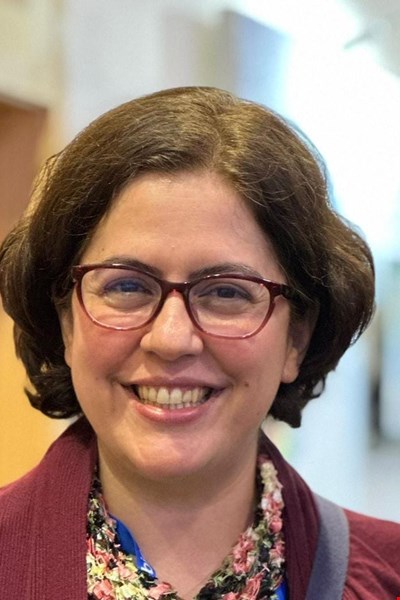
I am a biomedical scientist specializing in pathogen-immune system interactions within gastrointestinal diseases. Throughout my scientific career, I have developed expertise in cancer biology and molecular immunology, ranging from investigating the role of kinases in cancer progression to exploring innate and adaptive immune responses in disease setting. I earned my Ph.D. at the University of Basel, conducting research at the Friedrich Miescher Institute (FMI) and ETH-Zurich under the mentorship of Prof. Wilhelm Krek. During this time, I was awarded a scholarship that supported my research and academic endeavors. My doctoral research focused on the role of a kinase in cancer progression, providing me with extensive training in cell biology and biochemistry. Following my Ph.D., I became deeply interested in studying the chronic inflammation that leads to cancer using model systems. I pursued postdoctoral studies in the laboratory of Prof. Anne Müller at the University of Zurich’s Institute of Cancer Research, supported by a University of Zurich URPP Systems Biology postdoctoral fellowship. During this time, I explored immune modulation by Helicobacter pylori, a bacterium associated with chronic gastric diseases and cancer. My research demonstrated that H. pylori induces Regulatory B cells (Bregs), which promote T Regulatory 1 (Tr1) cells, highlighting cooperative immune regulation in bacterial infection models. Following my postdoctoral training, I joined the Department of Molecular Biology and Genetics at Istanbul Technical University (ITU) as a faculty member, establishing a multidisciplinary Molecular Immunology research group. I mentored numerous MSc and Ph.D. students, taught undergraduate and graduate courses, and led several competitive research projects funded by organizations such as TÜBİTAK and the Istanbul Development Agency. In 2018, I was awarded a Fulbright Visiting Scholarship to work with Prof. Peter Ernst at the University of California, San Diego. There, I investigated the role of Regulatory B cells in the pathogenesis of Crohn’s disease. My contributions to immunology were recognized in 2022 when I was honored with the prestigious İsil Berat Barlan Award for Outstanding Women Scientists in Immunology. I actively engage in European Union COST Actions to foster collaborations and initiate joint projects focusing on host immune responses to pathogens in chronic diseases. My goal remains to unravel the complex mechanisms underlying immune regulation and inflammation, ultimately contributing to improved therapeutic strategies for chronic diseases and cancer. I joined the Division of Biosciences in late 2024 and hold an Honorary Professorship at Istanbul Technical University, Turkey.
This project aims to dissect the immunometabolic programming of B cell subsets in gastric cancer and their response to microbial stimuli such as Helicobacter infection.
You'll examine how metabolic rewiring influences B cell regulatory functions (Bregs) and their crosstalk with T cells in tumour-bearing and infected hosts. Experimental approaches will include metabolic flux analysis, immune profiling by high-dimensional flow cytometry, and integration of metabolic and cytokine signalling data. The project offers opportunities to explore therapeutic interventions that modulate B cell metabolism for improved anti-cancer immunity.
Eligibility:
You should possess a strong academic background in immunology, molecular biology, or biomedical sciences. Experience with animal models, flow cytometry, or immune cell functional assays is advantageous.
Supervisor’s Research Interest:
Dr. Ayça Sayi Yazgan’s group focuses on host immune regulation in gastrointestinal cancer, with emphasis on regulatory B cells, T cell metabolism, and infection-associated immunomodulation. The lab integrates immunometabolic and microbial approaches to identify new immune targets for cancer therapy.
How to apply
If you are interested in applying for the above PhD topic please follow the steps below:
- Contact the supervisor by email or phone to discuss your interest and find out if you would be suitable. Supervisor details can be found on this topic page. The supervisor will guide you in developing the topic-specific research proposal, which will form part of your application.
- Click on the "Apply here" button on this page and you will be taken to the relevant PhD course page, where you can apply using an online application.
- Complete the online application indicating your selected supervisor and include the research proposal for the topic you have selected.
Good luck!
This is a self-funded topic
Brunel offers a number of funding options to research students that help cover the cost of their tuition fees, contribute to living expenses or both. The UK Government is also offering Doctoral Student Loans for eligible students, and there is some funding available through the Research Councils. Many of our international students benefit from funding provided by their governments or employers. Brunel alumni enjoy tuition fee discounts of 15%.