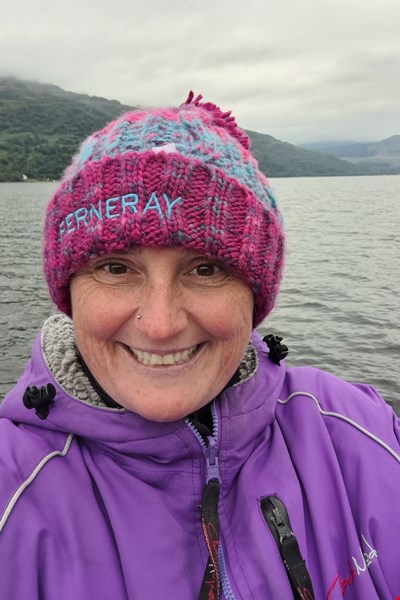
I am Professor of Technology in Society in the Brunel Business School, and also hold invited Visiting Professor positions at Wakayama University (Japan) and the University of Surrey (UK). With 20 years of experience as an academic, my research interests are varied, but lie in the key areas of: technology for social good; mixed reality and immersive technologies in arts, culture and heritage; connection to nature (physical and virtual, green and blue space) for wellbeing; the visual and embodied, multisensorial engagements and interplays. Bringing together my work on the visual, technology and digital solutions, my recent research has focused on: enriching the visitor experience through augmented reality in arts and heritage; the role of immersive experiences (principally multisensory immersions and VR) as providing stimulating environments for healthy ageing; connection with nature for wellbeing (working in care home, community centre, day centres and school contexts). I also have expertise in storytelling and social media, and have a passion for creative methodologies and methods, in particular the use of visuals and art-based facilitation. Throughout my career, I have secured funding from a range of bodies, including: ESRC, EPSRC, AHRC, NESTA, InnovateUK, iCURE, DEFRA, amongst others, and work closely with a range of research partners, including: Natural England, the Environment Agency, Forest Research, Smartify, Bradt Travel Guides, Emirates, and the Disability Coalition Network. As a long-term fellow of the Royal Geographical Society with the Institute of British Geographers, I hold the post of International Advisor to the Geographies of Leisure and Tourism Research Group, as well as a range of other externally elected and appointed national and international positions, including: executive committee member of Leisure Studies Association, Editorial Board member of the Journal of Sustainable Tourism, Sustainability, Digital Geography and Society, amongst other journals. I also review regularly for UKRI and other national and international funding bodies, and act as reviewer for national and international programme/departmental/instiutional reviews. The links between my academic work and my external voluntary positions are very strong and I hold a number of external advisory and board positions, including: Invited Member of the Environment Agency Blue Space Forum, Director of Visit Surrey, Advisory Board Member of Surrey Hills Arts, and Strategic Board Member for the Surrey Cultural Partnership. As a year-round, open-water swimmer, I also volunteer as a co-host for Mental Health Swims (www.mentalhealthswims.co.uk) where I support groups to experience the benefit of open water for mental health. My passion for open water and swimming in general, also brings inspiration for my artwork as I am an exhibting artist, creating mixed media acrylic and soundscape expressions of community, water, immersion and mental health (insta: @carolinerossart)
This proposed PhD explores how open water swimming (OWS) communities in the UK act as catalysts for environmental awareness, local activism and stewardship in response to growing water pollution in rivers, lakes and coastal areas.
OWS is widely recognised for its mental health and wellbeing benefits (Britton & Foley, 2021; White et al., 2020), but recent environmental crises have reframed blue spaces as contested and at risk (Everard et al., 2021). In this context, swimmers are increasingly taking on roles as citizen scientists, advocates and environmental stewards campaigning for cleaner, safer and more accessible waters (Olive, 2019; Buller, 2023).
Using a qualitative, ethnographic approach, this project investigates how OWS fosters environmental attachment, collective identity and local activism. Through interviews, participant observation and discourse analysis of community initiatives, campaigns and social media, the research examines how embodied encounters with polluted waters generate emotional and political responses that challenge governmental neglect and corporate pollution.
Drawing on blue humanities, environmental geography and social movement theory, the study aims to understand OWS as both a wellbeing practice and a form of environmental citizenship. Outcomes will include a theoretical framework linking sensory immersion to environmental care, along with practical insights for policymakers and community organisations looking to mobilise blue‑space engagement toward ecological justice and sustainable stewardship.
How to apply
If you are interested in applying for the above PhD topic please follow the steps below:
- Contact the supervisor by email or phone to discuss your interest and find out if you would be suitable. Supervisor details can be found on this topic page. The supervisor will guide you in developing the topic-specific research proposal, which will form part of your application.
- Click on the "Apply here" button on this page and you will be taken to the relevant PhD course page, where you can apply using an online application.
- Complete the online application indicating your selected supervisor and include the research proposal for the topic you have selected.
Good luck!
This is a self-funded topic
Brunel offers a number of funding options to research students that help cover the cost of their tuition fees, contribute to living expenses or both. The UK Government is also offering Doctoral Student Loans for eligible students, and there is some funding available through the Research Councils. Many of our international students benefit from funding provided by their governments or employers. Brunel alumni enjoy tuition fee discounts of 15%.