
Overview
Studying anthropology at Brunel gives you the opportunity to do fully funded fieldwork placements anywhere in the world according to your anthropological interests.
Anthropology offers a unique and powerful means for understanding cultural and social diversity in the modern world. It considers issues which can lead to mind blowing revelations about how individuals and cultures experience life differently.
Anthropology is concerned with contemporary issues such as multiculturalism, identity politics, racism and ethnic nationalism, changing forms of the family, religious conflict, gender, and the political role of culture. It also addresses perennial questions about human nature, such as: ‘What do we have in common with each other cross-culturally?’ and ‘What makes us different?’.
If you are intrigued by these questions and want to study a discipline that will enrich your everyday life as well as equip you for a great variety of occupations, anthropology is the right course for you.
Fieldwork is excellent preparation for work and a chance to make useful contacts and will help to add greater meaning to academic studies. Around half of Brunel’s anthropology students carry out a placement or fieldwork abroad, in places as wide ranging as India, Nepal, Australia, South Africa, Papua New Guinea and Jamaica. Additionally with the fieldwork now funded as part of your degree, you can concentrate on your research rather than financial obstacles. Recent UK placement destinations include the Royal Anthropological Institute, Campaign for Press and Broadcasting Freedom, Amnesty International and the Department of Health.
Examples of dissertation titles based on fieldwork findings have included work in a Nepalese monastery, a South African women’s refuge, the Police Complaints Authority (on the Stephen Lawrence case), as well as in schools and charities.
Outside of classes, you can look forward to a one of the most cultural diverse campuses in the UK with opportunity to meet people from all over the world. Additionally, Brunel’s anthropological student society arrange class trips to places like the Pitt Rivers museum in Oxford, and the campus’s London location makes it ideal for exploring places like the British Museum in Central London.
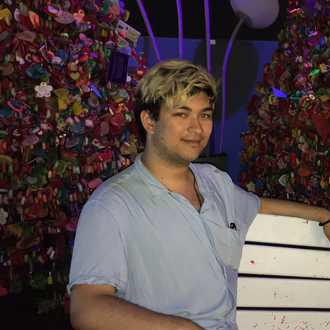
"Studying here ...has been one of the best experiences of my academic life and I have nothing but endless high praises about the program. I was so happy to have professors who were supportive, engaging and understanding, compared to my secondary school, where I often felt unheard, ignored, or discouraged for disagreeing with the material. Like I mentioned above, at Brunel, they ask you “why do you disagree?”, and are open to discussion. " - Rami Mroueh

"Here’s the selling point… the Brunel placement year. I spent 3 months travelling Mexico, with my best friend. Yep, this dreamy version of a university placement year was my reality! In Anthropology, you can literally study anything anthropologically, anywhere. So, on a whim with my course mate, we randomly picked Mexico. " - Chrisyl Wong-Hang-Sun

"Anthropology has honestly challenged me to become the best version of myself and has shaped me into who I am today. I encourage you to join our Anthropology Department here in Brunel and find yourself a new home for the upcoming years. Your journey is just about to begin." - Iris Toska

"Unlike most subjects, this course offers a chance to apply what was learned in readings and lectures in ongoing conversation – which includes respectfully challenging the lecturer and classmates during seminars" - Candice Feddis
"Studying here ...has been one of the best experiences of my academic life and I have nothing but endless high praises about the program. I was so happy to have professors who were supportive, engaging and understanding, compared to my secondary school, where I often felt unheard, ignored, or discouraged for disagreeing with the material. Like I mentioned above, at Brunel, they ask you “why do you disagree?”, and are open to discussion. " - Rami Mroueh
"Here’s the selling point… the Brunel placement year. I spent 3 months travelling Mexico, with my best friend. Yep, this dreamy version of a university placement year was my reality! In Anthropology, you can literally study anything anthropologically, anywhere. So, on a whim with my course mate, we randomly picked Mexico. " - Chrisyl Wong-Hang-Sun
You can explore our campus and facilities for yourself by taking our virtual tour.
Course content
Through a set of compulsory modules in your first year, you will gain a firm foundation in the central themes and debates in anthropology as you are introduced to the international work carried out by the teaching staff that explores the practicalities of undertaking anthropological funded fieldwork.
In years two and three, you will follow a pre-set group of compulsory modules according, plus optional modules choices according to your interests. Below is a list of the variety of modules typically taught within the subject.
Compulsory
- SC1603 - Contemporary Challenges
This module provides hands-on experience of how social and political science operates outside the university, focusing on Contemporary Challenges. Over ten weeks, you will work in small groups on applied research addressing real-world social, political, and institutional problems. The emphasis is on learning by doing, supported by mentoring, methods training, professional exposure, and structured reflection on skills development.
- SC1601 - Fundamentals of the Social Sciences
This module will introduce you to key concepts, theories, thinkers and approaches in the social and political sciences and history. You will also learn the techniques used by a range of disciplines within the social and political sciences and history for gaining and validating knowledge of the social and political world.
- SC1604 - Special Subjects A
In this module, you get to dive deep into your own area of study and experience the full range of subjects taught by Brunel Social and Political Sciences. As part of the module, you’ll take three classes – at least one from your degree subject, with the others chosen from across the department. Classes cover a huge range of topics, from media production to African history, crime investigation to the climate crisis – so you can gain new skills, explore pressing problems, and follow where your curiosity leads you.
- SC1605 - Special Subjects B
In this module, you get to dive deep into your own area of study and experience the full range of subjects taught by Brunel Social and Political Sciences. As part of the module, you’ll take three classes - at least one from your degree subject, with the others chosen from across the department. Classes cover a huge range of topics, from media production to African history, crime investigation to the climate crisis - so you can gain new skills, explore pressing problems, and follow where your curiosity leads you.
Compulsory
- SA2610 - Political and Economic Issues in Anthropology
Is anthropology separate from the study of politics and economics? In this module students will be learning about how politics and economics relate to anthropological knowledge. That is, they will be learning (a) how anthropologists have studied the economic and political lives of ‘Others’, as well as (b) how politics and economics have contributed, and sometimes even shaped, the kinds of studies that anthropologists have produced.
- SA2626 - Qualitative Research in Professional Practice
The module provides training in how to conduct a research project in preparation for a qualitative dissertation in the social sciences. Throughout the module students will develop an understanding of the ethical and practical problems of conducting ethnographic research with human participants in varied social and professional contexts. Students will define research questions in light of existing literature and their knowledge of the social setting they are researching.
- SA2627 - Migration, Citizenship and Identity
This module introduces students to a range of key concepts and theories in the anthropology of ethnicity, culture, nationhood and identity. These classical anthropological themes will be examined through the lens of high-profile contemporary social issues, including migration, citizenship, transnationalism and globalisation, xenophobia and deportation. Drawing on ethnographic case studies from settings across the world, we will explore how categories of identity and belonging are constructed, deployed and contested, and the ways in which they are embedded in broader social, political, legal and economic contexts.
- SA2621 - Kinship, Sex and Gender
An introduction to some of the key social anthropological literature on kinship, gender and sexuality including universalities and particularities in the construction of gender roles and different theoretical paradigms on gender and sexuality.
Optional
- PP2636 - Climate PoliticsThis module aims to enable students to attain a comprehensive understanding of key concepts and theories in the politics and political economy of climate change. It will provide students with resources to assist them in making informed judgments on a range of questions and debates.
- PX2615 - Colonialism and Decolonization in Africa
Africa is one of the most misunderstood and misrepresented regions of the modern world. More often than not, its history is presented as a long series of human disasters, conflict, and disorder. However, Africa’s modern history is also one of resistance, and dynamic and creative responses to changing circumstances. This module examines Africa’s multifaceted history since about 1800.
- CY2608 - Crime and Deviance in Society
An introduction to notions of deviance in terms of othering, stigma, and criminalisation. It will consider the changing nature of deviance, how perceptions of deviance change over time, and how these perceptions impact on individuals and communities. Deviance will be studied through a number of different lenses that consider deviance as a part of a process of oppression but also a source of resistance.
- SA2622 - Culture, Education and Learning
This module explores key theoretical issues in the cross‑cultural study of education, examining how culture shapes learning and how educational practices, in turn, influence social and cultural life. It develops your ability to understand these processes ethnographically and highlights the value of a comparative approach to studying education across different contexts.
- SO2611 - Digital Culture
This module considers the shape of new media technologies such as iPhones - has changed the basis of contemporary social life and culture. This module will examine some of the key transformations that are taking place through digital culture. Key aims of the module include:
- an introduction to debates on digital culture and society;#
- conceptual, analytical and practical resources to understand contemporary issues on digital culture;
- the use of case studies to focus on debates around digital culture;
- to consider the extent to which digital culture is changing social relations at local and global levels.
- CY2613 - Gangs, Street Culture and Crime
Students will be introduced to the history and the various theoretical debates surrounding the nature of street gangs and street cultural formation. Using a wide range of criminological and empirical research, the causes of gangs and street culture, and the responses to this global phenomenon will be considered.
- SO2609 - Gender, Sexuality and Feminism
This module will introduce students to core ideas in feminism via the key concepts of gender and sexuality. It will develop students’ understandings of social structures, human cultures, and economic inequalities and political relationships. The course will offer theoretical tools and historical insights into gendered, feminised, and sexualised socio-cultural worlds.
- CO2608 - Global Communication
On this module, students will examine the ways in which the globalisation of communication has transformed social, political and economic relations.
- SA2623 - Global Development: Critical Perspectives
To acquire a theoretical and historical overview of the changing relationship between the critical social sciences and global development, to understand the multiple ways in which social science research can enhance our understanding of contemporary policies and practices in global development and to critically evaluate, from a social science perspective, various theoretical approaches to global development.
- SA2628 - Global Health: Critical Perspectives
This module aims to provide a theoretical introduction to the anthropological study of global health. It will provide students with a detailed insight into the ways in which medical anthropology can contribute towards the critique of existing interventions in the field of global health and with a detailed insight into the construction of global; health problems such as plagues and epidemics Finally, it will assess a range of ethnography and theory bearing on issues pertaining to global health, enabling students to bring a comparative perspective to familiar problems.
- SA2624 - Middle East: Societies, Religion and Politics
This module examines a particular ethnographic region, assessing in the first instance whether these regions can usefully be considered cultural areas, and going on to examine the key issues for the different parts of each region. The module covers topics such as religion, gender, economics, and local politics in the area of study.
- GY2606 - Sustainable Development and Political Ecology
Students will engage critically with principles and practices of sustainable development and learn to understand environmental questions through a lens of political ecology. The module will provide opportunities for students to develop their own of attitudes and values in relation to the environment.
- SA2625 - South Asia: Cultures, Societies and Development
This module examines the region of South Asia, assessing whether the geographical region can usefully be considered as a cultural area, and going on to examine the key issues for the different parts of the region. The module covers topics including colonial histories, caste and class, gender, kinship, globalisation, and South Asian diasporas. It draws, in particular, on the disciplines of anthropology and history and on the field of development studies.
- PP2629 - The State and Revolution
This module provides students with an understanding of the historical emergence of two of the central concepts of modern political thought: the state and revolution, or the constitution of political order and the process of fundamental political transformation. We study the development of these concepts in some of the major events of political modernity, from the 16th to the 19th centuries.
- SO2615 - Understanding Cities and Inequalities
This module is introduces students to the links between social inequalities and urban transformations and apply this understanding to London. Processes of urbanisation in London are examined in relation to global systems of power, spatial development and processes on inclusion and exclusion. Through a mixture of lectures and fieldwork, students learn to engage empricically with a range of places in and around London, gaining critical insights on the dynamics that shape differences and commonalities, local and global practices and their interconnections.
- SA3629 - Understanding Childhood and Youth
This module will introduce you to the study of childhood and youth as they are constructed and practiced in different social, cultural and economic settings. The first section focuses on children, looking first at how ideas of childhood are constructed by adults, the second section is devoted to young people.
- SA2619 - War and Humanitarianism
This module aims to provide students with a critical understanding of the main themes in the anthropology of war and humanitarian assistance. These include the anthropology of violence, how societies respond in the aftermath of violence, the origins of humanitarianism, the concept of emergency, refugees and Giorgio Agamben’s concept of ‘bare life’.
Compulsory
- SC3601 - Dissertation
To develop students’ abilities to plan, design and execute a research project in the subject area of their degree programme, to communicate their ideas and critically evaluate the success of their project.
- SC3602 - Advanced Research Skills for History
- To introduce and guide students on the research and writing process for dissertations or Major Final Projects
- To support students to develop their reading, writing, and analytical skills for their dissertation.
- To introduce students to the techniques used in designing and executing a research project in their discipline.
- To encourage students’ critical engagement with their chosen dissertation topic
- SA3634 - Contemporary Worlds
To explore approaches to contemporary issues in anthropology and cognate disciplines.
Optional
- SA3615 - War and Humanitarianism
This module aims to provide students with a critical understanding of the main themes in the anthropology of war and humanitarian assistance. These include the anthropology of violence, how societies respond in the aftermath of violence, the origins of humanitarianism, the concept of emergency, refugees and Giorgio Agamben’s concept of ‘bare life’.
- SA2628 - Global Health: Critical Perspectives
This module aims to provide a theoretical introduction to the anthropological study of global health. It will provide students with a detailed insight into the ways in which medical anthropology can contribute towards the critique of existing interventions in the field of global health and with a detailed insight into the construction of global; health problems such as plagues and epidemics Finally, it will assess a range of ethnography and theory bearing on issues pertaining to global health, enabling students to bring a comparative perspective to familiar problems.
- SA3628 - Medical Anthropology in Clinical and Community Settings
Delve into the contemporary texts that have contributed to the development of medical anthropology as you consider its innovations and how the application of anthropological research in the subject can contribute to improving medical practices.
- SA3629 - Understanding Childhood and Youth
This module will introduce you to the study of childhood and youth as they are constructed and practiced in different social, cultural and economic settings. The first section focuses on children, looking first at how ideas of childhood are constructed by adults, the second section is devoted to young people.
- SA2622 - Culture, Education and Learning
This module explores key theoretical issues in the cross‑cultural study of education, examining how culture shapes learning and how educational practices, in turn, influence social and cultural life. It develops your ability to understand these processes ethnographically and highlights the value of a comparative approach to studying education across different contexts.
- SA2623 - Global Development: Critical Perspectives
To acquire a theoretical and historical overview of the changing relationship between the critical social sciences and global development, to understand the multiple ways in which social science research can enhance our understanding of contemporary policies and practices in global development and to critically evaluate, from a social science perspective, various theoretical approaches to global development.
- CY3609 - Psychosocial Perspectives on Crime and Violence
An interdisciplinary module which explores the psychosocial underpinnings of crime and violence in the contemporary world. It offers students the opportunity to move beyond common sense understandings of crime and criminal justice to consider the interconnected psychic, social and cultural processes involved in the development of criminal social identities.
- CY3612 - Drugs, Crime and Criminal Justice
Examine historical and current debates concerning the criminalisation of a variety of drugs. This will introduce students to debates about the impact of the criminalisation of drugs on marginalised communities. Students will be introduced to debates about global drug markets and the changing nature of those markets over time.
- SA3631 - Environment and Sustainability
- PX3619 - Violence and Conflict in Eastern AfricaIn this module students will explore the role of violence and conflict in the course of eastern Africa’s modern history. Students will gain an in depth understanding of the ways in which violence and conflict have influenced economy, society and polity in the modern era, through a consideration of broad themes, such as age, ethnicity, and resources, as well as specific case studies taken from across the region.
- SO3614 - Apocalypse! Crisis and Society
Explore the social & political significance of representations of national and global crises, and public perceptions of controversies. Students analyse dystopian popular and scientific discourses that dwell on disorder and catastrophe. Indicative content includes risk, uncertainty, globalisation, the environment, disease, capitalism. Public understanding, perception and engagement with popular and scientific controversies and notions of crisis.
- SO3617 - Lawyers, Guns and Money: Making the Modern World System
This module will explore issues raised by historical and political sociology regarding the development of the modern world-system. In particular the course will focus upon the rise to dominance of Europe in the building of the modern world-system and the explanations offered for this.
- CO3617 - Digital Media, Social Movements and Change
This module gives you an in‑depth, critical understanding of how social movements emerge, succeed or fail to create social or political change, using real‑world cases to explore media tools, leadership, collective identity and governmental or international responses. You’ll build strategic thinking by analysing how historical and contemporary movements organise, mobilise and coordinate in the digital age.
- PP3631 - Marx and the Critique of Political EconomyThis module will introduce you to the work of Marx and his collaborator Engels and assist in developing a critical understanding of Marx’s major work Capital: A Critique of Political Economy. You will engage with primary sources in political thought.
- GY3610 - Modern Slavery and Human Trafficking
This module provides a ‘meta-critique’ of both the dominant and critical claims related to modern slavery and human trafficking. The module aims to introduce students to the historical debates on labour and migration that led to the current international laws on ‘human trafficking’ (and national laws on ‘modern slavery’ in the UK and Australia). Students will be able to critically analyse the geopolitics of several competing terminologies, such as ‘human trafficking’, ‘modern slavery’, ‘forced labour’, and ‘unfree labour’. They will be able to critically evaluate whether and how these terms help address labour exploitation and/or are selectively deployed to serve certain political ideologies. Not only will students develop critical lenses to analyse the dominant paradigm of ‘modern slavery’ and ‘human trafficking’, but they will also be able to critically interrogate the strengths, weaknesses, and biases of the critical literature. Overall, the module is designed to encourage students first to engage with critical perspectives and then to go beyond them to decolonise one of the most politically charged debates of the 21st century, enabling them to develop original ideas on how to address the exploitation, oppression, and rightlessness of all workers.
- GY3611 - Climate Justice in a Changing World
The module introduces students to current political and academic debates on climate justice in a changing world. The students will explore the different dimensions of climate justice, including the ways in which climate impacts and responsibilities are geographically (in space) and intergenerationally (over time) unequally distributed, and how they are stratified along class, race, and gender-based lines. The students will learn to analyse climate policies from a justice perspective, including questions related to historical and geographical responsibilities and the distribution of the costs and burdens of the green transition. Moving beyond a narrow focus on distributional justice, the students will also explore procedural and epistemic dimensions of climate justice. They will gain an understanding of the emergence and development of climate justice movements, their political challenges, and the role these movements have played in bringing justice questions to the forefront of the climate agenda.
This course can be studied undefined undefined, starting in undefined.
This course has a placement option. Find out more about work placements available.
Please note that all modules are subject to change.
Careers and your future
As a graduate of a three year anthropology degree, your research and fieldwork experience, which forms such a major part of our degree course, will help to set you apart from other graduates.
These placements build up fantastic experience and can connect you with organisations and people who will be invaluable when it comes to progressing your career.
Brunel anthropology graduates have gone on to work at the World Bank, UNICEF, the NHS, NGOs and charities such as Oxfam and Save the Children, as well as local government, legal sectors and the media.
Graduates have also gone on to work as teachers, journalists and research officers in the health and social sectors, and in other professions requiring knowledge of social and cultural processes.
Others go on to pursue further research degrees in anthropology and become academic anthropologists.
UK entry requirements
2026/7 entry
Please check our Admissions pages for more information on other factors we use to assess applicants as well as our full GCSE requirements and accepted equivalencies in place of GCSEs.
A minimum of five GCSEs (grade C/4 or above) are required, including GCSE English Language (grade C/4) or GCSE English Literature (grade B/5)
Standard Offer: GCE A level BBB
Contextual Offer: GCE A level BCC
We apply a contextual admissions process for UK undergraduate applicants who meet one or more of our contextual markers – please see our contextual admissions page for more information.
Standard Offer: BTEC Level 3 National Extended Diploma DDM in any subject
Contextual Offer: BTEC Level 3 National Extended Diploma DMM in any subject
We apply a contextual admissions process for UK undergraduate applicants who meet one or more of our contextual markers – please see our contextual admissions page for more information.
Standard Offer: BTEC Level 3 National Diploma DM in any subject and an A Level grade B
Contextual Offer: BTEC Level 3 National Diploma MM in any subject and an A Level grade B
We apply a contextual admissions process for UK undergraduate applicants who meet one or more of our contextual markers – please see our contextual admissions page for more information.
Standard Offer: BTEC Level 3 National Extended Certificate Merit in any subject, with A level grades BB
Contextual Offer: BTEC Level 3 National Extended Certificate Merit in any subject, with A level grades BC
We apply a contextual admissions process for UK undergraduate applicants who meet one or more of our contextual markers – please see our contextual admissions page for more information.
Standard Offer: International Baccalaureate Diploma 30 points. GCSE English equivalent SL 5 or HL 4
Contextual Offer: International Baccalaureate Diploma 28 points. GCSE English equivalent SL 5 or HL 4
We apply a contextual admissions process for UK undergraduate applicants who meet one or more of our contextual markers – please see our contextual admissions page for more information.
Standard Offer: Obtain a minimum of 120 tariff points in the Access to HE Diploma with 45 credits at Level 3 in any subject
Contextual Offer: Obtain a minimum of 104 tariff points in the Access to HE Diploma with 45 credits at Level 3 in any subject
We apply a contextual admissions process for UK undergraduate applicants who meet one or more of our contextual markers – please see our contextual admissions page for more information.
Merit overall in any subject
If your qualification isn't listed above, please contact the Admissions Office by emailing admissions@brunel.ac.uk or call +44 (0)1895 265265 to check whether it's accepted and to find out what a typical offer might be.
Brunel's committed to raising the aspirations of our applicants and students. We'll fully review your UCAS application and, where we’re able to offer a place, this will be personalised to you based on your application and education journey.
Please check our Admissions pages for more information on other factors we use to assess applicants, as well as our full GCSE requirements and accepted equivalencies in place of GCSEs.
International entry requirements
If you require a Tier 4 visa to study in the UK, you must prove knowledge of the English language so that we can issue you a Certificate of Acceptance for Study (CAS). To do this, you will need an IELTS for UKVI or Trinity SELT test pass gained from a test centre approved by UK Visas and Immigration (UKVI) and on the Secure English Language Testing (SELT) list. This must have been taken and passed within two years from the date the CAS is made.
English language requirements
- IELTS: 6.5 (min 5.5 in all areas)
- Pearson: 59 (59 in all subscores)
- BrunELT: 6.5 (min 5.5 in all areas)
- TOEFL: 5 (min 4 in all subscores)
You can find out more about the qualifications we accept on our English Language Requirements page.
Should you wish to take a pre-sessional English course to improve your English prior to starting your degree course, you must sit the test at an approved SELT provider for the same reason. We offer our own BrunELT English test and have pre-sessional English language courses for students who do not meet requirements or who wish to improve their English. You can find out more information on English courses and test options through our Brunel Language Centre.
Please check our Admissions pages for more information on other factors we use to assess applicants. This information is for guidance only and each application is assessed on a case-by-case basis. Entry requirements are subject to review, and may change.
Fees and funding
2026/27 entry
UK
£9,790 full-time
£1,955 placement year
International
£17,400 full-time
£1,955 placement year
Fees quoted are per year and may be subject to an annual increase. Home undergraduate student fees are regulated and are currently capped at £9,535 per year; any changes will be subject to changes in government policy.
For the 2026/27 academic year, tuition fees for home students will be £9,790, subject to Parliamentary approval.
In England and Wales, tuition fees for home undergraduate students are subject to the Government fee cap. The Government has confirmed that this will be £9,790 for 2026/27 and £10,050 for 2027/28 (subject to Parliamentary approval).
From 2028 onwards, the fee cap is expected to rise annually in line with inflation. This means your tuition fees in future years may increase to reflect these changes.
International fees may change annually, by no more than 5% or RPI (Retail Price Index), whichever is the greater.
More information on any additional course-related costs.
See our fees and funding page for full details of undergraduate scholarships available to Brunel applicants.
Please refer to the scholarships pages to view discounts available to eligible EU undergraduate applicants.
Teaching and learning
You'll be taught by world-leading experts in your field of study, and have the opportunity to interact with fellow students at London’s leading campus University.
Your programme will consist of a variety of learning and studying activities, including lectures, seminars and discussions. You'll study six modules during two terms across the academic year (four modules and a dissertation in the third year). Each module will have on average two to three hours of in-person contact time per week in lectures, seminars and workshops in the teaching terms. There'll also be the opportunity for a further six hours per week to seek guidance during module lecturers’ feedback and consultation hours.
Additionally, you'll be able to seek support in individual meetings with their personal tutors, both on-campus and online. There'll also be regular cohort meetings and student society events, at both programme and departmental level. Field trips and excursions to support your learning will be organised throughout the year.
All lectures, seminars, cohort meetings and other social activities will occur in person on the Brunel campus. You regularly attend these events, as sustained engagement with a learning community is a central dimension of the Brunel experience. Online provision of some activities will be made available when it is appropriate to the learning outcomes of your programme.
Access to a laptop or desktop PC is required for joining online activities, completing coursework and digital exams, and a minimum specification can be found here.
We have computers available across campus for your use and laptop loan schemes to support you through your studies. You can find out more here.
The Anthropology BSc at Brunel consistently ranks within the top quartile for student satisfaction for anthropology nationally.
You'll be taught by an internationally respected team of anthropologists who have conducted fieldwork in five continents on religion, witchcraft, disability, memory, nationalism, childhood and education, political violence, social hierarchies, race, ethnicity, and ecology.
Like most social science subjects, anthropology is taught through a mixture of lectures and small discussion groups or seminars. For each module, you'll usually attend one lecture and one seminar every week.
Uniquely for a UK university, studying anthropology at Brunel will always mean applying what you have read to what you discover in real-life situations with the opportunity to conduct funded fieldwork experience anywhere in the world.
Find out about some of our students’ experiences on the Anthropology work placements page.
Should you need any non-academic support during your time at Brunel, the Student Support and Welfare Team are here to help.
Assessment and feedback
There are no examinations for our anthropology degree. Assessment is typically by essay or practical assignments (for example, analysis of a short field exercise), and a dissertation of approximately 10,000 to 15,000 words based upon your own fieldwork experience anywhere in the world.
Read our guide on how to avoid plagiarism in your assessments at Brunel.
