
Overview
This multi-faceted course examines the development of structures of power, control and ownership of the media, and how media can be mobilised in activism, resistance and in social justice movements. Drawing on leading international academics and media professionals from across London, Communication and Media Studies at Brunel University London can be studied through two pathways, a theoretical pathway or a media practice pathway.
Our academics and media professionals will offer you the latest knowledge and draw on cutting edge debates to analyse how the media shapes culture and society, how digital media shapes social and power relations, and how media can be used for social activism.
On the theoretical media and communications route, students develop a detailed and meaningful understanding of the wide discipline of media and communications. They will engage with media and communications theory and research techniques, and develop skills that will allow them to critique media and communications in a sophisticated fashion. Students also have the opportunity to meet professionals working in the broadcast, advertising and marketing industries and to take part in course‑related field trips.
The course is designed to meet the needs of advanced students with backgrounds in media, sociology and other relevant disciplines and is also perfectly suited for professionals in the communications/broadcast industry seeking to gain a more sociologically informed understanding of those industries. The courses offer a distinctive focus on media activism and politics.
The degree offers the opportunity to study London’s media industry including a mixture of industry visits, guest lectures, mentoring and practical skills development to accommodate different student needs, with a strong emphasis on student engagement with entrepreneurship and professional development. Our graduates typically progress to further advanced academic research or pursue careers in the media industries. Destinations will include independent media production companies, public and private institutions (BBC, Channel 4, ITV) and an increasing number of media activist organisations.
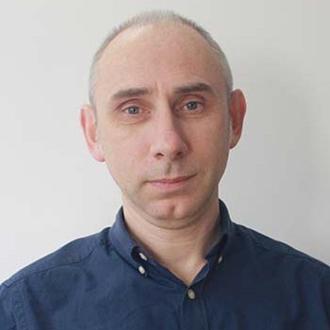
"The course was immensely stimulating, allowing me indulge some of my existing interests and introducing me to plenty of new topics and ideas" - Paul Solman
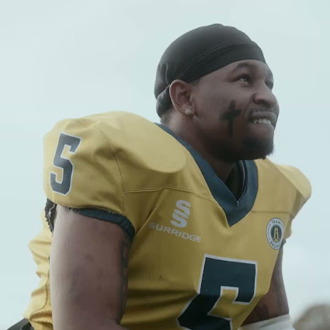
"Brunel has enhanced my American Football experience in many ways. The togetherness and brotherhood I built on this team Is something I will never forget. Winning my first Uniball championship with my teammates was one of the best experiences." - Khaleeb Webb
"The course was immensely stimulating, allowing me indulge some of my existing interests and introducing me to plenty of new topics and ideas" - Paul Solman
"Brunel has enhanced my American Football experience in many ways. The togetherness and brotherhood I built on this team Is something I will never forget. Winning my first Uniball championship with my teammates was one of the best experiences." - Khaleeb Webb
You can explore our campus and facilities for yourself by taking our virtual tour.
Course content
This course offers a global and interdisciplinary approach to how contemporary digital media technologies shape cultures and societies. Drawing on critical media studies, digital media and media production it challenges assumptions about the media’s impact on individuals, institutions and power relations in social and political contexts.
The traditional theoretical pathway teaches viewing media not just as entertainment but through critique and as a lens for social and political engagement.
Throughout the course you can combine critical theoretical and empirical study of the media including issues of media audiences together with the study of developments in information and communication technologies. You will be required to do a dissertation on any aspect of Media and Communications study. Typical modules on the programme include Digital Audiences and Identities, Digital Media Career Development and Media as Power (see below for more modules).
Compulsory
- CO5606 - 21st Century Media-Bodies
This module provides students with a sophisticated, critical knowledge and understanding of the relationships between media, bodies and culture. These relationships are explored in relation to their institutional, historical and social contexts and their material and textual emergence. The module explores the relationship between bodies and media in a broad range of contexts (e.g. through a consideration of identity, lived experience, representation, participation and audiences). The module educates students in the application of diverse theories and methods and equips them with appropriate knowledge, understanding and analytical skills needed to examine the relationships between media, bodies and culture. The module provides students with the tools to analyse the role of power relations in shaping media bodes and modes of resistance to these.
- CO5611 - Digital Media, Social Movements and Change
The module aims to provide students with an in-depth and critical understanding of how social movements occur, succeed, or fail in bringing social and/or political change. By focusing on empirical cases, students will study the use of old and new media tools, the role of leaders and collective identity formation during the social movements, as well as governmental and international response to these developments. The students will develop strategic thinking through critically analysing the organisation, mobilisation and coordination of the old and contemporary movements in the digital age.
- CO5601 - Media as Power
This module will enable students to analyse and understand the concept of power in relationship to the role of the media in contemporary society. It will examine the relationship between the media, society, and the state with regard to the balance of power that exists between them. The focus will be on both local and concrete issues such as the creation of public spheres for debate and discussion in the UK as well as global issues that focus upon the regulation of new digital media platforms such as Facebook and Netflix. At its broadest the module will provide a global sociological understanding of the impact of the digital revolution on the main institutions that govern social life.
- CO5604 - Media Production as Activism
This module will enable students to develop a broad range of practical skills by using creative practice to respond to, critique and challenge social issues. It will foreground the role of the media in bringing together theory and practice, and in mobilising practitioners and communities around social and political issues. Through a range of local, national and international examples, both past and present, the module will enable students to understand the role of the media as a site of struggle and as a form of creative resistance. Students will develop a high-level knowledge of key concepts such as ‘cultural identity’, ‘resistance’ and ‘radical hope’ and how they connect with the theory and practice of media activism. The module will engage with postcolonial scholarship on media and activism and postcolonial activist media practice. The limitations and possibilities of media as a site of resistance will be evaluated.
- PP5619 - Researching Social and Political Sciences
This module aims to promote critical understanding of different approaches to the conduct of research in the social and political sciences. It will provide a critical overview of some key methods appropriate to the field of researching social and political sciences that are suitable for student dissertations, engage students in practical experience in the design and conduct of research projects using different research methods, provide a critical grounding in qualitative methods relevant to research in diverse areas of social and political research, and equip students with the necessary background to read and critically evaluate research in these fields and to carry out their own research.
- CO5600 Written Dissertation
Optional
- JR5630 - AI for Journalists, Campaigners and Activists
Since 2022, the integration of AI generative and assistive into newsrooms, campaigns and activism has accelerated. The module aims to prepare students for the changing nature of news, campaigning and activism as professionals increasingly appropriate and adapt AI to the workplace. It does so through a mix of theory and practical workshops. Theoretical engagement seeks to develop students’ critical reflexivity about rapid changes, how AI systems are reconfiguring the human-machine relationship and the implications for working practices. The practical dimensions expose students to a series of case studies and to working with some of the key tools and techniques used to identify AI-generated images, check the veracity of outputs and identify gaps in news or campaigning materials.
- CO5607 - Digital Media Career Development
This module will provide students with the opportunity to gain a critical overview of working in the media and cultural industries from direct encounters with creative industry professionals, companies or institutions. Drawing on a variety of formats ranging from invited speakers to visits to particular creative industry sector’s or work shadowing opportunities, the module will support students’ understanding of, competence and confidence in working independently in a professional manner appropriate to the media and cultural industries. The module will advance students’ ability to produce a professional portfolio for future employment.
- JR5622 - Fake News, Images and Websites
The module is a mix of theory and practice. In the theory classes, you will learn about historical and contemporary approaches to understanding fake news, manipulated images, and conspiracy theories. The practical workshops teach you the techniques and tools for verifying or debunking claims, images, and videos. The assessment is a mix of theory and practice.
- JR5617 - Multi-platform Storytelling
Through this module, you will develop advanced skills in researching, designing, and page layout, video, photography, audio, and scriptwriting for multimedia storytelling. By the end of the module, you will be able to construct visual stories in various contexts and audiences using photographs, audio podcasts, video clips, magazine design and page layout, and webcasting.
- PP5618 - Politics and Digital Cultures
The module, in exploring the relationship between politics and digital cultures, aims to develop students’ critical knowledge and understanding of the interplay between the two. It does so by interrogating how different political actors use digital cultures and how such cultures hold actors up to scrutiny, ridicule or praise. It also explores the ways in which digital cultures facilitate (or impede) new political visibilities and consumption of politics.
- PP5629 - Political and Strategic Comms
The module aims to develop students' ability to apply strategic thinking to campaign planning while providing a strong theoretical understanding of political and strategic communication across various contexts. Students will also learn to trace changes and continuities in communication technologies and practices over time.
- CO5608 - Political Satire and Comedy
This module provides students with a sophisticated and critical knowledge and understanding of the relationships between politics, satire and comedy. These relationships are explored in relation to their institutional, historical and social contexts and their textual conventions. The module explores political satire and comedy as it exists in a broad range of texts (e.g. television, cartoons, live stand-up and digital comedy). The module equips students with appreciation and understanding of the continuities and changes in political satire and comedy in national and global political systems and international relations, and its relationship with concepts of political power and hegemony.
This course can be studied undefined undefined, starting in undefined.
This course has a placement option. Find out more about work placements available.
Please note that all modules are subject to change.
Read more about the structure of postgraduate degrees at Brunel
Careers and your future
The Media and Communications MSc is perfect if you’re interested in a career in the media or creative industries. You will gain the theoretical and practical skills you need for the fast‑paced media environment, network with media practitioners and gain an in-depth overview of both media and society. Career opportunities for our graduates typically include further advanced academic research or pursuing careers in the media industries such as Disney Channel, the BBC and Sky.
Whatever your career goals, this course will help you achieve them. We invite professionals who are working in the media and broadcast industry (advertising and marketing, television documentary and different PR organisations) to come and deliver talks and offer careers advice. You’ll benefit from bespoke workshops and lectures to enhance your employability skills, including media and communications careers advise and help on pitching yourself to employers.
Many of our students go on to advanced academic research or to pursue careers within the media industries. Typical job roles include Press and Communications Officer and Head of Information. Past students have worked in developing countries for HGO’s or as technology consultants.
UK entry requirements
- A 2:2 (or above) UK Honours degree, or equivalent internationally recognised qualification, in a Media/Communications-related subject (Social Science, Business Studies, Arts and Humanities, Media, Communications, Sociology, Cultural Studies, Politics, History, Film Studies, Geography, Criminology).
- Applicants with other qualifications, or equivalent professional qualifications with considerable relevant work experience will be considered on an individual basis.
International entry requirements
If you require a Tier 4 visa to study in the UK, you must prove knowledge of the English language so that we can issue you a Certificate of Acceptance for Study (CAS). To do this, you will need an IELTS for UKVI or Trinity SELT test pass gained from a test centre approved by UK Visas and Immigration (UKVI) and on the Secure English Language Testing (SELT) list. This must have been taken and passed within two years from the date the CAS is made.
English language requirements
- IELTS: 6.5 (min 6 in all areas)
- Pearson: 59 (59 in all subscores)
- BrunELT: 6.5 (min 6 in all areas)
- TOEFL: 4.5 (min 4.5 in all subscores)
You can find out more about the qualifications we accept on our English Language Requirements page.
Should you wish to take a pre-sessional English course to improve your English prior to starting your degree course, you must sit the test at an approved SELT provider for the same reason. We offer our own BrunELT English test and have pre-sessional English language courses for students who do not meet requirements or who wish to improve their English. You can find out more information on English courses and test options through our Brunel Language Centre.
Please check our Admissions pages for more information on other factors we use to assess applicants. This information is for guidance only and each application is assessed on a case-by-case basis. Entry requirements are subject to review, and may change.
Fees and funding
2027/28 entry
UK
£12,485 full-time
£6,240 part-time
International
£21,010 full-time
£10,505 part-time
Find out more information about placement year fees or any additional course-related costs.
Fees quoted are per year and may be subject to an annual increase. Certain Home postgraduate student fees are regulated and are currently capped at £10,050 per year; any changes will be subject to changes in government policy.
From 2028 onwards, the fee cap is expected to rise annually in line with inflation. This means your tuition fees in future years may increase to reflect these changes.
International fees may change annually, by no more than 5% or RPI (Retail Price Index), whichever is greater.
Fees quoted are per year and are subject to an annual increase.
See our fees and funding page for full details of postgraduate scholarships available to Brunel applicants.
Scholarships and bursaries
Teaching and learning
Assessment and feedback
You’ll have the opportunity to be assessed through a variety of traditional and new assessment types. Assessments can include traditional essays and reviews, contributing to online blogs and engage in critical analysis of visual media. You’ll be assessed through essays, report writing, blog entries and group work. You’ll also complete a written dissertation.
Under supervision, students will build up a portfolio of work to use as a calling card in the world of freelance employment, as well as in more structured career paths. The design of these portfolios will be informed by the industry contacts that students engage with on the course and will help graduates to be well-equipped to undertake a number of positions in the media.
Read our guide on how to avoid plagiarism in your assessments at Brunel.