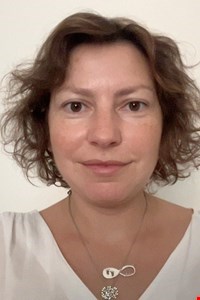
Ines is a Lecturer in Genomics since 2023. She is passionate about the genome and how genes switch ON/OFF in a timely and spatially regulated manner. She left Portugal in 2007 to study gene expression regulation in yeast (UMC Utrecht, the Netherlands) and flies (Netherlands Cancer Institute, the Netherlands). She did her PhD at Imperial College London investigating the spatial location of chromosomes in Huntington’s Disease (London, UK). During her two postdocs she looked at chromatin regulation during cell cycle (Brunel University London, UK) and HIV-1 infection (Heidelberg University/EMBL Germany). She is particularly interested at the nuclear periphery and how the genome is organised underneath the Nuclear Pore Complex, the gate of HIV-1 into the nuclei. Visit our lab page to know more: https://nuclearperipherylab.mystrikingly.com/
We offer a fully funded 3-year PhD position for UK home students in the Biosciences Department (CHMLS). The project will be based in a cell biology research laboratory that investigates fundamental aspects of nuclear organisation in the context of Nuclear Pore Complex Biology.
The studentship is jointly funded by CHMLS and the Academy of Medical Sciences and is open only to UK candidates or those with settlement status. The position covers Home tuition fees and provides a London-rate stipend (currently estimated at £22,780 per year) for up to 36 months. Interested candidates are invited to apply by 12h noon (UK time) on Monday 23rd February 2026. Interviews will be held on 26th/27th February. The start date is 1st April 2026.
Overview
The PhD project will explore one nuclear envelope structure, the nuclear pore complex, and how it contributes to its functions and can be influenced during infection. Using a combination of imaging and molecular approaches, the student will study how changes to the nuclear transport machinery affect its structure and function, with relevance to viral nuclear entry. The project provides interdisciplinary training and opportunities to collaborate with researchers at other UK institutions, and a student interested in advanced imaging techniques and nuclear pore complex biology.
For informal discussions, please contact Dr Ines Castro at ines.castro@brunel.ac.uk.
Eligibility
Candidates should hold an undergraduate degree (first or upper second class) or equivalent qualification in biosciences or a related field. A master's qualification in a relevant area and laboratory experience are desirable. Previous experience in molecular biology (cloning/qPCR), imaging techniques (immunofluorescence), biochemistry (Western Blots, Immunoprecipitations) and mammalian cell culture is desirable. Applicants who have not been awarded a degree by a UK university will be expected to demonstrate English language skills at IELTS 7.0 (minimum 6.5 in any section). Open only to UK candidates or those with settlement status.
How to apply
If you wish to apply, please email the following to ines.castro@brunel.ac.uk by 12h noon (UK time) on Monday 23rd February 2026.
- An up-to-date CV.
- A single-page A4 single-spaced personal statement describing why you are a suitable candidate (i.e. outlining your qualifications and laboratory skills).
- One example of your academic writing (e.g. an essay, a section from a dissertation).
- A summary of your teaching experience or your willingness to support teaching activities.
- Names and contact details for two academic referees.
- A copy of your highest degree certificate and transcript.
- A copy of your English language qualification, where applicable.
Short-listed applicants will be required to attend an interview 26th/27th February.