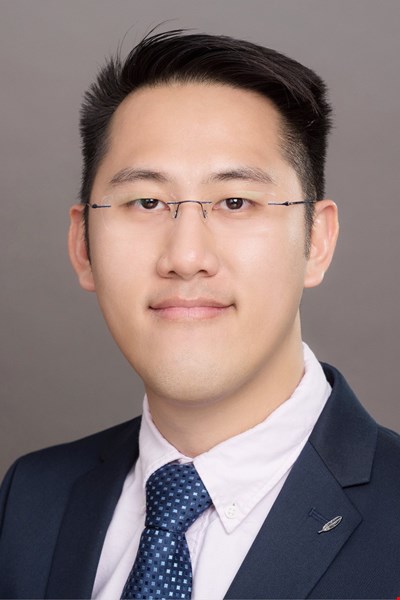
Dr Kok Siew Ng is Senior Lecturer (Associate Professor) in Chemical Engineering at Brunel University of London. He joined Brunel in March 2022 as a Lecturer (Assistant Professor) after the completion of his 4-year independent NERC fellowship at the University of Oxford. He is currently leading the Biorefinery and Resource Recovery Research Group and the interdisciplinary MSc in Advanced Chemical Engineering (Hydrogen and Low Carbon Technologies) at Brunel. Prior to joining Brunel, Kok Siew was a UKRI/NERC Industrial Innovation (Rutherford) Research Fellow and Lecturer in Chemical Engineering at the Department of Engineering Science, University of Oxford, from 2018 to 2022. During his time in Oxford, he was a Principal Investigator for the SYNERGORS project 'A systems approach to synergistic utilisation of secondary organic streams' (£0.5 million), funded by NERC. The project aimed to explore novel approaches to addressing challenges in organic waste management and achieving circular economy. As the first Research Fellow in the Department to be offered a concurrent lectureship contract, he took on the role of delivering comprehensive full-module teaching. This includes conducting lectures, guiding tutorials, managing exams, and overseeing MEng project supervision. Kok Siew was the Co-Investigator and Coordinator of the Oxford Agile project (Sprint 2) – a university-wide initiative focusing on tackling various environmental challenges using an interdisciplinary approach, funded through the £10 million NERC Changing the Environment programme, from 2022-2023. The sprint project aims to develop strategies for determining the best regional combination of nutrient recovery and utilisation options for both economic viability and environmental benefits. He completed his MEng Chemical Engineering with Chemistry (First Class Honours) in 2008, and later gained his PhD in 2011 from the Centre for Process Integration (CPI), The University of Manchester. After completing his PhD, he joined Process Integration Limited (PIL) as a consultant and later took up a position as a Postdoctoral Research Fellow at the Centre for Environment and Sustainability (CES), University of Surrey. Kok Siew is a chemical engineer by training with >15 years of research and industrial consultancy experience in systems engineering, process integration, techno-economic analysis and environmental life cycle assessment (LCA). His research vision is to develop novel and sustainable solutions from a systems engineering perspective, to facilitate the transition of the chemical, energy and waste industries from a fossil-based, linear system to one that is fundamentally sustainable by using renewables as the mainstream resources and by fully embracing circular economy principles. He has contributed to more than 10 UK and international projects funded by NERC, Innovate UK, EU FP7, Royal Academy of Engineering and Newton Fund. His research is significant in terms of addressing global challenges in the 21st century, aligned with the UN SDG 7 and 12, the UK Industrial Strategy, and international ambitions to achieving circular economy and net-zero target. Kok Siew has published more than 40 articles including journals, book chapters and magazine articles. He has authored the pioneering textbook "A New Systems Thinking Approach to Sustainable Resource Management: Principles and Applications" (2024) and co-authored “Biorefineries and Chemical Processes: Design, Integration and Sustainability Analysis” (2014). His work related to decarbonisation of energy systems has been recognised by the IChemE Junior Moulton Medal award (best publication) in 2011. Furthermore, Kok Siew has been nominated for the University of Oxford Vice-Chancellor's Environmental Sustainability Staff Award in 2022 for his contribution in actively promoting environmental sustainability through his research vision, which develops sustainable solutions from a systems engineering perspective. He is an Editorial Board Member of Resources, Conservation & Recycling Advances (RCR Advances) journal and also a reviewer for French ANR and UKRI/EPSRC proposals. Kok Siew's research has significant implications for policy decision-making. He was invited to serve as a technical advisor and modelling expert for Chatham House's Sustainability Accelerator initiative, contributing to key discussions on global bioeconomy development. His input helped shape the publication "How strategic collaboration on the bioeconomy can boost climate and nature action". Through this engagement, his research has provided critical evidence and systems insights that support international efforts to accelerate the transition toward a sustainable and inclusive bioeconomy. Kok Siew is enthusiastic in establishing international collaboration with researchers from multidisciplinary background. He has been working closely with international academic and industrial organisations in the UK, Europe, China and South East Asia. He has organised and participated in a number of British Council/Newton Fund workshops in Malaysia, Mexico, Brazil, Kazakhstan and China, and attended the Royal Academy of Engineering Frontiers of Engineering for Development Symposium “From feeding people to nourishing people”. He has a long-term ambition in influencing resources and waste management practices in developing countries towards sustainable development through cross-disciplinary and cross-sectoral collaboration between the UK and international organisations. His ambition in international development together with the objectives of SYNERGORS are well aligned with the UK Industrial Strategy in enhancing resource efficiency and mitigating pollution and waste materials, while achieving a sustainable industrial growth and a more resilient economy at global level. Awards and Achievements Outstanding Programme Award for MSc Advanced Chemical Engineering (Hydrogen and Low Carbon Technologies), Brunel University of London, 2026. Outstanding Programme Award for MSc Advanced Chemical Engineering (Hydrogen and Low Carbon Technologies), Brunel University of London, 2025. University of Oxford Vice-Chancellor's Environmental Sustainability Staff Award, Nominee, 2022. Best Oral Presentation Award, Newton-Al-Farabi UK-Kazakhstan workshop “Low-carbon Future: Efficient Management of Resources and Energy”, 26-28 September 2016, Astana, Kazakhstan. IChemE Junior Moulton Medal for the best publication, 2011 - “Ng, K.S., Lopez, Y., Campbell, G.M., Sadhukhan, J., 2010. Heat integration and analysis of decarbonised IGCC sites. Chem Eng Res Des., 88 (2): 170-188.” PhD Scholarships (2008-2011): Overseas Research Scholarship (ORS), Manchester Alumni Funds, Process Integration Research Consortium (PIRC) Research Funds, School of Chemical Engineering and Analytical Science Scholarship MEng Chemical Engineering with Chemistry Specialist Subject Course Prize (ranked 1st in the cohort), 2008, The University of Manchester.
The rapid increase in the production and consumption of consumer electronics such as mobile phones and laptops has created a significant environmental challenge. The UK generates around 6 million tonnes of electronic waste annually, among the highest per capita rates globally, yet less than a third is recycled. Valuable metals such as gold and copper are lost, while hazardous substances, including heavy metals and persistent organic pollutants, are released into soils, water, and the atmosphere. These emissions contribute to resource depletion, pollution, and ecosystem degradation, however their pathways and long-term environmental implications remain poorly understood.
This project aims to improve scientific understanding of the environmental fate and impacts of materials and pollutants associated with electronic waste across their life cycle. Using a systems-based environmental modelling approach, the research will integrate material flow analysis, life cycle assessment, and data-driven modelling to quantify the movement and transformation of critical and hazardous elements from production to end-of-life management. The project will assess how alternative waste treatment and circular economy interventions influence environmental fluxes, pollution risks, and resource sustainability under different scenarios. Experimental work will be undertaken to validate model assumptions and characterise pollutant behaviour in relevant environmental media.
The research will provide new insight into the interactions between resource use, pollution, and ecosystem health, generating evidence to guide sustainable environmental management and policy. You will develop interdisciplinary expertise spanning environmental science, sustainability assessment, and data analytics, preparing you to address complex environmental challenges in the transition to a circular economy.
You will follow a personalised training programme designed to equip you with the knowledge and practical skills required for this interdisciplinary research. Training will be delivered through a blend of self-directed study, taught modules, and one-to-one instruction by the supervisory team, complemented by input from external partners where appropriate. You will develop expertise in machine learning (e.g., time series forecasting, hybrid modelling), material flow analysis (MFA), life cycle assessment (LCA), and experimental techniques. Additional support in academic writing and presentation will be provided through the Brunel ASK team.
Eligibility
You must hold, or be expected to achieve, a first or high upper second-class undergraduate honours degree or equivalent (for example BA, BSc, MSci) or a Master's degree in a relevant subject.
All students whose first language is not English must be able to provide recent evidence that their spoken and written command of the English language is adequate for the programme. The required evidence may be one of the following:
- Substantial education or work experience conducted in English
- A recently obtained acceptable English language qualification or test result. Our preferred English language qualification is the International English Language Testing System (IELTS) Academic Version and we require candidates to achieve the level of "GOOD".
- Good level: Overall grade of 7.0 with a minimum of 6.5 in each of the subtests.
The UKRI has confirmed that all students meeting the residency requirements will be eligible for postgraduate studentships covering both the stipend to support living costs and fees at research organisations UK rate. UKRI funding will not cover international fees set by universities.
TREES can offer a number of studentships to applicants eligible to pay international fees (number to be confirmed soon). These studentships will cover overseas fees and pay the standard UKRI stipend but may be restricted to one of the TREES partners, depending on funding availability. Any restrictions will be clearly explained at the point of offer.
Please note there there are no international opportunities at BRUNEL in 2026.
How to apply
Please use the following links to apply to this programme
Meet the Supervisors
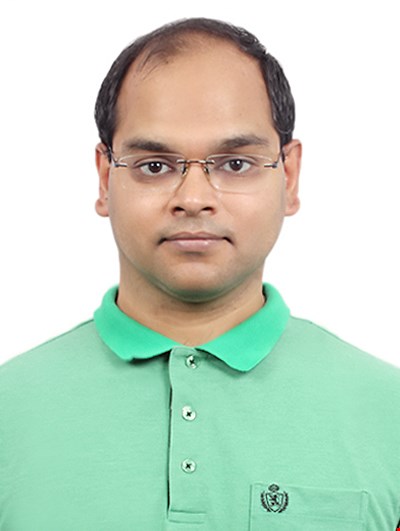
Dr. Lahiri joined Brunel University as lecturer in March 2020. He got his PhD from University of Leeds in 2008 after which he went on to do his Postdoc in USA and Japan. From 2011 he joined Clausthal University of Technology in Prof Frank Endres group and worked extensively on electrodeposition in ionic liquids and understanding the battery electrode/electrolyte interface. His work primarily focusses on electrochemical synthesis of functional materials using ionic liquids for energy storage and electrocatalysis. Besides, he focusses on sustainable extraction process for recovery of metal/metal oxides from electronic wastes and lithium ion batteries. In ionic liquids, the electrode/electrolyte interface is considerably different from aqueous electrolytes and therefore controlling and modifying the interface leads to change in functional properties of the materials. His research focusses and utilises the property of interfacial modulation to develop new functional materials and tries to bridge the gap between fundamental aspects of electrochemistry and applied electrochemistry. Questions such as can we design a suitable interface to develop dendrite-free deposits which are essential for developing high energy density Li/Na metal batteries are targeted. Besides, developing batteries for grid energy storage with sustainable materials are being researched.
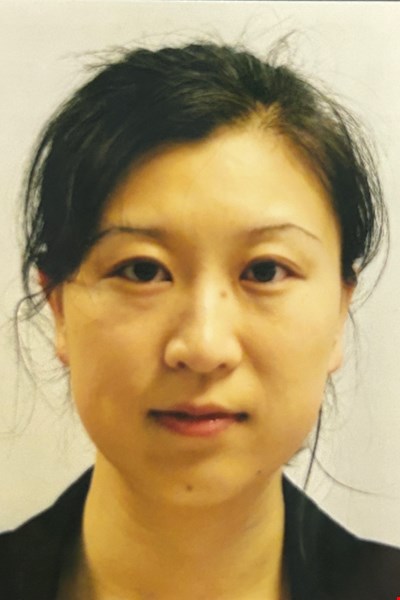
Dr. Yang is a Lecturer in Chemical Engineering Department. She is currently leading the Digital Manufacturing Group, which aims to integrate the advanced computational technologies, such as big data, machine/deep learning, simulation and visualisation, to facilitate manufacturers achieve tangible improvements in key metrics. Her multidisciplinary research spans across diverse industrial sectors, addressing the challenges and driving the industry towards a new revolution. Dr. Yang has a multidisciplinary background. She obtained her BSc and MSc degree in Computer Science from Tianjin University, China and received her PhD sponsored by Overseas Research Scholarships (ORS) and Tetley & Lupton Scholarships (TLS) from University of Leeds. During her PhD, she successfully applied data mining and machine learning techniques to identify the optimal composition of nano-photocatalyst (TiO2). The decisional tool designed and developed by Dr. Yang, which combined process analytical technology (PAT), image analysis and machine learning techniques, was sponsored and adopted by GlaxoSmithKline Pharmaceuticals (GSK) for its nanoparticle product line. Due to her outstaning performance, Dr.Yang was awarded Chinese Government Award for Outstanding Self-financed Students Abroad in 2010. Prior to joining Brunel, Dr. Yang worked at Imperial College London and University College London as a postdoctoral researcher. During this period, Dr. Yang accumulated great knowledge and experience in biopharmaceutical manufacturing process and personalised medicine development. Collaborated with UCB and Eli Lily, the leaders of biopharmaceutical industries in UK, Dr. Yang established process models and ecnomic models of biomanufacturing process using discrete-event modelling and Monte Carlo simulation methods. A decision-support tool which combined the process models, ecnomic models and machine learning models for facility fit analysis had been greatly complimented by biopharmaceutical industry users. Supported by Pall Corporation, Merck and Medimmune, Dr. Yang’s research of digital twins for continuous biomanufacturing process awarded funding by Future targeted healthcare manufacturing hub at UCL. She is currently holding Brunel Research Initiative & Enterprise Funding for digital twin system of hydrogen production. Multi-omics data analysis for personalised medicine development is another research intrest of Dr. Yang. She led a collaboration with Shanghai Pulmonary Hospital (China) to construct a decision-support tool with big data analysis for personalized diagnosis and treatment of lung cancer. She is currently collaborating with Life Science Department for cancer and drug dependency analysis.