
I am an environmental scientist, Professor of exposome science, Fellow of the Institution of Environmental Sciences, a chartered chemist and Fellow of the Royal Society of Chemistry. My research covers a range of topics in environmental, analytical, exposome and water sciences. My research is focused on the development of analytical techniques for the determination of environmental contaminants to assess animal and human exposure to hazardous compounds in the environment. My work includes investigations into the occurrence and fate of emerging environmental contaminants and hazardous substances in the aquatic and terrestrial environment and the study of their behaviour during wastewater treatment and drinking water production. My research investigates the elimination of micro-pollutants from wastewater and potable water through conventional water treatment processes and I apply green chemistry principals and green technologies to eliminate or convert hazardous pollutants to less harmful or more biodegradable compounds. My research covers the formation and occurrence of disinfection-by-products resulting from conventional and advanced treatment. My studies involve the development of high resolution tandem mass spectrometry methods for the identification of contaminants in human body fluids, biota, potable water and wastewater samples. My research involves the development of new strategies in data interpretation using spectral and chromatographic deconvolution and chemometric methods of nontargeted analysis to address unknown hazards or "known or unknown unknowns." Career 2025 to present, Professor, College of Engineering, Design and Physical Sciences, Brunel University of London 2025 to present, Director of Research, Civil and Environmental Engineering, Brunel University of London 2016 to 2023, Vice Dean International, College of Health, Medicine and Life Sciences, Brunel University London 2013 to 2025, Professor in the College of Health, Medicine and Life Sciences, Brunel University London 2005-2012, Principal Scientist, Severn Trent Laboratories, Reading 1999-2005, Principal Scientist, Water Research Centre (WRc-NSF), Medmenham 1990-1999, Principal Scientist, Water Research Centre (WRc), Medmenham
Highway surface runoff often contains a wide range of chemical pollutants from tyre wear that are transported from road surfaces to receiving waters following rainfall. A recent US study has reported the presence of a highly toxic quinone transformation product of N-(1,3-dimethylbutyl)-N′-phenyl-p-phenylenediamine (6PPD), an antioxidant used in tyres which is highly toxic to coho salmon (Oncorhynchus kisutch) in highways run-off. This is one of many recent studies on the presence of a cocktail of toxic pollutants originating from tyre wear that adversely affects the chemical and ecological quality of natural waters. This project will undertake a complete chemical characterisation of the presence of toxic pollutants originating from tyre wear which include microplastics, heavy metals and rubber derivatives. Furthermore the study will identify the hundreds of toxic chemicals in tyre wear particles that remain unknown. The study will utilise analytical techniques including high resolution tandem mass spectrometry (LC-QTOF), ICP-MS and GCMS/MS alongside a battery of toxicological assays to elucidate the identity of components of tyre wear particles that remain unknown. The project will inform policy makers of the harm of untreated highways runoff, it will involve extensive fieldwork and laboratory analysis to identify the composition, fate and remediation of stormwater chemical pollution and is expected to make a significant contribution to solving an emerging ecological crisis.
You will receive training on a number of sampling and analytical techniques. Specifically this will include training in High resolution Liquid Chromatography Mass Spectrometry ICPMS, GCMS, ICMSMS (by supervisory team) and in toxicological assays including microtox, CSE-119 (by environmental science technical team).
Eligibility
You must hold, or be expected to achieve, a first or high upper second-class undergraduate honours degree or equivalent (for example BA, BSc, MSci) or a Master's degree in a relevant subject (e.g. Biosciences, Analytical Science, Ecotoxicology etc). Prior experience in data analysis/visualisation, machine learning and/or analytical chemistry would be beneficial for this project. Candidates that have a relevant background in maths and/or data analytics that would like to develop biological knowledge, and analytical chemistry skills will also be suitable for this position. For further information on eligibility please refer to the TREES website.
How to apply
Enquiries email name and address:
TREES.Admissions@ucl.ac.uk
Application Web Page:
https://www.trees-dla.ac.uk/apply
Meet the Supervisors
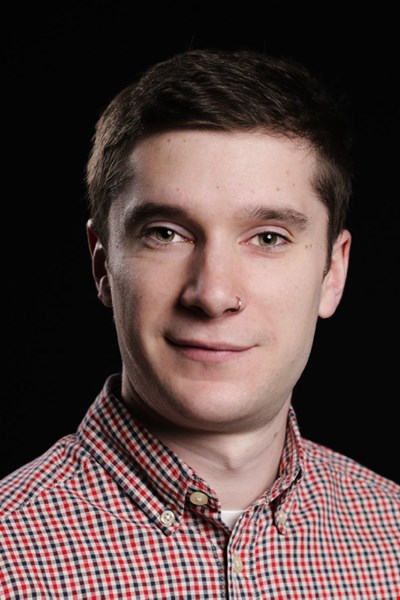
As an interdisciplinary scientist with a background in biology and analytical chemistry, my research interests are focussed on the impact of chemicals in the environment and the interaction this chemical stress has with other environmental stressors. My expertise lies in small molecule mass spectrometry to determine chemicals found in the environment (especially in wildlife) and to determine biomarkers and pathways associated with adverse effects in exposed organisms. I am also interested in the integration of artificial intelligence within environmental toxicology to support and solve different environmental challenges. From the start of my PhD at King's College London my research was originally focussed on the uptake, biotransofrmation and elimination of pharmaceuticals in a freshwater invertebrate (Gammarus pulex) commonly found in UK rivers. I developed and validated machine learning models to predict these proccesses to support and potentially replace bioaccumulation testing during environmental risk assessments. I then moved into a postdoctoral position where I focussed on understanding the impact of pharmaceuticals by assessing behavioural disruption in these organisms. I developed and applied metabolomic workflows to gain a mechanistic understanding of animal behaviour and to link cause-effect relationships for different drug exposures. Here at Brunel, I will be working in three main areas concerned with chemical pollution. First is concerned with the determination of chemicals (and mixtures) using exposomics to characterise the chemical space in the environment, with a focus on internalised residues in animals. Second, improving mechanistic understanding of cause-effect relationships using metabolomics and lipidomics to determine biochemical changes that are phenotypically anchored. Finally, development and application of AI to support envrionmental risk assessment, replace animal testing and improve interpretation of complex datasets to better understand animal health.