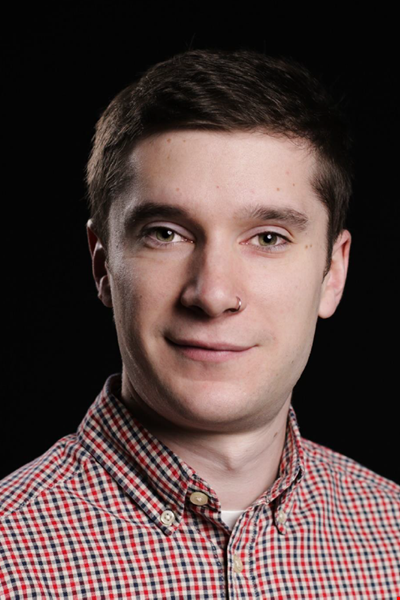
Dr Thomas Miller
Senior Lecturer in Environmental Sciences
Heinz Wolff 001C
- Email: thomas.miller@brunel.ac.uk
- Tel: +44 (0)1895 268741
- Civil and Environmental Engineering
- College of Engineering, Design and Physical Sciences
Summary
As an interdisciplinary scientist with a background in biology and analytical chemistry, my research interests are focussed on the impact of chemicals in the environment and the interaction this chemical stress has with other environmental stressors. My expertise lies in small molecule mass spectrometry to determine chemicals found in the environment (especially in wildlife) and to determine biomarkers and pathways associated with adverse effects in exposed organisms. I am also interested in the integration of artificial intelligence within environmental toxicology to support and solve different environmental challenges.
From the start of my PhD at King's College London my research was originally focussed on the uptake, biotransofrmation and elimination of pharmaceuticals in a freshwater invertebrate (Gammarus pulex) commonly found in UK rivers. I developed and validated machine learning models to predict these proccesses to support and potentially replace bioaccumulation testing during environmental risk assessments. I then moved into a postdoctoral position where I focussed on understanding the impact of pharmaceuticals by assessing behavioural disruption in these organisms. I developed and applied metabolomic workflows to gain a mechanistic understanding of animal behaviour and to link cause-effect relationships for different drug exposures.
Here at Brunel, I will be working in three main areas concerned with chemical pollution. First is concerned with the determination of chemicals (and mixtures) using exposomics to characterise the chemical space in the environment, with a focus on internalised residues in animals. Second, improving mechanistic understanding of cause-effect relationships using metabolomics and lipidomics to determine biochemical changes that are phenotypically anchored. Finally, development and application of AI to support envrionmental risk assessment, replace animal testing and improve interpretation of complex datasets to better understand animal health.
Qualifications
- 2020 - Present: Lecturer in Environmental Sciences (Brunel University London)
- 2017- 2020: Postdoctoral Research Associate (King's College London)
- 2012 - 2016: PhD in Environmental Toxicology (King's College London)
- 2011 - 2012: MSc Analytical Chemistry (Kingston University)
- 2008 - 2011: BSc(Hons) Biology (University of Portsmouth)
Responsibility
- Study and assesment block lead for the BSc Environmental Sciences programme (ES1702 & ES1802)
- Admissions Tutor for the Environmental Sciences Division
Newest selected publications
Panagiotidis, K., Miller, TH., Martin, OV. and Baynes, A. (2025) 'Mapping molluscan endocrinology: a systematic and critical appraisal'. Biological Reviews, 101 (2). pp. 970 - 1002. ISSN: 1464-7931 Open Access Link
Howard, SA., de Dios, R., Maslova, E., Myridakis, A., Miller, TH. and McCarthy, RR. (2025) 'Pseudomonas aeruginosa clinical isolates can encode plastic-degrading enzymes that allow survival on plastic and augment biofilm formation'. Cell Reports, 44 (5). pp. 1 - 21. ISSN: 2639-1856 Open Access Link
Uhlhorn, J., Ng, KT., Barron, LP., Ford, AT. and Miller, TH. (2025) 'Chemical profiling of surface water and biota in protected marine harbours impacted by combined sewer overflows'. Environment International, 199. pp. 1 - 12. ISSN: 0160-4120 Open Access Link
Mottershead, K. and Miller, TH. (2023) 'Application of deep learning to support peak picking during non-target high resolution mass spectrometry workflows in environmental research'. Environmental Science: Advances, 2 (6). pp. 877 - 885.Open Access Link
Langan, LM., Paparella, M., Burden, N., Constantine, L., Margiotta‐Casaluci, L., Miller, TH., et al. (2023) 'Big Question to Developing Solutions: A Decade of Progress in the Development of Aquatic New Approach Methodologies from 2012 to 2022'. Environmental Toxicology and Chemistry, 43 (3). pp. 559 - 574. ISSN: 0730-7268 Open Access Link