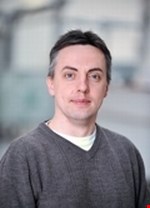
Dr. Rudolph is a world-renowned expert in bacterial DNA replication and repair, bacterial chromosome dynamics and bacterial chromosome structure. His research investigates how cells respond to replication stress and maintain genome stability. Using bacterial systems as highly tractable models, his group combines fundamental molecular biology with technically advanced experimental approaches to investigate how DNA replication is disrupted, how cells process stalled or damaged replication forks, and how these pathways influence chromosome maintenance, DNA repair, CRISPR adaptation and antimicrobial responses. A central aim of his work is to understand how different forms of replication stress generate distinct DNA intermediates and how cells process these structures to preserve genome stability. Replication stress is a major driver of genome instability across all domains of life. By studying these mechanisms in bacteria, we can dissect the molecular pathways that stabilise or destabilise genomes with a level of precision difficult to achieve in more complex systems. However, a detailed understanding of these processes also creates opportunities for the development of much-needed antimicrobial strategies and for broader applications in biotechnology and genome engineering. Current research areas of his group include DNA replication termination, replication–transcription conflicts, replication restart pathways, CRISPR–Cas adaptation, and the effects of new antimicrobial substances on DNA replication and chromosome dynamics. Dr Rudolph also maintains the Rudolph LAB website and research blog, which communicate recent research, experimental approaches, scientific publishing and broader issues in genome biology, laboratory science and higher education. Through these resources he aims to make fundamental molecular biology more accessible, support knowledge exchange and engage both scientific and wider audiences.
The Centre for Inflammation Research and Translational Medicine is offering a fully funded PhD studentship to investigate novel therapeutic interventions to tackle caesarean section (C-section) infections. 15% of women globally who undergo a C-section delivery will experience an infection of the wound. Subsequently, mothers will experience severe pain, compromised mobility or even death. This PhD will develop novel strategies to prevent and/or treat C-section infections.
Based in and funded by the College of Health, Medicine and Life Sciences (CHMLS), this studentship offers a full-time annual London rate stipend estimated at £20,551 plus Home/EU tuition fees, for a maximum of 36 months. The successful candidate will benefit from the support of Brunel Medical School which has established connections with local NHS Trusts and clinicians.
The Department of Life Sciences holds a Silver Athena SWAN Award and is committed to the advancement of gender equality in Academia.
The start date will be 1 October 2023.
Overview
Antimicrobial resistance is a major threat to modern medicine and there is an urgent need to develop novel antimicrobial therapeutic strategies. In recent work in the McCarthy and Rudolph Labs published in EMBO Molecular Medicine (and featured in BBC Science Focus Magazine), we have demonstrated that the artificial sweetener acesulfame-K (ace-K) can be used to treat wound infections. Specifically, we show that it can inhibit the growth of a broad range of pathogens including common antibiotic resistant wound pathogens Acinetobacter baumannii and Pseudomonas aeruginosa. Remarkably, ace-K can also increase the sensitivity of A. baumannii to antibiotics. In this proposal, we aim to harness the newly identified therapeutic potential of ace-K and combine it with cutting-edge wound models, transcriptomics, genome sequencing, live cell imaging and 3D printing to develop a first-of-its kind bespoke therapeutic solution to tackle the underrepresented clinical need of mothers following a C-sections.
The successful candidate will be supervised by an expert interdisciplinary team of researchers who will provide full training for the research.
For informal discussions, please contact Ronan McCarthy ronan.mccarthy@brunel.ac.uk
Eligibility
Candidates should have an undergraduate degree (first or upper second class) or equivalent qualification in biosciences or a related field. A Masters qualification in a relevant area would be desirable. Applicants who have not been awarded a degree by a University in the UK will be expected to demonstrate English language skills to IELTS 7.0 (minimum 6.5 in any section).
How to apply
If you wish to apply, please e-mail the following to chmls-pgr-officestaff@brunel.ac.uk by 7 June 2023.
- A current CV.
- A single-page A4 single-spaced personal statement describing why you are a suitable candidate (i.e. outlining your qualifications and skills).
- One example of your academic writing (e.g. an essay, a section from a dissertation).
- A summary of your teaching experience or your willingness to support teaching activities.
- Names and contact details for two academic referees.
- A copy of your highest degree certificate and transcript.
- A copy of your English language qualification, where applicable.
Shortlisted applicants are expected to attend an interview week commencing 3rd July 2023.
For further information about how to apply, please contact the CHMLS Postgraduate Programmes Office on chmls-pgr-officestaff@brunel.ac.uk.