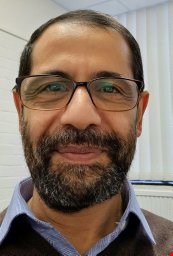
Ashraf is a Fellow of the Chartered Institution of Water and Environmental Management (FCIWEM), a Chartered Engineer (CEng), Chartered Environmentalist (CEnv) and Chartered Water and Environmental Manager (C.WEM). He holds BSc and MEng degrees in Civil Engineering from Egypt and a PhD in Civil Engineering from the University of Manchester. Prior to entering academia, he gained industrial experience in structural and reinforced concrete design, providing a strong foundation for his research-led andpractice-informed teaching. Ashraf is a Reader in the Department of Civil and Environmental Engineering at Brunel University London, having previously held a lectureship at Queen’s University Belfast. He has established an internationally recognized research profile in groundwater hydrology, climate resilience, environmental sustainability and the application of artificial intelligence and machine learning to water and environmental engineering challenges. His research outputs comprise more than 110 publications, including over 83 peer-reviewedjournal papers, generating 4,800 citations and an h-index of 26. In recognition of the international impact of his research, he was included in Stanford University’s World Top 2% Scientists list in both 2024 and 2025. Since joining Brunel, Ashraf has secured and led six externally funded research projects as Principal Investigator at Brunel, including projects funded by Horizon Europe, UKRI, EPSRC, Innovate UK, the Newton Fund, and the British Council. Three projects have been successfully completed and delivered, while he currently leads three active projects with a combined Brunel value of over £600k. His research is generating impact beyond academia, A key feature of Ashraf’s research leadership is the development of interdisciplinary collaborations across Civil Engineering, Computer Science, Artificial Intelligence, Data Science, and Environmental Sciences, enabling innovative solutions to complex environmental and climate-related challenges. He serves as a member of the UKRI Peer Review College. Ashraf is the developer and Director of the MSc Water and Environmental Engineering program at Brunel University of London, and has led curriculum development, professional accreditation from JBM and CIWEM, and enhanced student employability. Ashraf was also the industrial placement coordinator from 2020 to 2024, where he supported many students to secure placement opportunities. Externally, Ashraf contributes to the engineering and environmental professions through service on the CIWEM Accreditation Board, chairing and being a member of accreditation panels for environmental and water-related degree programs in the UK and internationally, and acting as an assessor for Chartered Engineer (CEng) and Chartered Environmentalist (CEnv) applications. Through these activities, he contributes to professional standards, educational quality, and the international visibility of Brunel University London.
Saltwater intrusion (SWI) in coastal aquifers is one of the main challenges for water resources management. It is a natural process that happens because of the density difference between the denser saltwater and the lighter freshwater. Factors such as rising in seawater level or decrease in the groundwater flux towards the sea would promote further intrusion. Also, excessive pumping of freshwater to supply the demand of coastal cities can lead to increased intrusion lengths, potentially rendering the supplies unusable if not managed effectively.
This PhD project will study SWI in heterogeneous coastal aquifers. Both experimental and numerical methods will be used. Data from a real field site is available and the computer model SEAWAT will be used, and recommendations will be given on how to slow or reduce saline intrusions in similar contaminated sites.
Students with a grade of 1st class or 2.1 can apply. Desirable to have some basics of computer simulations but not necessary.
References:
1.Abdoulhalik, A, Abdelgawad, A., and Ahmed, A.A. (2019). Impact of Layered Heterogeneity on Transient Saltwater Upconing in Coastal Aquifers. Journal of Hydrology, https://doi.org/10.1016/j.jhydrol.2019.124393.
2. Ahmed, A. A., Abdoulhalik, A., (2018). Transient investigation of saltwater upconing in laboratory-scale coastal aquifer, Estuarine, Coastal and Shelf Science, 214, 149-160.
3. Abdoulhalik, A., Ahmed, A. A. (2018). Transience of Seawater Intrusion in Response to Incremental Water Level Variations: Experimental and Numerical Study. Hydrogeological processes, https://doi.org/10.1002/hyp.13214.
How to apply
If you are interested in applying for the above PhD topic please follow the steps below:
- Contact the supervisor by email or phone to discuss your interest and find out if you would be suitable. Supervisor details can be found on this topic page. The supervisor will guide you in developing the topic-specific research proposal, which will form part of your application.
- Click on the "Apply here" button on this page and you will be taken to the relevant PhD course page, where you can apply using an online application.
- Complete the online application indicating your selected supervisor and include the research proposal for the topic you have selected.
Good luck!
This is a self-funded topic
Brunel offers a number of funding options to research students that help cover the cost of their tuition fees, contribute to living expenses or both. The UK Government is also offering Doctoral Student Loans for eligible students, and there is some funding available through the Research Councils. Many of our international students benefit from funding provided by their governments or employers. Brunel alumni enjoy tuition fee discounts of 15%.