
Overview
The Guardian University Guide 2024 ranks Brunel design graduates top in the UK for career after 15 months, while government figures also show Brunel design graduates rank no.1 for graduate earnings in the UK.*
Get a visual overview of this exciting programme by watching our colourful short video.
Design at Brunel is all about realising fantastic ideas in the real world. Our Industrial Design BA/MDes Degree suits creative and practical thinkers who prefer to learn through building and evaluating project-based challenges, with a technological understanding and less theory and quantitative analysis.
There is a lot of project-based learning to test your skills on all aspects of the design process, from contextual design ideas to realising your concept in the form of a product prototype. This means you’ll be able to build a great portfolio of your best-quality projects, academic and industry briefs, and case studies, during your studies.
You’ll have workshop training and will use industry-standard equipment and software to develop quality hands-on skills to become a maker. You'll have access to modern facilities that include dedicated design studios, digital sketching, extensive prototyping workshops, as well as electronics and digital fabrication labs. The practical knowledge you gain is transferable to industry and provides a head start for your future career as a creative designer and design communicator in the modern world.
This course can be studied 3 years full-time or 4 years full-time with placement starting in September. The placement year helps you to prepare for the world of work and you’ll have a year’s worth of invaluable professional experience when you graduate. Our students have worked in both small innovation start-ups and multinational organisations such as Chanel, Dior, Disney, Dyson and Lego.
Our students have the opportunity to study abroad. You could spend a term or a year in one of our partner universities via our exchange programme: Politecnico di Milano in Italy; Delft University of Technology in The Netherlands, San Francisco State University in the USA and Institut Superieur de Design, ISD Bubika in France. New exchange opportunities are being developed with India, Canada and China.
Made in Brunel is a unique, student-led initiative that showcases our design talent at its finest. Each year our students run a series of industry and community events leading up to the Made in Brunel exhibition. This annual showcase is a highlight of the London design calendar and promotes the incredible work our students produce to the creative community, and is a great way for our students to network with key design professionals.
If you are interested in turning a product or technology idea into a business after you graduate, we are in partnership with the Central Research Laboratory (CRL), a design incubator for start-ups. You’ll have access to meeting rooms and workspace as well as prototyping facilities. A team of in-house professionals will guide and support you at each stage and a number of our previous entrepreneurial students have successfully commercialised their products.
The BA Industrial Design programme is fully accredited and recognised by the Institution of Engineering Designers (IED), the premier professional body representing engineering and product designers.
* Longitudinal Employment Outcomes (LEO) 2022
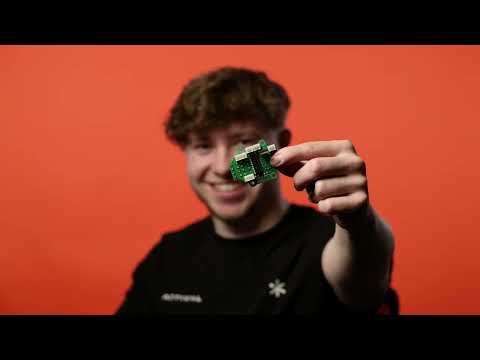
Please enable cookies to view this video.
Click here to view the videoYou can explore our campus and facilities for yourself by taking our virtual tour.
Course content
You’ll gain a sound grounding in technical and creative subjects before you move on to more specialised areas with a strong technological and humanistic focus. In your final year, you’ll learn advanced design innovation. Your major project is likely to include an aesthetic model and a functional prototype. The MDes year features further specialisation and research-led design.
Compulsory
- Design Process and Research
Aim: To enable students to familiarise with the design process and engage with the broader context of design research methods, their application within visual, market, user-centred, inclusive and other design fields. To also understand design’s ethical position and the relationships between societal, economic and environmental dimensions in global and local contexts relating to design decisions.
- Design Communication
Aim: To enable students to have an appreciation of visual literacy in the context of design and visual expression, appreciating the context of visual thinking and to develop visual thinking techniques and processes through a variety of media. To help students develop foundation skills in visual communication, graphic communication, visualisation, design and the use of computer-generated media methods.
- Materials and Manufacturing
Aim: To enable students to develop the fundamental knowledge of materials science and materials engineering, properties for various materials, the selection process and manufacturing methods. To also help students to establish links between materials, production volumes and manufacturing processes in product design.
- Introduction to Mechanics
Aim: To introduce basic concepts and methods of engineering mechanics including statics and dynamics, relevant to the analysis of existing products using mathematical elements that underpin engineering mechanics. To enable students to make informed judgements about load, product geometry, mechanics of materials and energy considerations.
- Computer Based Design
To introduce students to the basics of computer-based design methods and techniques including model representations, geometric sketches, constraints, and 3D features. To develop understanding and skills required to produce computer generated digital models, technical drawings, material simulation and rapid prototyping approaches within a CAD environment.
- Creative Engineering Practice
Aim: To provide students with a solid foundation in electronic engineering and mathematics, including an in-depth knowledge in electronic components in terms of their functionality and applications. To also provide working knowledge in computer software to simulate and solve electronic circuits and associated mathematics.
Compulsory
- UX Design and Graphics
The module offers the opportunity to develop students’ critical awareness, understanding and skills to think and communicate visually across all stages of the design process including branding, design, usability and function.
- Design for Manufacturing and Advanced CAD
The module will help students to develop awareness of the range of suitable manufacturing processes for key materials such as plastics and metals, by also considering the manufacturing constraints and potential defects. To better identify the design rules necessary to avoid product quality issues and to establish the proper links between virtual prototyping in CAD, physical prototyping, scaled production volumes and efficient assembly/joining methods.
- Technical Design Applications
The module offers students the opportunity to consider creative technology principles, applications, models and methodologies to develop technological solutions. Students will study aspects of creative technology applications, and apply the knowledge gained to the design of electro-mechanical systems and their interfaces, within a product design context.
- Design Practice and Minor Projects
This module enables students to develop their ability to use methodologies to conceive, explore, develop, evaluate, synthesise, realise, externalise and communicate the design of products and solutions through virtual modelling and simulation. By tackling design challenges through innovation, they systematically apply design process tools within a variety of contexts, with consideration to design, engineering and manufacturing issues.
- Fundamentals of Design for Sustainability
The module introduces students to concept such as sustainable development, key environmental issues, Life Cycle Analysis etc. Students carry out a streamlined environmental review of a product in the earliest stages of the design process. Students will gain an in-depth knowledge of product eco-design and design for circular products, and to be able to apply these approaches in practice.
- Fundamentals of Innovation
This module enables students to develop capabilities relating to personal innovation and creativity, to enhance entrepreneurial thinking and manage innovation. Students will be introduced to the concepts and relevant theories of innovation and entrepreneurship, while instilling their importance during the introduction, growth and survival of new products, services and businesses.
Compulsory
- Industrial Design Major Project (Research)
This module enables students to research and define the requirements of a self-defined or industry-based project. They will demonstrate the comprehensive skills acquired through their academic programme and apply these to define an industrial design opportunity. Students will demonstrate a deep level of knowledge of the design and innovation process and develop individual specialisations and creative differentiation.
- Industrial Design Major Project (Development)
From the insights and definition gained during their major project research module, students will combine all the skills acquired during their course to develop an innovative design proposal though iterative design thinking, user interaction, experimental visual design language, materials and manufacture. Students will realise their designs using 3D CAD and digital manufacture combined with traditional model making techniques.
Optional
- Advanced Design for Sustainability Project
This module enables students to tackle sustainability challenges by shaping production-consumption systems (product-service system design, design for circular systems), individual behaviour (emotionally durable design, design for sustainable behaviour) and collective behaviour (design for social innovations). Students will analyse a complex sustainability challenge, identify critical issues and apply a combination of design for sustainability approaches to address the challenge.
- Advanced UX and Interaction Design Project
The module aims to provide a working knowledge of interaction design, user experience and user interface principles. Students will be introduced to various interaction design approaches and design tools including participatory and co-design techniques. Students will participate in the critical evaluation of digital products and develop appropriate methodologies, processes and techniques for creative data and systems visualisation.
- Advanced Design Innovation Project
This module offers the opportunity to develop advanced design innovation methodologies and approaches that enable a broader understanding of the current and future contextual issues facing our world and identify creative solutions that respond to real human needs. The module combines design process, brand re-positioning, detailed product visual language, product family image and the production of high-quality visual appearance models.
- Product Design Engineering Analysis Project
This module will develop students’ ability to analyse the stress distribution of components both theoretically and using Finite Element Analysis (FEA), the ability to analyse the structure, dynamics and mechanisms of products theoretically and interpret and present the results to optimise a design. Students will develop technical and analytical skills in the real-world of product design.
- Embedded Systems for Product Design Project
This module provides an environment for students to develop and demonstrate skills and knowledge in the application of microcontroller interfacing techniques, to understand theoretical and code-related principles associated with embedded systems and to design dedicated electronic and electromechanical embedded systems that can be transferred to their major project and that can be used for prototyping products of commercial quality.
This course can be studied undefined undefined, starting in undefined.
This course has a placement option. Find out more about work placements available.
Please note that all modules are subject to change.
Careers and your future
To help you prepare for the world of work, we’ll encourage you to take the placement option, incorporating a year spent in industry. This means you’ll have a year’s worth of invaluable professional experience and networks when you graduate. Our students have worked on placement for both small innovation start-ups and multinational organisations.
Our graduate designers are highly valued in the industry, working around the world for organisations where excellence in design is crucial to the brand, including Apple, Audi, British Airways, Dyson, Habitat International, Lego, Microsoft, Philips, Procter & Gamble, and Virgin Atlantic.
UK entry requirements
2026/7 entry
Please check our Admissions pages for more information on other factors we use to assess applicants as well as our full GCSE requirements and accepted equivalencies in place of GCSEs.
Brunel University London is committed to raising the aspirations of our applicants and students. We will fully review your UCAS application and, where we’re able to offer a place, this will be personalised to you based on your application and education journey.
All applicants are required to provide a portfolio for review as part of the selection process before a formal offer is made. Admissions will contact you when the portfolio is required and send you details of what the portfolio should include.
A minimum of five GCSEs are required, including GCSE Mathematics grade C or grade 4 and GCSE English Language grade C or grade 4 or GCSE English Literature grade B or grade 5.
Standard Offer: ABB
Contextual Offer: BBC
We apply a contextual admissions process for UK undergraduate applicants who meet one or more of our contextual markers – please see our contextual admissions page for more information.
Standard Offer: DDM
Contextual Offer: DMM
We apply a contextual admissions process for UK undergraduate applicants who meet one or more of our contextual markers – please see our contextual admissions page for more information.
Standard Offer: DD in any subject with A level grade B
Contextual Offer: DM in any subject with A level grade B
We apply a contextual admissions process for UK undergraduate applicants who meet one or more of our contextual markers – please see our contextual admissions page for more information.
Standard Offer: D in any subject with A level grade BB
Contextual Offer: M in any subject with A level grade BB
We apply a contextual admissions process for UK undergraduate applicants who meet one or more of our contextual markers – please see our contextual admissions page for more information.
Standard Offer: International Baccalaureate Diploma 31 points. GCSE English equivalent SL 5 or HL 4 and Mathematics SL 2 or HL 2
Contextual Offer: International Baccalaureate Diploma 29 points. GCSE English equivalent SL 5 or HL 4 and Mathematics SL 2 or HL 2
We apply a contextual admissions process for UK undergraduate applicants who meet one or more of our contextual markers – please see our contextual admissions page for more information.
Standard Offer: Obtain a minimum of 128 UCAS tariff points in the Access to HE Diploma course with 45 credits at Level 3
Contextual Offer: Obtain a minimum of 112 UCAS tariff points in the Access to HE Diploma course with 45 credits at Level 3
We apply a contextual admissions process for UK undergraduate applicants who meet one or more of our contextual markers – please see our contextual admissions page for more information.
Merit overall
If your qualification isn't listed above, please contact the Admissions Office by emailing admissions@brunel.ac.uk or call +44 (0)1895 265265 to check whether it's accepted and to find out what a typical offer might be.
Brunel's committed to raising the aspirations of our applicants and students. We'll fully review your UCAS application and, where we’re able to offer a place, this will be personalised to you based on your application and education journey.
Please check our Admissions pages for more information on other factors we use to assess applicants, as well as our full GCSE requirements and accepted equivalencies in place of GCSEs.
International entry requirements
If you require a Tier 4 visa to study in the UK, you must prove knowledge of the English language so that we can issue you a Certificate of Acceptance for Study (CAS). To do this, you will need an IELTS for UKVI or Trinity SELT test pass gained from a test centre approved by UK Visas and Immigration (UKVI) and on the Secure English Language Testing (SELT) list. This must have been taken and passed within two years from the date the CAS is made.
English language requirements
- IELTS: 6 (min 5.5 in all areas)
- Pearson: 59 (59 in all sub scores)
- BrunELT: 6 (min 5.5 in all areas)
- TOEFL: 4.5 (min 4 in all sub scores)
You can find out more about the qualifications we accept on our English Language Requirements page.
Should you wish to take a pre-sessional English course to improve your English prior to starting your degree course, you must sit the test at an approved SELT provider for the same reason. We offer our own BrunELT English test and have pre-sessional English language courses for students who do not meet requirements or who wish to improve their English. You can find out more information on English courses and test options through our Brunel Language Centre.
Please check our Admissions pages for more information on other factors we use to assess applicants. This information is for guidance only and each application is assessed on a case-by-case basis. Entry requirements are subject to review, and may change.
Fees and funding
2026/27 entry
UK
£9,790 full-time
£1,955 placement year
International
£21,795 full-time
£1,955 placement year
Fees quoted are per year and may be subject to an annual increase. Home undergraduate student fees are regulated and are currently capped at £9,535 per year; any changes will be subject to changes in government policy.
For the 2026/27 academic year, tuition fees for home students will be £9,790, subject to Parliamentary approval.
In England and Wales, tuition fees for home undergraduate students are subject to the Government fee cap. The Government has confirmed that this will be £9,790 for 2026/27 and £10,050 for 2027/28 (subject to Parliamentary approval).
From 2028 onwards, the fee cap is expected to rise annually in line with inflation. This means your tuition fees in future years may increase to reflect these changes.
International fees may change annually, by no more than 5% or RPI (Retail Price Index), whichever is the greater.
More information on any additional course-related costs.
See our fees and funding page for full details of undergraduate scholarships available to Brunel applicants.
Please refer to the scholarships pages to view discounts available to eligible EU undergraduate applicants.
Teaching and learning
The majority of teaching and learning activities will be delivered in person on campus. However, a few modules may offer an option for you to attend online, and some modules may provide pre-recorded content for you to engage with prior to on-campus activities such as in-person seminars, face-to-face interactive sessions and/or face-to-face tutorials.
On-campus teaching and learning activities allow you to make the most of the Design facilities available on campus, e.g., workshops, computer rooms and the dedicated studios. In-person teaching and learning activities also help encourage you to integrate into the Brunel Design School community and connect with students from other year groups and other programmes.
Teaching and learning content (e.g., lecture slides) will be available online via the University Virtual Learning Environment, Brightspace. The majority of assessments will be submitted via the University digital assessment platform although a few may require in person attendance on campus.
Access to a laptop or desktop PC is required for joining online activities, completing coursework and digital exams, and a minimum specification can be found here.
We have computers available across campus for your use and laptop loan schemes to support you through your studies. You can find out more here.
Our design degrees are delivered by a passionate multi-disciplinary academic and technical team, including practising designers and graphic communication experts, mechanical and electrical engineers, and computer and materials scientists, and our lecturing staff are research or professionally active. This means you’ll be learning from enthusiastic teaching staff with real industry experience, and who have been making their ideas a reality through design for many years.
Study will combine lectures and other tutor-led activities such as group tutorials, lab sessions, computing sessions, manufacturing workshops, and guided independent study.
Class sizes depend on module, but all core modules are split up into around 40 people per group. Independent learning is key, and the amount of credits in a module represents the amount of time you will be expected to put in. For example, 40 credit modules require 400 hours of work across the year which equates to 12 hours per week, typically three of which will be in lectures and the remaining nine in self-directed study.
You will receive your timetable in advance of the course starting.
Should you need any non-academic support during your time at Brunel, the Student Support and Welfare Team are here to help.
Assessment and feedback
Your progress will be assessed via assignments, coursework, presentations, individual and group design projects, lab reports and case studies, exams, and the final year major design project.
Marked work and feedback will be returned to students within three weeks of submission.
Read our guide on how to avoid plagiarism in your assessments at Brunel.
