
Overview
Perhaps you enjoy writing and have a keen interest in communication, culture, arts or sport, or want to present to camera as a broadcast journalist, or you are an experienced blogger or vlogger. If so, a journalism degree at Brunel might be a good match for you.
Brunel’s BA Journalism (Communication) degree combines a strong academic background in communication and culture with a broad range of essential journalism skills. You will graduate with communication in your degree title, flagging up to prospective employers that you have a dual specialism that combines academic rigour with practical competencies.
Alongside your degree, students will be able to apply to study - at no extra cost - for the prestigious Diploma in Journalism run by the National Council for the Training of Journalists (NCTJ), the UK media industry's number one training body. Brunel has been accredited for many years to run the NCTJ Diploma, which significantly increases job opportunities after university.
In the journalism modules, you will learn how to research a story, pitch ideas, interview, report and write across different platforms. You will learn video, audio and magazine journalism and because it is so hand-on you will feel like you are building real skills for future.
There is a strong emphasis in the practical modules on digital technology and you will learn in a 24-hour, state-of-the-art, multi-platform digital newsroom with broadcast facilities, using the latest edition industry-standard hardware and software.
You will also develop an academically robust and critical understanding of the media, communication and cultural environments in which journalism operates and interacts as well as the analytical ability to explore intellectual inquiries and present findings.


"I enjoyed my three years at Brunel immensely - and would return for another helping in a heartbeat, had the staff and course not helped me walk into such a staggeringly good job" - Aaron Brown
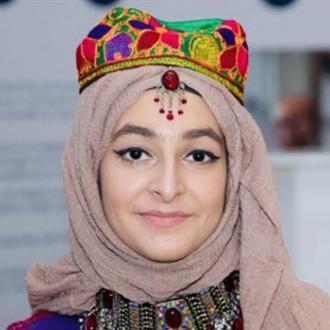
"I have a lot of memories of studying at Brunel, such as being part of the Afghan Society, and met lots of amazing people during the years." - Ariana Abawe

"We have the luxury of having a dedicated newsroom, radio suites and private editing suites at our disposal" - Amalie Henden
"I enjoyed my three years at Brunel immensely - and would return for another helping in a heartbeat, had the staff and course not helped me walk into such a staggeringly good job" - Aaron Brown
"I have a lot of memories of studying at Brunel, such as being part of the Afghan Society, and met lots of amazing people during the years." - Ariana Abawe
You can explore our campus and facilities for yourself by taking our virtual tour.
Course content
Journalism (Communications) BA is an opportunity to acquire not only an understanding of journalism and communications, but also the skills needed to practice as a journalist and the technical know-how to deliver news stories in a variety of media.
Compulsory
- SC1603 - Contemporary Challenges
This module provides hands-on experience of how social and political science operates outside the university, focusing on Contemporary Challenges. Over ten weeks, you will work in small groups on applied research addressing real-world social, political, and institutional problems. The emphasis is on learning by doing, supported by mentoring, methods training, professional exposure, and structured reflection on skills development.
- SC1601 - Fundamentals of the Social Sciences
This module will introduce you to key concepts, theories, thinkers and approaches in the social and political sciences and history. You will also learn the techniques used by a range of disciplines within the social and political sciences and history for gaining and validating knowledge of the social and political world.
- SC1604 - Special Subjects A
In this module, you get to dive deep into your own area of study and experience the full range of subjects taught by Brunel Social and Political Sciences. As part of the module, you’ll take three classes – at least one from your degree subject, with the others chosen from across the department. Classes cover a huge range of topics, from media production to African history, crime investigation to the climate crisis – so you can gain new skills, explore pressing problems, and follow where your curiosity leads you.
- SC1605 - Special Subjects B
In this module, you get to dive deep into your own area of study and experience the full range of subjects taught by Brunel Social and Political Sciences. As part of the module, you’ll take three classes - at least one from your degree subject, with the others chosen from across the department. Classes cover a huge range of topics, from media production to African history, crime investigation to the climate crisis - so you can gain new skills, explore pressing problems, and follow where your curiosity leads you.
Compulsory
- CO2605 - Researching Your World
This module provides an advanced understanding of research methodologies, with a particular focus on data analysis. Equipping students with an understanding and appreciation of the important theoretical paradigms that underpin qualitative and quantitative social and communications research traditions. Furnishing students with the tools and skills required to conduct and evaluate their own empirical social and communications research.
- CO2608 - Global Communication
On this module, students will examine the ways in which the globalisation of communication has transformed social, political and economic relations.
- JR2615 - Media Law, Ethics and Regulation
This module will develop an insightful working knowledge and critical appreciation of law and regulation necessary to practise professional journalism. Students will learn how to craft news reports within appropriate legal and ethical frameworks and navigate the potential conflicts and pressures journalists can face. Students will also gain an understanding of the law, court processes, and the hierarchy of the courts as they affect professional journalists.
- JR2616 - Crime and Court Reporting
- This module will develop proficiencies and competence from reporting in different courts, both Magistrates and Crown Court.
- It will develop an insightful working knowledge and critical appreciation of the law and legislation necessary to practice professional journalism.
- Students will be able to craft news reports within appropriate legal and ethical frameworks and navigate the potential conflicts and pressures journalists can be subjected to in their working lives.
- They will also gain an understanding of the law, court processes and the hierarchy of the courts as they affect professional journalists. In addition to this, the students will understand the sentencing guidelines and the category within the judicial sentencing guide that specific crimes are allocated.
- Students will also be taught how to work with and understand the sentencing guidelines and preempt the categories a crime will be placed in as outlined within the guidelines.
- A solid under of the Bail application and understanding of the appeals process both within the lower courts and the high court.
- JR2619 - Cross Platform Journalism
This module aims to look at how journalists report on stories and issues about politics, arts and culture, including the use of data for researching stories of these kinds. It will develop skills and advance learning techniques in video, written, audio and photojournalism, and layout and design, as well as using equipment and software to competently produce stories that cut across politics and arts-based content across all platforms.
Optional
- SO2611 - Digital Culture
This module considers the shape of new media technologies such as iPhones - has changed the basis of contemporary social life and culture. This module will examine some of the key transformations that are taking place through digital culture. Key aims of the module include:
- an introduction to debates on digital culture and society;#
- conceptual, analytical and practical resources to understand contemporary issues on digital culture;
- the use of case studies to focus on debates around digital culture;
- to consider the extent to which digital culture is changing social relations at local and global levels.
- SO2609 - Gender, Sexuality and Feminism
This module will introduce students to core ideas in feminism via the key concepts of gender and sexuality. It will develop students’ understandings of social structures, human cultures, and economic inequalities and political relationships. The course will offer theoretical tools and historical insights into gendered, feminised, and sexualised socio-cultural worlds.
- PP2627 - Issues in American PoliticsThis module aims to familiarise students with contemporary issues on the American political agenda and to demonstrate the ways in which politicians adapt policy stances and organisational and electoral strategies to accommodate change in the nature and direction of political debate. Students will be encouraged to adopt a more interdisciplinary and multidisciplinary approach to learning about American politics by examining social, moral, cultural and economic issues through a partisan political perspective.
- CO2607 - Popular Culture and Creative Industries
This module explores how meanings are developed through contemporary cultural representations, practices and processes, with a focus on creativity and the creative industries sector. It examines popular culture and the rise of the creative and cultural sector in late modernity drawing on relevant sociological, media and cultural studies debates and theories.
Compulsory
- JR5622 - Fake News, Images and Websites
The module aims to provide postgraduate students with a critical knowledge and understanding of how different disciplines have sought to make sense of political hoaxes, fake news or images and disinformation in as well as the contexts in which they flourish and are challenged.
- Journalism Dissertation
The dissertation aims to enable students to conduct independent research within their field. This will teach students to choose a feasible research project, locate it within relevant academic literature, and devise an appropriate analytical framework to construct arguments that can justify the research question has been answered. Individual supervision will support students in developing and executing the research project.
- Journalism Practice Project & Portfolio
The practice project aims to extend students’ understanding of journalism practice and principles through the planning and execution of a mini-portfolio that aims to enable students to begin to develop specialisms. It enables students to apply editorial judgement in the selection of stories, the target audience, and the approach taken and the preferred medium, and to recognise and employ ethical and legal knowledge in researching and reporting.
Optional
- CO3621 - Political and Strategic Communication
The module aims to develop students' ability to apply strategic thinking to campaign planning while providing a strong theoretical understanding of political and strategic communication across various contexts. Students will also learn to trace changes and continuities in communication technologies and practices over time.
- CO3617 - Digital Media, Social Movements and Change
This module gives you an in‑depth, critical understanding of how social movements emerge, succeed or fail to create social or political change, using real‑world cases to explore media tools, leadership, collective identity and governmental or international responses. You’ll build strategic thinking by analysing how historical and contemporary movements organise, mobilise and coordinate in the digital age.
- CO3xxD - Politics and Digital Cultures
- JR3xxA - AI for Journalists, Campaigners and Activists
The module aims to prepare students for the changing nature of news and journalism, campaigning and activism as professionals increasingly appropriate and adapt AI to the workplace. It does so through an engagement with some of the key theoretical debates about the nature of the changing human-machine relationships, the legal and ethical issues arising, and the implications for notions of professionalisation and automation. The practical workshops expose students to a series of case studies and to working with some of the key tools and techniques to identify AI-generated images, check the veracity of machine-generated outputs by tracking them back to the source and identify gaps in news or campaigning materials
- CO3620 - Media Production as Activism
This module will enable students to develop a broad range of practical skills by using creative practice to respond to, critique and challenge social issues. It will foreground the role of the media in bringing together theory and practice, and in mobilising practitioners and communities around social and political issues. Through a range of local, national and international examples, both past and present, the module will enable students to understand the role of the media as a site of struggle and as a form of creative resistance. Students will develop a high-level knowledge of key concepts such as ‘cultural identity’, ‘resistance’ and ‘radical hope’ and how they connect with the theory and practice of media activism. The module will engage with postcolonial scholarship on media and activism and postcolonial activist media practice. The limitations and possibilities of media as a site of resistance will be evaluated.
- PP3623 - Media, Politics & Power in America
This module seeks to familiarise students with the contemporary issues agenda in American politics. It seeks to demonstrate the ways in which politicians and institutions adapt policy stances and organisational strategies to accommodate changes in the nature, content and direction of political debate.
- PP3629 - European Union Politics: Problems and ProspectsIn this module students will discuss the development and functioning of the EU from its inception to the present day and be introduced to and learn to evaluate a range of theoretical perspectives on the EU’s creation, development and functioning. Students will examine a range of political problems in the European integration process, such as legitimacy, domestic and social impact, institutional and policy reform, enlargement, and future directions.
- PP3634 - Public Policy Analysis
How do governments make public policy? Why do public policies vary across countries? How can public policy be analysed? These are the questions that will be explored in this module. The module will provide the participants with a strong theoretical foundation for analysing public policy and skills to communicate the analyses to non-academic stakeholders in public policy.
- SO3625 - Cities, Culture and Social Change
This module introduces you to urban sociology and builds your understanding of how cities develop, how they’re lived in and how they’re represented. You’ll explore the relationship between space, culture and social life in contemporary cities, using theoretical tools and practical examples to bring those ideas to life.
This course can be studied undefined undefined, starting in undefined.
Please note that all modules are subject to change.
Careers and your future
The combination of practical skills in journalism and rigorous academic study of communication will equip you for a range of careers including as a general reporter or arts/culture correspondent or as public relations officer or communication officer. Career options such as marketing, public relations or event management are possible.
UK entry requirements
2026/7 entry
Please check our Admissions pages for more information on other factors we use to assess applicants as well as our full GCSE requirements and accepted equivalencies in place of GCSEs.
A minimum of five GCSEs (grade C/4 or above) are required, including GCSE English Language (grade C/4) or GCSE English Literature (grade B/5)
Standard Offer: GCE A level BBB
Contextual Offer: GCE A level BCC
We apply a contextual admissions process for UK undergraduate applicants who meet one or more of our contextual markers – please see our contextual admissions page for more information.
Standard Offer: BTEC Level 3 National Extended Diploma DDM in any subject
Contextual Offer: BTEC Level 3 National Extended Diploma DMM in any subject
We apply a contextual admissions process for UK undergraduate applicants who meet one or more of our contextual markers – please see our contextual admissions page for more information.
Standard Offer: BTEC Level 3 National Diploma DM in any subject and an A Level grade B
Contextual Offer: BTEC Level 3 National Diploma MM in any subject and an A Level grade B
We apply a contextual admissions process for UK undergraduate applicants who meet one or more of our contextual markers – please see our contextual admissions page for more information.
Standard Offer: BTEC Level 3 National Extended Certificate Merit in any subject, with A level grades BB
Contextual Offer: BTEC Level 3 National Extended Certificate Merit in any subject, with A level grades BC
We apply a contextual admissions process for UK undergraduate applicants who meet one or more of our contextual markers – please see our contextual admissions page for more information.
Standard Offer: International Baccalaureate Diploma 30 points. GCSE English equivalent SL 5 or HL 4
Contextual Offer: International Baccalaureate Diploma 28 points. GCSE English equivalent SL 5 or HL 4
We apply a contextual admissions process for UK undergraduate applicants who meet one or more of our contextual markers – please see our contextual admissions page for more information.
Standard Offer: Obtain a minimum of 120 tariff points in the Access to HE Diploma with 45 credits at Level 3 in any subject
Contextual Offer: Obtain a minimum of 104 tariff points in the Access to HE Diploma with 45 credits at Level 3 in any subject
We apply a contextual admissions process for UK undergraduate applicants who meet one or more of our contextual markers – please see our contextual admissions page for more information.
Merit overall in any subject
If your qualification isn't listed above, please contact the Admissions Office by emailing admissions@brunel.ac.uk or call +44 (0)1895 265265 to check whether it's accepted and to find out what a typical offer might be.
Brunel's committed to raising the aspirations of our applicants and students. We'll fully review your UCAS application and, where we’re able to offer a place, this will be personalised to you based on your application and education journey.
Please check our Admissions pages for more information on other factors we use to assess applicants, as well as our full GCSE requirements and accepted equivalencies in place of GCSEs.
International entry requirements
If you require a Tier 4 visa to study in the UK, you must prove knowledge of the English language so that we can issue you a Certificate of Acceptance for Study (CAS). To do this, you will need an IELTS for UKVI or Trinity SELT test pass gained from a test centre approved by UK Visas and Immigration (UKVI) and on the Secure English Language Testing (SELT) list. This must have been taken and passed within two years from the date the CAS is made.
English language requirements
- IELTS: 6.5 (min 5.5 in all areas)
- Pearson: 59 (59 in all subscores)
- BrunELT: 6.5 (min 5.5 in all areas)
- TOEFL: 5 (min 4 in all subscores)
You can find out more about the qualifications we accept on our English Language Requirements page.
Should you wish to take a pre-sessional English course to improve your English prior to starting your degree course, you must sit the test at an approved SELT provider for the same reason. We offer our own BrunELT English test and have pre-sessional English language courses for students who do not meet requirements or who wish to improve their English. You can find out more information on English courses and test options through our Brunel Language Centre.
Please check our Admissions pages for more information on other factors we use to assess applicants. This information is for guidance only and each application is assessed on a case-by-case basis. Entry requirements are subject to review, and may change.
Fees and funding
2027/28 entry
UK
£10,050 full-time
International
£17,920 full-time
Fees quoted are per year and may be subject to an annual increase. Home undergraduate student fees are regulated and are currently capped at £10,050 per year; any changes will be subject to changes in government policy.
For the 2027/28 academic year, tuition fees for home students will be £10,050, subject to Parliamentary approval.
In England and Wales, tuition fees for home undergraduate students are subject to the Government fee cap.
From 2028 onwards, the fee cap is expected to rise annually in line with inflation. This means your tuition fees in future years may increase to reflect these changes.
International fees may change annually, by no more than 5% or RPI (Retail Price Index), whichever is the greater.
Find out more information about placement year fees or any additional course-related costs.
See our fees and funding page for full details of undergraduate scholarships available to Brunel applicants.
Please refer to the scholarships pages to view discounts available to eligible EU undergraduate applicants.
Teaching and learning
You'll be taught by world-leading experts in your field of study, and have the opportunity to interact with fellow students on London’s leading campus University.
Your programme will consist of a variety of learning and studying activities, including lectures, seminars and discussions. Students will study six modules during two terms across the academic year (4 modules and a dissertation in the third year). Each module will have on average two-to-three hours in person contact time per week in lectures, seminars and workshops in the teaching terms. There'll also be the opportunity for a further six hours per week to seek guidance during module lecturers’ feedback and consultation hours. Additionally, students will be able to seek support in individual meetings with their personal tutors, both on campus and online. There'll also be regular cohort meetings and student society events, at both programme and departmental levels. Field trips and excursions to support students’ learning will be organised throughout the year.
All lectures, seminars, cohort meetings and other social activities will occur in person on the Brunel campus. It is expected that students will regularly attend these events, as sustained engagement with a learning community is a central dimension of the Brunel experience. Online provision of some activities will be made available when it is appropriate to the learning outcomes of your programme.
Students are strongly advised to purchase core texts from module reading lists, although copies are also available via Brunel Library.
Access to a laptop or desktop PC is required for joining online activities, completing coursework and digital exams, and a minimum specification can be found here.
We have computers available across campus for your use and laptop loan schemes to support you through your studies. You can find out more here.
You'll be taught through a mixture of lectures, seminars, workshops, practical classes and one-to-one tutorials by experienced senior journalists and academic staff with international reputations for research and many of whom serve as consultants to government departments, think tanks and NGOs.
You'll learn the fundamental skills of journalism in our new state-of-the-art, multi-platform digital newsroom with broadcast facilities, using industry-standard hardware and software including Adobe editing suit.
Throughout the degree, you’ll also get to hear from alumni and guest speakers about what it’s really like to work in journalism. Previous representatives from regional papers, as well as the BBC and The Guardian, have helped to provide further insight into the industry.
The proximity of the Brunel campus to central London’s world-class research facilities, the British Library, Westminster, Wembley Stadium and the West End with its theatres, clubs and festivals (film and fashion).
Should you need non-academic support during your time at Brunel, the Student Support and Welfare Team are here to help.
Assessment and feedback
You will be assessed by a combination of practical work, coursework and exams but much of your time will be spent going out collecting and videoing for news stories, in private study and reading. In the process, you will build up a portfolio of practical work you can show prospective employers and in interviews be able to talk competently about the political issues of the day. In your final year you will research and create a practical project and a final dissertation on a subject of your choice under the guidance of supervisors. Many students value the unique experience and opportunities to become authorities on a particular area of journalism.
Read our guide on how to avoid plagiarism in your assessments at Brunel.
