
Overview
Brunel's Advanced Mechanical Engineering MSc will develop your knowledge, understanding, and skills in subjects related to the discipline, with close links to both existing MEng courses and significant research in the College. The main aim of this programme is to create Master’s degree graduates with qualities and transferable skills for challenging employment in mechanical engineering industries. The elective themes of Fluids Engineering and Solid & Structural Mechanics will provide you with ideal skills to solve real-world engineering problems, including elements of robotics, artificial intelligence, materials and manufacturing, engineering design and sustainable energy technologies. You will have the independent learning ability required for continuing professional development and acquiring new skills at a high level. The programme is designed to help you to develop themes of expertise in particular subject areas, mainly through the group project and dissertation. The course also provides a useful introduction should you wish to study for a higher degree.
Brunel's expert academics are conducting some of the latest research in the field and this feeds directly into the course teaching. They collaborate with major oil companies, vehicle manufacturers, and leading industrial firms and government laboratories. We also work with universities around the world.
You'll have access to our well-equipped laboratories with dedicated areas for fluid mechanics, internal combustion engines, vibrations and structural testing, and will use our high-tech computing facilities for simulation and modelling of fluids and structural engineering research.
Our advanced mechanical engineering course is accredited by the Institution of Mechanical Engineers (IMechE) and is studied full-time over one year.


"Make sure you seize the opportunity to make your experience personal, get immersed in Brunel beyond the academics. " - Kennedy Ameh
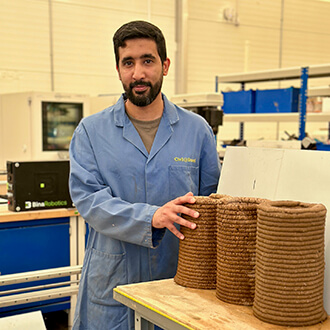
"My passion for robotics and sustainable technology really came to life during my PhD at Brunel, where I focused on the intersection of advancing 3D printing and sustainable construction materials." - Dr Abdulrahman Albar
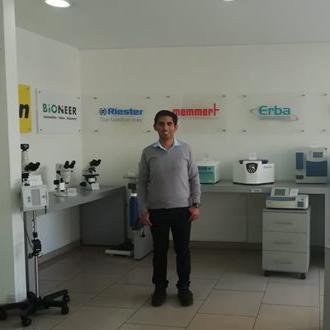
"As an international student, it was really important for me to study in a secure and comfortable place. My professors were always open to answer questions and guide me through my learning process." - Santiago Chaglla

"Recognise your skill set, no matter what course you are doing, work out how you are translating that course to real life business." - Sachin Patel
"Make sure you seize the opportunity to make your experience personal, get immersed in Brunel beyond the academics. " - Kennedy Ameh
"My passion for robotics and sustainable technology really came to life during my PhD at Brunel, where I focused on the intersection of advancing 3D printing and sustainable construction materials." - Dr Abdulrahman Albar
You can explore our campus and facilities for yourself by taking our virtual tour.
Course content
In this postgraduate engineering degree, you will study the taught modules in terms one and two, each being 11 weeks of full-time study (10 teaching weeks plus one reading week in the middle of a term). Four modules are compulsory for both themes. In addition, you will choose and study three out of four modules in the elected theme, either Fluids Engineering or Solid and Structural Mechanics, as shown below. You then move on to your individual project, the final compulsory module, and prepare your dissertation.
Theme 1 – Fluids Engineering (to choose and study 3 modules)
- Advanced Thermofluids
- Energy Conversion Technologies
- Machine Learning for Fluids Engineering
- Principles of Heat Transfer
Theme 2 – Solid and Structural Mechanics (to choose and study 3 modules)
- Additive Manufacturing and Advanced CAD
- Advanced Materials and Manufacturing
- Advanced Solid Body Mechanics & FEA
- Dynamics and Modal Analysis
Compulsory
- ME5542 - Advanced Modelling and Design
- To provide students with the ability to employ advanced numerical models for the analysis of complex problems in engineering.
- To reinforce the awareness of advances in - and constraints on - engineering design.
- ME5500 - Dissertation
The dissertation aims for students to complete and report on a soundly executed and constructed programme of investigation, analysis and research containing original work.
- ME5692 - Mechanical Engineering Group Project
Students work nominally in groups of 3-5 to prepare a novel design for a particular mechanical engineering system or product. They will be required to work from an initial design brief to produce the product design specification and the necessary planning and management strategies. Using these procedures students will learn and apply the techniques and skills necessary to carry out the design of a multidisciplinary or cross-disciplinary system or product. As part of the outcome of this work they will be required to produce a final technical specification including cost justification. They will also be expected to provide performance justification, the specification of appropriate manufacturing techniques and provision for accommodating environmental effects.
- ME5694 - Robotics and Automation
- Building upon the introductory principles of actuation, sensing, and control methods.
- Providing advanced understanding of modelling and analysing methods in time and frequency domain.
- Providing advanced understanding of classical and modern control theories, and controller design methods.
- Providing advanced understanding of robot modelling overview including forward and inverse kinematics, and control methods
- ME5641 - Strategy and Business Planning
This modules provides concepts of business development (innovation, business and enterprise) and the links that exist at these levels. Students will develop the ability to critically conduct appraisals of investments, develop new products and business proposals and analyse organisational resources in order to grow businesses.
Optional
- ME5514 - Additive Manufacturing and Advanced CAD
- To learn the state of the art in advanced additive manufacturing, and its impact on manufacturing, industries, and the global market.
- To have knowledge of a range of additive manufacturing processes, capabilities and materials.
- To enable students with more advanced features of CAD.
- ME5689 - Advanced Materials and Manufacturing
- To provide a comprehensive understanding of properties of various types of materials choices for lightweight and high-performance structural design.
- To enable students to understand microstructure-property relationships in materials.
- To enable students to understand the manufacturing processes used for producing advanced mechanical engineering components.
- To introduce advanced manufacturing technologies for producing hybrid materials structures.
- To provide an understanding of full life cycle consideration in selection of materials for different applications.
- Hands-on experience in additive manufacturing and practical analysis of microstructure versus properties of materials.
- ME5691 - Advanced Solid Body Mechanics and FEA
This module will introduce students to the advanced principles of linear and nonlinear modelling of solids and structures and nonlinear finite element analysis (FEA). Students will also learn complex failure modes of solids and structures, including plastic collapse, fracture and buckling. Students will combine and compare numerical, experimental and analytical techniques for the nonlinear analysis of solids and structures up to failure.
- ME5693 - Advanced Thermofluids
- To introduce advanced simulation and modelling techniques for thermofluids.
- To introduce advanced experimental techniques for thermofluids.
- To develop the skills required to numerically solve engineering flow problems using advanced modelling techniques, analysing the results and then reporting the process and results.
- ME5557 - Dynamics and Modal Analysis
- To enable students to understand specialist topics in dynamics and modal analysis
- To introduce aspects related to experimental modal analysis
- To introduce topics in rigid multi-body dynamics
- ME5506 - Energy Conversion Technologies
- Demonstrate comprehensive knowledge and understanding of the advanced principles and practice of modern energy conversion technologies
- Demonstrate comprehensive knowledge and understanding of the processes for local energy conversion and utilisation in buildings.
- Systematically evaluate the appropriate techniques for the solution of engineering problems in this field, analyse, apply complex mathematical or technical solutions and physical principles.
- ME5515 - Machine Learning for Fluids Engineering
- To provide students with a solid foundation in Machine Learning (ML), including core concepts and the distinction between regression and classification models.
- To develop students’ understanding and implementation skills in Neural Networks (NN) and Deep Learning algorithms.
- To introduce the principles and practical use of Physics-Informed Neural Networks (PINNs) in solving a range of fluid mechanics problems.
- To equip students with a comprehensive understanding of Genetic Algorithms (GA) for global optimisation and their application to fluid flow and related engineering challenges.
- To explore the use of Genetic Algorithms as a Machine Learning technique for model training, feature selection, and evolving neural network architectures in fluid mechanics applications.
- ME5696 - Principles of Heat Transfer
- To demonstrate comprehensive knowledge and understanding of the advanced theory and practical concepts of single and two-phase heat transfer.
- To demonstrate comprehensive knowledge and understanding of the advanced analytical studies of heat transfer and apply this to heat transfer equipment.
- To demonstrate the awareness of current evolutions and developments in this field.
This course can be studied undefined undefined, starting in undefined.
This course has a placement option. Find out more about work placements available.
Please note that all modules are subject to change.
Read more about the structure of postgraduate degrees at Brunel
Careers and your future
Brunel’s MSc in Advanced Mechanical Engineering is designed to prepare you for success in high-demand mechanical engineering industries. Emphasising practical skills, advanced simulation tools, and real-world problem solving, the course enables you to take on challenging roles in sectors such as fluids engineering, structural engineering, energy, robotics and manufacturing. Through strong ties with industry partners and collaborative projects, you’ll gain valuable insights and hands-on experience. Whether you're aiming for a role in design engineering, systems development, or technical consultancy, Brunel’s career services and industrial network will support your transition into a rewarding, future-proof career.
The course provides a strong foundation for those aspiring to pursue research and academic careers. With a curriculum rooted in cutting-edge scientific principles and emerging technologies, this course fosters critical thinking, innovation and advanced problem-solving skills. You’ll have the opportunity to work alongside leading researchers on real-world engineering challenges and contribute to impactful projects. Graduates are well-positioned to continue to PhD studies or engage in research-intensive roles across academic institutions, national laboratories, or industrial R&D departments. Brunel’s research excellence and facilities give you the tools and mentorship to shape the future of mechanical engineering.
UK entry requirements
A 2:2 (or above) UK Honours degree or equivalent internationally recognised qualification in an Engineering (Mechanical, Aeronautical or Aerospace) or Technology discipline, Physics or Maths. Other subjects in a related area, including but not limited to physics and mathematics will be considered and assessed on an individual basis.
Entry to this programme requires all students who are not nationals of the European Economic Area (EEA) and have temporary immigration permission to remain in the UK to obtain an ATAS certificate. If you are made an offer to join this course and you are not an EEA national, you will be required to obtain an ATAS certificate as a condition of your offer.
Applicants who will need an Academic Technology Approval Scheme (ATAS) Certificate. To find out if you will need an ATAS certificate, please visit this webpage: https://www.gov.uk/guidance/find-out-if-you-require-an-atas-certificate#when-you-need-an-atas-certificate.
The deadline for Admissions to make offers to applicants who will require an ATAS certificate is 31st July 2026.
EU and International entry requirements
If you require a Tier 4 visa to study in the UK, you must prove knowledge of the English language so that we can issue you a Certificate of Acceptance for Study (CAS). To do this, you will need an IELTS for UKVI or Trinity SELT test pass gained from a test centre approved by UK Visas and Immigration (UKVI) and on the Secure English Language Testing (SELT) list. This must have been taken and passed within two years from the date the CAS is made.
English language requirements
- IELTS: 6 (min 5.5 in all areas)
- Pearson: 59 (59 in all sub scores)
- BrunELT: 58% (min 55% in all areas)
- TOEFL: 4.5 (min 4 in all sub scores)
You can find out more about the qualifications we accept on our English Language Requirements page.
Should you wish to take a pre-sessional English course to improve your English prior to starting your degree course, you must sit the test at an approved SELT provider for the same reason. We offer our own BrunELT English test and have pre-sessional English language courses for students who do not meet requirements or who wish to improve their English. You can find out more information on English courses and test options through our Brunel Language Centre.
Please check our Admissions pages for more information on other factors we use to assess applicants. This information is for guidance only and each application is assessed on a case-by-case basis. Entry requirements are subject to review, and may change.
Fees and funding
2026/27 entry
UK
£14,435 full-time
£1,385 placement year
International
£24,795 full-time
£1,385 placement year
More information on any additional course-related costs.
Fees quoted are per year and are subject to an annual increase.
See our fees and funding page for full details of postgraduate scholarships available to Brunel applicants.
Scholarships and bursaries
Teaching and learning
To ensure you receive the maximum support and have the greatest opportunity to reach your full potential the expectation is that you attend in-person all teaching activities including examinations that are scheduled on campus. This will be the majority of all activities. However, where for pedagogical reasons alternative methods of delivery are used for activities you'll be notified and expected to engage with the activity at the time of delivery.
Laboratory Support
For modules with practical learning content, these will be delivered in-person on campus in the laboratories.
Assessment
Traditional examinations will be taken in-person on campus.
Access to specialist software
You'll have access to relevant engineering software on campus. You're also able to install software on your own personal laptop and connect to the Brunel License server through a VPN connection. This provides continued access to all services.
Access to a laptop or desktop PC is required for joining online activities, completing coursework and digital exams, and a minimum specification can be found here.
We have computers available across campus for your use and laptop loan schemes to support you through your studies. You can find out more here.
Our advanced mechanical engineering degree is delivered by a passionate teaching team who specialise in a variety of mechanical engineering disciplines, and enhanced by industry professionals who are part of our extensive network of collaborative partners.
Study will combine lectures, seminars, tutorials, laboratory experiments, computer modelling sessions, independent research, self-study and individual project work. There will also be guest talks from industry experts.
Should you need any non-academic support during your time at Brunel, the Student Support and Welfare Team are here to help.
Assessment and feedback
Modules are assessed by assignment and/or examination. Your work will include written coursework, technical project reports, design project work, research assignments, an individual project and your dissertation.
Read our guide on how to avoid plagiarism in your assessments at Brunel.
