
Overview
2nd in London for Politics - National Student Survey 2025 | 1st in London for Sociology and 4th in the UK - National Student Survey 2025
Politics and Sociology at Brunel is a dynamic combination of high level study in both subjects. Your politics studies will help you address critical questions like: Who has political power? Why do they have it? And in whose interest do they exercise it?
Meanwhile, your studies in sociology will look at subjects like sociological theory, social identities, the sociology of everyday life and the changing nature of modern societies. You’ll be studying people, societies and how people live, and on the other how they are governed or want to be governed.
Both subjects will help to demonstrate your intellectual acumen and understanding of world affairs and real life issues, which will be an asset in so many fields of work.
Whether you’re studying modern world politics or the development of social change and transformations, you’ll not just learn about them, you’ll be analysing them using the tools of political science and social science to help deepen your understanding and critical thinking.
Opt for a placement year and you'll gain valuable experience to help give you the edge in the job market when you come to graduate. Past students have secured placements in the Home Office, HM Treasury, the House of Commons, and the Competition Commission, but the list of possibilities is endless.
It’s a competitive world out there, so you’ll get plenty of support from your lecturers and the University’s Professional Development Centre to help prepare you for your placement year and the world of work.
But why not increase your career options with an accredited journalism course, a free modern language course, or a social media internship? You can even opt to study part of your degree abroad in one of our partner universities in Europe, or participate in an exchange programme to China or the USA.
It’s all available at Brunel to help you make a difference in the world – now and in the future.
Brunel graduates of this subject enter diverse careers. Some go into politics and the civil service, some are at GCHQ and military intelligence, and some go on to further study or into research.
Others go into the public sector – the NHS, social or care work, education or in local authorities, while others go into the private sector working for international banks, business consultancy, law, NGOs, the media and marketing. The opportunities are endless.
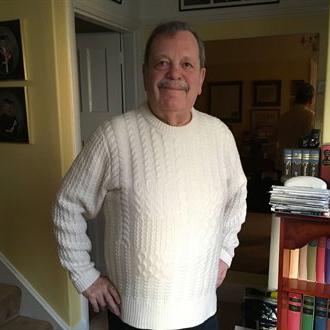
"At an Open Day, I met some superb minds who encouraged me to come to Brunel. I felt comfortable, even though I would be more than 40 years older than most new students" - Dr John Matlin .

"Studying at Brunel helped me develop a deeper understanding of my passion in politics and mental health." - Angela Awuah

"Brunel helped me to develop an interest in working as a part time Community Worker" - Suk Yan Agnes Shuen

"Without Brunel offering the opportunity to do a placement and do it at Brunel, the trajectory I am on would certainly be very different." - Ali Hussain
"At an Open Day, I met some superb minds who encouraged me to come to Brunel. I felt comfortable, even though I would be more than 40 years older than most new students" - Dr John Matlin .
"Studying at Brunel helped me develop a deeper understanding of my passion in politics and mental health." - Angela Awuah
You can explore our campus and facilities for yourself by taking our virtual tour.
Course content
The course content is made up of a variety of subject area strands that can be studied across all three years of the programme. At every level, there are modules relating to each strand. After taking the compulsory modules in the first year, you can choose to study across a range of strands, or specialise in particular strands. Below is a list of the strands:
Politics (compulsory elements): This strand equips you with tools to understand contemporary politics at every level. It will focus on political thought as well the differences between diverse political systems (including Britain). You will also you develop the tools for sustained research in political science. This will include research design, qualitative methods, such as interview techniques, as well as quantitative analysis of, for example, polling data.
Politics (elective elements): This strand builds on the strand above. You will be able to study the policies and political systems of other countries, political behaviour and elections and issues of race, culture, identity and public policy.
Sociology: This strand focuses on our understanding of human behaviour. It places a special emphasis on culture, society and media as well as the social, economic and political forces that drive human interaction at all levels.
Compulsory
- SC1603 - Contemporary Challenges
This module provides hands-on experience of how social and political science operates outside the university, focusing on Contemporary Challenges. Over ten weeks, you will work in small groups on applied research addressing real-world social, political, and institutional problems. The emphasis is on learning by doing, supported by mentoring, methods training, professional exposure, and structured reflection on skills development.
- SC1601 - Fundamentals of the Social Sciences
This module will introduce you to key concepts, theories, thinkers and approaches in the social and political sciences and history. You will also learn the techniques used by a range of disciplines within the social and political sciences and history for gaining and validating knowledge of the social and political world.
- SC1604 - Special Subjects A
In this module, you get to dive deep into your own area of study and experience the full range of subjects taught by Brunel Social and Political Sciences. As part of the module, you’ll take three classes – at least one from your degree subject, with the others chosen from across the department. Classes cover a huge range of topics, from media production to African history, crime investigation to the climate crisis – so you can gain new skills, explore pressing problems, and follow where your curiosity leads you.
- SC1605 - Special Subjects B
In this module, you get to dive deep into your own area of study and experience the full range of subjects taught by Brunel Social and Political Sciences. As part of the module, you’ll take three classes - at least one from your degree subject, with the others chosen from across the department. Classes cover a huge range of topics, from media production to African history, crime investigation to the climate crisis - so you can gain new skills, explore pressing problems, and follow where your curiosity leads you.
Optional
- PP2636 - Climate PoliticsThis module aims to enable students to attain a comprehensive understanding of key concepts and theories in the politics and political economy of climate change. It will provide students with resources to assist them in making informed judgments on a range of questions and debates.
- SO2610 - Colonialism, Migration and Global Racism
- SA2622 - Culture, Education and Learning
This module explores key theoretical issues in the cross‑cultural study of education, examining how culture shapes learning and how educational practices, in turn, influence social and cultural life. It develops your ability to understand these processes ethnographically and highlights the value of a comparative approach to studying education across different contexts.
- SO2611 - Digital Culture
This module considers the shape of new media technologies such as iPhones - has changed the basis of contemporary social life and culture. This module will examine some of the key transformations that are taking place through digital culture. Key aims of the module include:
- an introduction to debates on digital culture and society;#
- conceptual, analytical and practical resources to understand contemporary issues on digital culture;
- the use of case studies to focus on debates around digital culture;
- to consider the extent to which digital culture is changing social relations at local and global levels.
- PP2633 - Explaining Politics: Quantitative Political Science in Practice
This modules aims to provide students with the skills to analyse political data and introduce methods for gathering and understanding data. Students will be encouraged to critically engage with the use of existing statistical data in political discourse and demonstrate the importance of quantitative analysis in domestic and international politics.
- PP2631 - From Student to Scholar: Successful Research in the Modern World
Preparing students for their final year dissertation begins in the second year in From Student to Scholar: Successful Research in the Modern World. This module introduces students to a variety of analytical perspectives, research methods and techniques used in designing a research project in politics, international relations and international politics.
- SO2609 - Gender, Sexuality and Feminism
- CO2608 - Global Communication
On this module, students will examine the ways in which the globalisation of communication has transformed social, political and economic relations.
- PP2627 - Issues in American PoliticsThis module aims to familiarise students with contemporary issues on the American political agenda and to demonstrate the ways in which politicians adapt policy stances and organisational and electoral strategies to accommodate change in the nature and direction of political debate. Students will be encouraged to adopt a more interdisciplinary and multidisciplinary approach to learning about American politics by examining social, moral, cultural and economic issues through a partisan political perspective.
- SA2624 - Middle East: Societies, Religion and Politics
- PX2XXX - Military History and Strategic Thought
- PP2628 - National Security IntelligenceStudents will receive an introduction and overview to the field of national security intelligence and examine in greater detail intelligence collection, analysis, counterintelligence, covert action, and other selected topics.
- PP26XX - Plato’s Republic
- CO2607 - Popular Culture and Creative Industries
This module explores how meanings are developed through contemporary cultural representations, practices and processes, with a focus on creativity and the creative industries sector. It examines popular culture and the rise of the creative and cultural sector in late modernity drawing on relevant sociological, media and cultural studies debates and theories.
- CO2605 - Researching Your World
This module provides an advanced understanding of research methodologies, with a particular focus on data analysis. Equipping students with an understanding and appreciation of the important theoretical paradigms that underpin qualitative and quantitative social and communications research traditions. Furnishing students with the tools and skills required to conduct and evaluate their own empirical social and communications research.
- SO2614 - Sociology of Everyday Life: Issues in Contemporary Culture
In this module you will consider the meanings of ordinary, ‘everyday’ processes and actions in society, by examining what everyday life consists of and the relevant academic debates and theories around it. The module will encourage you to reflect on your own everyday life through the lense of power, identity and gender in wider socio-cultural contexts.
- SA2625 - South Asia: Cultures, Societies and Development
- PP2629 - The State and Revolution
- PP2638 - Theories of International Relations
This module introduces students to major theoretical approaches in the study of International Relations. These theories are employed to examine and understand contemporary actors in world politics such as states, international organisations, non-governmental actors as well as major issues and problems such as war, terrorism, climate change or nuclear proliferation. The aim is to give students a critical understanding of IR theory
Compulsory
- SC3602 - Advanced Research Skills for Social and Political Sciences
This module introduces you to the research and writing process for your dissertation or Major Final Project, helping you build the reading, writing and analytical skills you’ll rely on throughout. It also guides you through the techniques for designing and carrying out a research project in your discipline, encouraging you to engage critically with the topic you choose.
- SC3601 - Dissertation
To develop students’ abilities to plan, design and execute a research project in the subject area of their degree programme, to communicate their ideas and critically evaluate the success of their project.
Optional
- SO3614 - Apocalypse! Crisis and Society
- SO3625 - Cities, Culture and Social Change
This module introduces you to urban sociology and builds your understanding of how cities develop, how they’re lived in and how they’re represented. You’ll explore the relationship between space, culture and social life in contemporary cities, using theoretical tools and practical examples to bring those ideas to life.
- CO3617 - Digital Media, Social Movements and Change
- SA3631 - Environment and Sustainability
- PP3629 - European Union Politics: Problems and ProspectsIn this module students will discuss the development and functioning of the EU from its inception to the present day and be introduced to and learn to evaluate a range of theoretical perspectives on the EU’s creation, development and functioning. Students will examine a range of political problems in the European integration process, such as legitimacy, domestic and social impact, institutional and policy reform, enlargement, and future directions.
- SO3615 - Global Migration
Equips students with an understanding of the key concepts in global migration including the causes and consequences of migration, national and international responses to migration and the diversity of migrant flows within a global context, using cases from both Global North and Global South contexts.
- PP3xxA - Great Power Competition: Russia, China and the USA
- PP5628 - International Development: Politics and Policy
- SO3617 - Lawyers, Guns and Money: Making the Modern World SystemThis module aims to explore issues raised by historical and political sociology regarding the development of the modern world-system. In particular the course will focus upon the rise to dominance of Europe in the building of the modern world-system and the explanations offered for this.
- PP3631 - Marx and the Critique of Political EconomyThis module will introduce you to the work of Marx and his collaborator Engels and assist in developing a critical understanding of Marx’s major work Capital: A Critique of Political Economy. You will engage with primary sources in political thought.
- PP3623 - Media, Politics & Power in America
This module seeks to familiarise students with the contemporary issues agenda in American politics. It seeks to demonstrate the ways in which politicians and institutions adapt policy stances and organisational strategies to accommodate changes in the nature, content and direction of political debate.
- GY3610 - Modern Slavery and Human Trafficking
- PP3621 - Parliamentary Studies
This module aims to provide students with a detailed understanding of the UK Parliament by examining its structure, internal processes, and different committees, and to give students an understanding how to transfer the skills they have acquired when thinking about social, historical and political issues to practical ongoing issues that parliament is encountering in its committees or in legislation it is devising.
- CO3xxD - Politics and Digital Cultures
- PP3640 - Political Economy of the Changing World Order
- CO3xxC - Political Satire and Comedy
This module provides students with a sophisticated and critical knowledge and understanding of the relationships between politics, satire and comedy. These relationships are explored in relation to their institutional, historical and social contexts and their textual conventions. The module explores political satire and comedy as it exists in a broad range of texts (e.g. television, cartoons, live stand-up and digital comedy). The module equips students with appreciation and understanding of the continuities and changes in political satire and comedy in national and global political systems and international relations, and its relationship with concepts of political power and hegemony.
- PP3634 - Public Policy Analysis
How do governments make public policy? Why do public policies vary across countries? How can public policy be analysed? These are the questions that will be explored in this module. The module will provide the participants with a strong theoretical foundation for analysing public policy and skills to communicate the analyses to non-academic stakeholders in public policy.
- PP3622 - Terrorism and CounterterrorismThis module aims to address a series of empirical questions regarding the causes, conduct, and consequences of campaigns of terrorism in the modern world. You will gain an understanding of a series of key debates in the social science literature.
- PX3626 - The Arab-Israeli Conflict
This course can be studied undefined undefined, starting in undefined.
This course has a placement option. Find out more about work placements available.
Please note that all modules are subject to change.
Careers and your future
Past students have gone on to further training in law, accountancy, personnel management and other graduate degrees. They have joined the Civil Service (fast stream), have gone into publishing, journalism and the media including BBC Radio and Granada Television, have entered major financial and accountancy firms such as PriceWaterhouseCoopers and Lloyds Bowmaker Finance Group, and have entered the fields of management and marketing with firms such as Ford, Metal Box and Rank Xerox.
Politics students benefit from excellent career prospects – graduates have gone on to become politicians, have joined local and national government organisations, or work in the private sector.
Sociologists are in increasing demand in many sectors in social welfare and policy, in local government and administration (including lobbying, campaigning and fundraising), in medicine, in education and research, and in industry. If you are thinking of a career in any of these fields, it may also be possible to select work experience in these areas. There are also openings available in business, particularly marketing and advertising, management, media, and recruitment, as well as computing, consultancy and teaching.
UK entry requirements
2026/7 entry
Entry requirements may be reduced during Clearing, subject to the number of places available - please contact us during Clearing for the latest information.
Please check our Admissions pages for more information on other factors we use to assess applicants as well as our full GCSE requirements and accepted equivalencies in place of GCSEs.
A minimum of five GCSEs (grade C/4 or above) are required, including GCSE English Language (grade C/4) or GCSE English Literature (grade B/5)
Standard Offer: GCE A level BBB
Contextual Offer: GCE A level BCC
We apply a contextual admissions process for UK undergraduate applicants who meet one or more of our contextual markers – please see our contextual admissions page for more information.
Standard Offer: BTEC Level 3 National Extended Diploma DDM in any subject
Contextual Offer: BTEC Level 3 National Extended Diploma DMM in any subject
We apply a contextual admissions process for UK undergraduate applicants who meet one or more of our contextual markers – please see our contextual admissions page for more information.
Standard Offer: BTEC Level 3 National Diploma DM in any subject and an A Level grade B
Contextual Offer: BTEC Level 3 National Diploma MM in any subject and an A Level grade B
We apply a contextual admissions process for UK undergraduate applicants who meet one or more of our contextual markers – please see our contextual admissions page for more information.
Standard Offer: BTEC Level 3 National Extended Certificate Merit in any subject, with A level grades BB
Contextual Offer: BTEC Level 3 National Extended Certificate Merit in any subject, with A level grades BC
We apply a contextual admissions process for UK undergraduate applicants who meet one or more of our contextual markers – please see our contextual admissions page for more information.
Standard Offer: International Baccalaureate Diploma 30 points. GCSE English equivalent SL 5 or HL 4
Contextual Offer: International Baccalaureate Diploma 28 points. GCSE English equivalent SL 5 or HL 4
We apply a contextual admissions process for UK undergraduate applicants who meet one or more of our contextual markers – please see our contextual admissions page for more information.
Standard Offer: Obtain a minimum of 120 tariff points in the Access to HE Diploma with 45 credits at Level 3 in any subject
Contextual Offer: Obtain a minimum of 104 tariff points in the Access to HE Diploma with 45 credits at Level 3 in any subject
We apply a contextual admissions process for UK undergraduate applicants who meet one or more of our contextual markers – please see our contextual admissions page for more information.
Merit overall in any subject
If your qualification isn't listed above, please contact the Admissions Office by emailing admissions@brunel.ac.uk or call +44 (0)1895 265265 to check whether it's accepted and to find out what a typical offer might be.
Brunel's committed to raising the aspirations of our applicants and students. We'll fully review your UCAS application and, where we’re able to offer a place, this will be personalised to you based on your application and education journey.
Please check our Admissions pages for more information on other factors we use to assess applicants, as well as our full GCSE requirements and accepted equivalencies in place of GCSEs.
International entry requirements
If you require a Tier 4 visa to study in the UK, you must prove knowledge of the English language so that we can issue you a Certificate of Acceptance for Study (CAS). To do this, you will need an IELTS for UKVI or Trinity SELT test pass gained from a test centre approved by UK Visas and Immigration (UKVI) and on the Secure English Language Testing (SELT) list. This must have been taken and passed within two years from the date the CAS is made.
English language requirements
- IELTS: 6.5 (min 5.5 in all areas)
- Pearson: 59 (59 in all subscores)
- BrunELT: 6.5 (min 5.5 in all areas)
- TOEFL: 5 (min 4 in all subscores)
You can find out more about the qualifications we accept on our English Language Requirements page.
Should you wish to take a pre-sessional English course to improve your English prior to starting your degree course, you must sit the test at an approved SELT provider for the same reason. We offer our own BrunELT English test and have pre-sessional English language courses for students who do not meet requirements or who wish to improve their English. You can find out more information on English courses and test options through our Brunel Language Centre.
Please check our Admissions pages for more information on other factors we use to assess applicants. This information is for guidance only and each application is assessed on a case-by-case basis. Entry requirements are subject to review, and may change.
Fees and funding
2026/27 entry
UK
£9,790 full-time
£1,955 placement year
International
£17,400 full-time
£1,955 placement year
Fees quoted are per year and may be subject to an annual increase. Home undergraduate student fees are regulated and are currently capped at £9,535 per year; any changes will be subject to changes in government policy.
For the 2026/27 academic year, tuition fees for home students will be £9,790, subject to Parliamentary approval.
In England and Wales, tuition fees for home undergraduate students are subject to the Government fee cap. The Government has confirmed that this will be £9,790 for 2026/27 and £10,050 for 2027/28 (subject to Parliamentary approval).
From 2028 onwards, the fee cap is expected to rise annually in line with inflation. This means your tuition fees in future years may increase to reflect these changes.
International fees may change annually, by no more than 5% or RPI (Retail Price Index), whichever is the greater.
More information on any additional course-related costs.
See our fees and funding page for full details of undergraduate scholarships available to Brunel applicants.
Please refer to the scholarships pages to view discounts available to eligible EU undergraduate applicants.
Scholarships and bursaries
Teaching and learning
Assessment and feedback
You’ll be assessed by a combination of coursework and exams, but most of your time will be spent in private study and reading. In your final year you will produce a final dissertation on a politics or history subject of your choice under the guidance of a dissertation supervisor.
Read our guide on how to avoid plagiarism in your assessments at Brunel.
