
Tarryn is a Lecturer in Sport, Health and Exercise Science (Sport Development). Her research employs qualitative methodologies and focuses on third sector partnerships, organisational capacity, and capacity building. She has extensive experience in monitoring, evaluation and learning (MEL) and has established impactful partnerships with Sport for Development charities, International Federations and National Governing Bodies of sport across the UK and internationally. She received the Early Career Researcher of the Year Award (CHMLS) in 2026. Tarryn is the Director of Recruitment and Admissions for Sport, Health and Exercise Sciences and is a member of the Centre for Health and Wellbeing Across the Lifecourse. I AM CURRENTLY ADVERTISING FOR A FULLY FUNDED PHD STUDENT HERE: Capacity Building in Sport for Development: Contexts, Challenges and Change in East Africa - ESRC GRAND UNION DTP CDA
|
Sport for Development (SfD) is increasingly recognised as a mechanism for addressing social inequalities, promoting inclusion and supporting community development. SfD organisations can play a vital role in health and wellbeing outcomes, local empowerment and social cohesion, yet often operate in precarious, resource-constrained environments. Many face challenges such as unstable funding, high staff turnover and accountability pressures which place significant demands on capacity: including the systems, structures and resources that enable mission delivery and adaptive functioning. This PhD will explore how capacity is built, sustained and adapted within SfD organisations operating in East Africa as part of a multi-stakeholder initiative focused on education and sustainable livelihoods. The programme aims to address youth unemployment and education gaps by leveraging sport for skill development, employability and entrepreneurship. These efforts are designed to contribute to wider health and wellbeing outcomes for individuals and communities, aligned with the UN Sustainable Development Goals. The research will examine the contextual factors, mechanisms and outcomes that shape capacity building in SfD organisations, enabling them to deliver education and employability initiatives that also foster social inclusion and healthier futures. It will adopt a flexible qualitative or mixed-methods design, potentially employing participatory and creative approaches. It will hope to generate rich, context-sensitive evidence to advance theoretical understanding of capacity building and inform practice in SfD. |
Eligibility
We welcome applicants from a wide range of disciplinary backgrounds, including but not limited to sport for development, sport management, sociology, public health, international development, organisational studies and related fields. Experience or interest in qualitative research, participatory methods, and/or sport for development would be advantageous. Candidates should be motivated to work collaboratively with practitioners and communities, and be willing to undertake fieldwork in East Africa (Kenya, Madagascar and/or Rwanda)
This is a collaborative project with international Sport for Development charity, Laureus Sport for Good. Laureus aims to harness the power of sport to end violence, discrimination and inequality for young people and their communities, proving that sport has the power to change the world. Laureus delivers SfD programmes and supports close to 300 grassroots organisations in over 40 countries, which use sport as a tool for social change. These organisations aim to enhance mental wellbeing, promote gender equity, improve educational outcomes and employability of young people, and/or foster inclusive, peaceful communities. Through funding, capacity building support, research, and strategic partnerships, Laureus contributes to partner organisations delivering impactful programmes.
The PhD studentship will be funded by the Grand Union DTP for an expected 3.5 years (or part-time equivalent) from October 2026. The award length offered may differ depending on the candidate’s prior training and how they meet ESRC training requirements.
Information about Grand Union DTP ESRC studentships and eligibility can be found on the Grand Union DTP website.
How to apply
|
To apply for the studentship you must submit: 1. A Grand Union DTP Application form, downloadable from: https://www.granduniondtp.ac.uk/how-apply#tab-1440826 2. 2000 word research proposal including references. Your proposal should draw on the description of the research detailed above. 3. Two written references, they should have a good knowledge of your academic record to date and your plans for the research project. They should be in a position to judge your suitability and preparedness for doctoral study. Only one of your two referees can be a member of your proposed (or actual) supervisory team. You may ask the supervisor of your Masters dissertation to be one of your referees. (References must include: The referee’s name and their relationship to you and comment on your previous performance/achievements) 4. Your up-to-date CV; 5. Your single A4 page, single-spaced personal statement setting out why you are interested in undertaking this project; 6. Your degree certificate(s) and transcript(s); 7. Evidence of your English language capability to IELTS 7.0 or equivalent, if appropriate; 8. Completed Equal Opportunities form Please email all completed documents to studentships@brunel.ac.uk with the subject header – Health & Wellbeing ESRC Studentship application by 9 January 2026. The admissions process is in two parts: applications will be assessed by the institution and the selected candidate will then be assessed as part of the applicant pool for ESRC Grand Union DTP funding. For any queries on this project, please contact First Supervisor Dr Tarryn Godfrey: tarryn.godfrey@brunel.ac.uk |
Meet the Supervisors
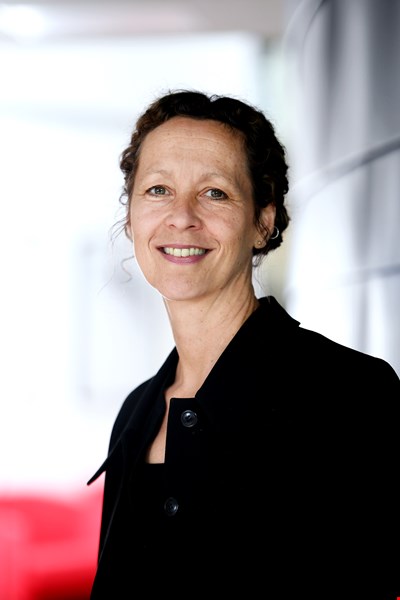
Career History Louise Mansfield is Professor of Sport, Health and Social Sciences and Vice Dean for Research in the College of Health Medicine and Life Sciences. She is Director of the Centre for Health and Wellbeing across the Lifecourse. Her research focuses on the relationship between sport, physical activity and public health and wellbeing. Louise's expertise are in partnership and community approaches in sport and physical activity and issues of health, wellbeing, inequality and diversity. She has led research projects for the Department of Health, Youth Sport Trust, sportscotland, Economic and Social Research Council, Medical Research Council, Macmillan Cancer Support, Public Health England and Sport England. She sits on the editorial boards for Leisure Studies, Qualitative Research in Sport, Exercise and Health and the International Review for the Sociology of Sport and is Managing Editor of Annals of Leisure Research. Louise is known for developing evidence to inform policy and practice.