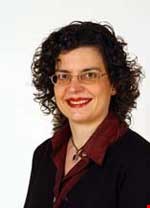
Dr Sabrina Tosi graduated in Biological Sciences at the University of Milan (Italy) in 1989 and then attained her post-graduate degree in Human Cytogenetics at the University of Pavia (Italy) in 1992. Between 1989 and 1993 she was a research scientist at the Department of Paediatric Haematology, University of Milan, Ospedale San Gerardo, Monza (Italy). During this time she worked also as a visiting research scientist at Oncogenetic Laboratory, Children's Hospital, University of Giessen (Germany) for approximately a year. In 1994, Dr Tosi transferred to the University of Oxford to work as a research scientist, she then enrolled and completed her DPhil studies in 1999. She continued to work at the University of Oxford until July 2005, when she was appointed as Lecturer in Biosciences at Brunel University London.
Leukaemia is the most common childhood cancer, and growing evidence suggests it often begins before birth.
Chromosomal translocations that create gene fusions are a hallmark of many leukaemias. Several are specific to paediatric disease, yet we still don’t fully understand how they form.
Our early chromosome‑positioning work using fluorescence in situ hybridisation (FISH) shows that exposing leukaemia cells to different concentrations of synthetic vitamin B9 (folate) — which is essential for foetal blood cell development — can dramatically change the nuclear positioning of specific chromosomes that carry fusion‑prone genes.
To build on this, we’ll investigate 3D genome organisation in more depth by examining how these fusion‑prone genes sit in relation to each other. Alongside FISH, we’ll use high‑throughput chromosome conformation capture (Hi‑C). Hi‑C will give us a detailed view of higher‑order chromatin architecture and help us assess how this structure might influence susceptibility to chromosomal translocations.
We also plan to integrate these 3D genomics data with future epigenomic analyses to explore folate‑dependent changes in DNA methylation and how they may affect genome organisation and translocation risk.
How to apply
If you are interested in applying for the above PhD topic please follow the steps below:
- Contact the supervisor by email or phone to discuss your interest and find out if you would be suitable. Supervisor details can be found on this topic page. The supervisor will guide you in developing the topic-specific research proposal, which will form part of your application.
- Click on the "Apply here" button on this page and you will be taken to the relevant PhD course page, where you can apply using an online application.
- Complete the online application indicating your selected supervisor and include the research proposal for the topic you have selected.
Good luck!
This is a self-funded topic
Brunel offers a number of funding options to research students that help cover the cost of their tuition fees, contribute to living expenses or both. The UK Government is also offering Doctoral Student Loans for eligible students, and there is some funding available through the Research Councils. Many of our international students benefit from funding provided by their governments or employers. Brunel alumni enjoy tuition fee discounts of 15%.
Meet the Supervisors

Sibylle Ermler is a Lecturer in Biosciences (Endocrinology and Metabolism) in the Department of Life Sciences. She joined Brunel as a Research Fellow in Human Toxicology. She has expertise in the impact of endocrine disrupting chemicals (EDCs) and genotoxicants on human and environmental health. Her research focuses on metabolic disorders and obesity, with additional interest in male and female reproductive health, and the developmental origins of health and disease. Furthermore, she is an expert in mixture toxicology with an interest in the translation of (mixture-) toxicology into chemical risk assessment. Sibylle’s research has a focus on the development and application of novel in vitro approaches with the aim of creating human relevant models for human disease, and reducing the requirement for animal testing. Additional interdisciplinary research interests include the impact of climate change on food systems and on human development and health. University positions 2022-current:Lecturer in Biosciences (Endocrinology and Metabolism), Life Sciences, Brunel University London 2011-2022: Research Fellow, Environmental Sciences, Life Sciences, Brunel University London 2007-2011: Postdoctoral Research Fellow, Centre for Toxicology, UCL School of Pharmacy, London
Our research concerns how the genome is spatially organised, influenced and manipulated within its environment, the cell nucleus. The group has had a number of major advances and is currently focused on aspects of genome behaviour in replicative senescence, the premature ageing disease Hutchinson-Gilford Progeria Syndrome, host:pathogen interactions and female cancers. We are wish to understand how structures such as the nuclear lamina, nucleoskeleton and nuclear motors influence the functionality of the genome in health and disease. Our newest interest is in how the genome can be organised and regulated in low gravity situations and space.