
Overview
Pollution, climate change and biodiversity loss are three of the key environmental challenges now recognised as environmental emergencies by the United Nations (UN). These global emergencies exacerbate inequalities across society and will continue to have significant health and socioeconomic consequences.
Effectively, the UN Sustainable Development Goals (SDGs) will not be achieved without addressing the root causes and understanding the threats posed by these emergencies. This requires investment in people and talent, equipping them with the multi- and transdisciplinary knowledge and skills needed to help solve these societal challenges, building up our social and natural capital.
This programme looks to raise your ability to understand and analyse complex interlinked environmental issues, in order to develop long-term solutions. You will develop advanced technical skills and build experience in applying them across a range of environmental areas ensuring that you are equipped with highly sought after skills needed for a successful career in the Environmental sector.
The Pollution pathway acknowledges the global current needs for toxicologists and ecotoxicologists who can support the exposure and hazard evaluation of chemical substances.
The pathway aims to provide students with an advanced, multi-disciplinary and current understanding of the effects of chemicals on human and environmental health and the consequent impact on chemical risk assessment and regulation.
The pathway has been specifically designed to equip students with the skills to critically evaluate and understand chemical hazards, as well as making informed decisions in terms of potential health risks for both humans and wildlife.
At Brunel, we have excellent links with many organisations through our research activities, so you can be assured of a high-quality placement at a relevant organisation. Opportunities for our master's students include placements at the Environment Agency and international placements at the European Food Safety Authority (EFSA) and with the European Chemicals Agency (ECHA)
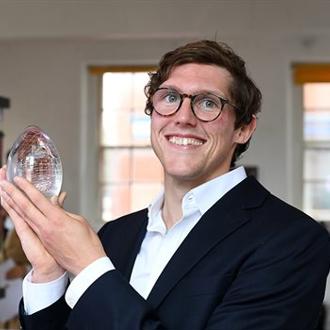
"I wanted to upskill myself and Sustainability, Entrepreneurship and Design MSc was the perfect course because it was an amalgamation of three areas that are really important to me. " - Tom Fudge

"The mix between sustainability, entrepreneurship and design is truly unique. I would recommend Brunel to others because of the amazing teachers who are passionate about their field and because of all the opportunities you get through Brunel." - Lili Dreyer
"I wanted to upskill myself and Sustainability, Entrepreneurship and Design MSc was the perfect course because it was an amalgamation of three areas that are really important to me. " - Tom Fudge
"The mix between sustainability, entrepreneurship and design is truly unique. I would recommend Brunel to others because of the amazing teachers who are passionate about their field and because of all the opportunities you get through Brunel." - Lili Dreyer
You can explore our campus and facilities for yourself by taking our virtual tour.
Course content
All students will begin the programme together regardless of the pathway selected. Semester 1 content is designed to give students a holistic perspective of environmental management given the diversity of areas that underpin the subject.
In Semester 2 you will undertake compulsory modules that are aligned with the respective pathway to enable students to gain specialist knowledge and skills. Finally, students will undertake a dissertation which will be lab, field or desk-based and produce an original piece of research in an area that will build experience in applying what they have learnt through the duration of programme.
Compulsory
- The Total Environment
The module aims to develop students’ understanding of the complexity and interdependencies of the most pressing environmental challenges.
Students will recognise the transdisciplinary nature of Environmental Management and develop fundamental understanding that focuses on the interconnection of different environmental spheres (e.g. water, air, soil) and societal factors (e.g. economy, policy, technology).
- Environmental Tools & Methods
The module aims to develop students’ understanding of a broad range of tools and methods used across different disciplines within environmental management.
Students will gain practical experience in lab, field and desk-based approaches that are used in identifying, monitoring and managing environmental problems.
- Environmental Monitoring and Pollution
The module aims to develop students’ understanding of environmental pollution and the techniques for monitoring and assessing exposure and hazard. Students will gain practical experience in advanced laboratory and field-based techniques.
- Chemical Risk Assessment and Management
This module will familiarise students with the concepts and approaches that are currently used in human and ecological risk assessment of chemical substances. The emphasis will be on case studies, where data use and interpretation can be practiced in a “hands-on” way.
- Dissertation
The module aims to further develop students’ understanding and technical skills in a specific area(s) relevant to the programme pathway they have selected (e.g. Pollution, Resources and Waste, Sustainable Water Resources). This module will consolidate taught content across the programme and students will gain experience investigating and producing an original piece of research.
- Placement Portfolio (with placement only)
The aim of this module is to provide the students with ‘real-world experience’ of applying the tools, methods and techniques learnt from the Environmental Management programme undertaking a 6-month period for professional development to support students in achieving career-orientated goals.
This course has a placement option. Find out more about work placements available.
Please note that all modules are subject to change.
Read more about the structure of postgraduate degrees at Brunel
Careers and your future
After completing the course, you'll be equipped with the skills to pursue a wide range of environmental careers. Our Alumni have gone on to hold positions in industry, government and academic sectors and this programme will give you the skills and experience needed to be successful in any one of these sectors.
Career choices can include Environmental Consultants, Environmental Managers, Policy Managers, Environmental Impact Assessors, Chemical Risk Assessors, Environmental Protection Officers and many more.
In fact, the Environmental sector is so incredibly diverse that this programme will put you in a position where you will have access to a wide range of opportunities and will be highly sought after. If you are passionate about research, PhD study may be something to consider. We are part of the TREES Doctoral Landscape Award which supports fully funded studentships in environmentally related research.
We also have dedicated careers advice for our students and will support you for up to three years after you graduate, in addition to the support during your studies from the Student Professional Development (SPD), personal tutors and academic staff.
UK entry requirements
2026/7 entry
- A 2:2 or equivalent internationally recognised qualification. A wide range of disciplines are acceptable, for example: Environmental Science; Engineering; Physics; Chemistry; Biology; Geography; Environmental Health; Marine Science; Maths; Agricultural Science; Law; Business; Commerce and Economics.
- Applicants with a third class honours degree or other qualifications will be considered with any relevant work experience. Such applicants may be required to attend an interview.
International entry requirements
If you require a Tier 4 visa to study in the UK, you must prove knowledge of the English language so that we can issue you a Certificate of Acceptance for Study (CAS). To do this, you will need an IELTS for UKVI or Trinity SELT test pass gained from a test centre approved by UK Visas and Immigration (UKVI) and on the Secure English Language Testing (SELT) list. This must have been taken and passed within two years from the date the CAS is made.
English language requirements
- IELTS: 6.5 (min 6 in all areas)
- Pearson: 59 (59 in all subscores)
- BrunELT: 6.5 (min 6 in all areas)
- TOEFL: 5 (min 4.5 in all subscores)
You can find out more about the qualifications we accept on our English Language Requirements page.
Should you wish to take a pre-sessional English course to improve your English prior to starting your degree course, you must sit the test at an approved SELT provider for the same reason. We offer our own BrunELT English test and have pre-sessional English language courses for students who do not meet requirements or who wish to improve their English. You can find out more information on English courses and test options through our Brunel Language Centre.
Please check our Admissions pages for more information on other factors we use to assess applicants. This information is for guidance only and each application is assessed on a case-by-case basis. Entry requirements are subject to review, and may change.
Fees and funding
2026/7 entry
UK
£13,280 full-time
£6,640 part-time
£1,955 placement year
International
£22,320 full-time
£11,160 part-time
£1,955 placement year
More information on any additional course-related costs.
Fees quoted are per year and are subject to an annual increase.
See our fees and funding page for full details of postgraduate scholarships available to Brunel applicants.
Scholarships and bursaries
Teaching and learning
Lectures, seminars and practical sessions will take place on campus - with few exceptions - and you'll be expected to be present in order to benefit fully from the immersive and interactive sessions that underpin problem-based and inquiry-based learning approaches, and the collaborative approach to learning that we use.
To supplement our full timetable of on-campus teaching, learning will be supported with a range of resources on our new Brightspace Virtual Learning Environment (VLE) including e.g. lecture recordings, videos, interactive activities, and links to additional reading etc.
Please note, that while recordings and online resources will help if you're unable to attend a particular teaching session, learning from the online materials alone won't be an adequate substitute to participating in a lively in-person discussion on campus alongside your peers.
Keep in mind that this is a campus-based degree programme, not an online programme – and attendance on campus will be essential for some events (e.g. lectures, seminars, workshops, practical sessions, demonstrations and student-led sessions in class). Module / block leaders may offer additional briefing, revision, and/or Q&A sessions on online platforms where appropriate to support on-campus learning.
Coursework will be submitted via WISEflow and exams will be a mix of on-campus in-person invigilated written exams and online open-book style assessments that'll require access to a personal computer.
Access to a laptop or desktop PC is required for joining online activities, completing coursework and digital exams, and a minimum specification can be found here.
We have computers available across campus for your use and laptop loan schemes to support you through your studies. You can find out more here.
You’ll be taught by environmental scientists whose research into exposure to harmful chemicals has changed government attitudes and policy. The Environmental Sciences team at Brunel are previous winners of the Queens Anniversary Prize for two decades of pioneering research. This means that our award-winning lecturers will bring their experience, passion and renowned expertise to your lectures.
Should you need any non-academic support during your time at Brunel, the Student Support and Welfare Team are here to help.
Assessment and feedback
Assessment on the programme will take a wide range of formats and have been designed to mirror ‘real world’ experiences that you would likely be asked to do as part of your career in the future. Assessments will include open book exams, reports, poster presentations, short talks, reports and requests to tender.
We are committed to supporting you on throughout your studies and all assessments will provide feedback to support your development and achievement. Our personal tutors will coach and mentor you to ensure that you achieve your goals whilst you study. Read our guide on how to avoid plagiarism in your assessments at Brunel.
Read our guide on how to avoid plagiarism in your assessments at Brunel.