
Overview
The Theatre and Creative Writing BA is ideal if you want to learn more about the richness of theatre and performance, while incorporating your passion for creative writing.
On the theatre side of your degree, you’ll develop creative skills in a range of practices such as acting, performance making, and musical theatre, and critically think about performances and their contexts.
On the creative writing side of the course, you’ll get to explore a number of writing styles including journalism, screenwriting, comedy writing, short stories and the contemporary novel.
You’ll also grow your knowledge through an understanding of the concepts and approaches used in the practice and study of theatre, together with the themes and techniques used by historic and contemporary authors.
By studying at Brunel you’ll become part of a rich community of creative students, artists, and academics, and have a variety of opportunities to collaborate through, for example, acting, theatre making, writing and production.
Studio Brunel nights regularly showcase new theatre, music, film, and creative writing work by Brunel students.
You'll benefit from instruction by internationally renowned industry professionals and academics within specialist facilities. Teaching faculty have worked with prestigious organizations and performing arts venues such as Barbican Theatre, Sadler’s Wells Theatre, Tate Modern, and Queen Elizabeth Hall in London and Lincoln Centre in NYC. These industry links will support you throughout your journey at Brunel and beyond, for example through industry placements, guest speakers, and access to industry networks. Students from the course have completed placements in a variety of organisations including the London’s Park Theatre, Rose Wisksteed Casting, The Vaults, Unicorn Theatre, Icarus Theatre Company, and the Grieg City Academy.
Off campus, Brunel’s easy access to central London helps to facilitate regular class trips to see West End productions and other events.

"Dana demonstrates a strong commitment to the third sector community, named as one of the Top 100 Charity Sector Influencers and winner of the Best Trustee Award at #SocialCEOS Awards 2019" - Dana Segal
"When I left Brunel, my plan was to get a paid internship right away. I knew how important this would be as my plan was to go into paid work right away and build on my career. I managed to secure an internship with a creative company, through the Santander scheme at Brunel." - Carolina Herranz-Carr

"Studying a variety of subjects and gaining work experience in different industries helped me build a unique stack of talents. " - Aldo Scott
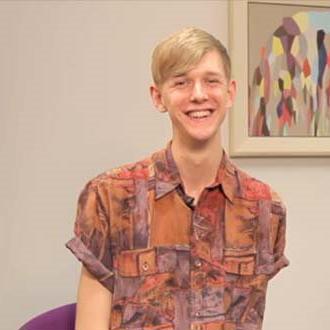
"Studying at Brunel has made me realise how much I enjoy writing and how after studying it for 3 years I don’t want to stop! " - Thomas Willet
"Dana demonstrates a strong commitment to the third sector community, named as one of the Top 100 Charity Sector Influencers and winner of the Best Trustee Award at #SocialCEOS Awards 2019" - Dana Segal
"When I left Brunel, my plan was to get a paid internship right away. I knew how important this would be as my plan was to go into paid work right away and build on my career. I managed to secure an internship with a creative company, through the Santander scheme at Brunel." - Carolina Herranz-Carr
You can explore our campus and facilities for yourself by taking our virtual tour.
Course content
The Theatre and Creative Writing BA is both an academic and a practical course that provides you with the opportunity to tailor your studies according to your interests in theatre and creative writing. There is a range of optional modules in both disciplines from which you can choose as you develop as a creative.
Please note you must choose one of the year 3 compulsory modules listed below.
Compulsory
- DR16aa - Why Performance Matters
Develop skills in analysing performance and use these to explore a fascinating range of performance practices from main stage productions and site-based work to the performance of everyday life.
This is a 30 credit module.
- CW1600 - Fiction 1
This module is designed to introduce students to the core elements and skills necessary for writing fiction. Aided by close reading and discussion of fiction by published writers, students will develop knowledge and understanding of core elements of the craft, such as character, setting, plot, dialogue, as well as key skills such as understanding audience, showing rather than telling, and writing to a specified word-count and brief. Students will practice these core competencies and also learn how to workshop their prose, developing skills for the giving and receiving of constructive feedback to enable redrafting of works-in-progress. Students will reflect upon their inspirations, reading and the development of their craft.
- CW1601 - Poetry 1
This module is designed to introduce students to the core elements and skills necessary for writing poetry. Aided by close reading and discussion of poetry by published writers, students will develop knowledge and understanding of core elements of the craft, such as the poetic line, working in form and free verse, sound and voice, as well as key skills such as concision and redrafting. Students will practice these core competencies and also learn how to workshop poems, developing skills for the giving and receiving of constructive feedback to enable redrafting of works-in-progress. Students will reflect upon their inspirations, reading and the development of their craft.
Optional
- DR16aa - Why Performance Matters
Develop skills in analysing performance and use these to explore a fascinating range of performance practices from main stage productions and site-based work to the performance of everyday life.
This is a 30 credit module.
- DR16bb - Performance and the World
In this module we study performance as a tool to understand how we have arrived at the current moment in the world. You will examine and discuss these circumstances aided by global understandings of performance revealing the richness and the complexity of the world we inhabit.
This is a 30 credit module.
- DR16cc - Acting
This module emphasises the creative making process rather than the finished theatre product. Sessions will introduce theatre-making tools, inviting you to develop your own company practices, and look at touring your work after your degree.
This is a 30 credit module.
- DR16dd - Making Theatre
This module emphasises the creative making process rather than the finished theatre product. Sessions will introduce theatre-making tools, inviting you to develop your own company practices, and look at touring your work after your degree.
This is a 30 credit module.
Optional
- DR26cc - Performance Perspectives
This modular block investigates key areas of contemporary arts and performance practice. You will engage with existing work and will be introduced to critical practitioners and core academic practices such as research, writing and presenting. It will also equip you with foundational ideas for analysing performance in relation to society and power.
This is a 30 credit module.
- DR2621 - Performance Lab
Advance your performance-making skills. Transform your curiosity into dynamic performance creations. Engage with performance to pose questions, probe specific topics, and explore contemporary issues. This module advances your performance making skills and empowers you to view performance not just as an art but as a potent mode of inquiry into the world around you.
This is a 30 credit module.
- DR2628 - Applied Theatre Project
Develop skills in workshop facilitation and performance-making for client groups, communities, or public engagement. Learn how to work creatively when responding to client briefs, or given situations, and build skills and experience for a future in performance, creative facilitation, and community engagement.
This is a 30 credit module.
- DR2629 - Music Theatre
Create and perform exciting music theatre work. This module introduces you to the compelling ways in which music contributes to theatre and performance. You will learn about different approaches to using music and practically explore them by creating work that draws on a range of performances and practitioners. Gaining practical insights through making music theatre work, you will reflect on the contribution of performances and practitioners to theatre, culture, and politics.
This is a 30 credit module.
- DR2631 - Acting as a Critical Practice
This module will extend your knowledge of acting by introducing realist and non‑realist approaches as critical tools for representing social realities. It also builds collaborative rehearsal and performance skills and will strengthen your ability to articulate how artistic practice relates to political, social and economic contexts.
This is a 15 credit module.
- CW2602 - Fiction II
The short story is one of the most powerful and satisfying forms of writing to produce. This module focusses on writing and understanding intricate masterpieces in the short story form. We read a wide variety of powerful short stories together—by writers from across the globe, from the mundane and the moving to the strange and experimental— looking closely to help understand what techniques make them so effective, and how we can develop individual approaches to writing our own original stories in response. The exact structure changes each year, but some of the topics covered previously included: subverting and updating traditional fairy-tales; stories with unusual approaches to time; Weird Tales of the impossible and unexplainable; flash fiction; climate change fiction.
- CW2603 - Poetry II
This module is designed to build upon foundational skills and knowledge acquired on the first-year poetry module. You will continue to write in increasingly exciting new ways to liberate the poet within. You will also expand your awareness of work that is being produced in the current world of UK poetry, the manner in which new mediums and technologies are being employed, and the manner in which this work might challenge previous conceptualisations and traditions in the field. In conclusion, you will acquire crafting tips while trying out traditional and innovate ways to write. There is no expectation of a house style. Your own approach to poetry based on what you will have learned is all that is required. Be excited by your own work, and I (Daljit) will be excited in turn to read it.
- CW2604 - Screenwriting I
The module introduces students to the professional practice and theory of screenwriting for film and television. Although the short film is the main focus of study, the classic, feature length narrative fiction film, television drama, and films from alternative and non- narrative traditions will also be considered. The module is substantially practice-based. All students will write an original screenplay to a maximum length of 10 pages. Students will also produce supporting documents, such as a Story Proposal, Beat Sheet, and Scene Outlines. The module also requires students to analyse films and scripts – including their own and contemporaries’ – from a screenwriting perspective. Students will produce analyses of key features of films and screenplays and write the screenplay for a short film.
- CW2605 - Writing Genre
This module focusses on three popular and enduring genres - horror, science fiction, and fantasy - which provide endless fascination for readers and practitioners alike. We will explore these genres via lectures, seminars (including writing workshops) and the study of classic and emerging writers from each genre. At the end, you will have written a body of work in each genre, with a core understanding of their key features. The module has featured discussion of writers such as Stephen King, Chuck Palahniuk, Angela Carter, Gwyneth Jones, William Gibson, Octavia Butler, Gabriel Garcia Marquez, Brandon Sanderson, and more. Sub-genres and styles discussed include space opera, Grimdark, urban fantasy, utopian/dystopian fiction, cosmic horror, body horror, and weird fiction.
- CW2606 - Life Writing I
This module will allow you to explore a range of life writing practices such as memoir, autofiction, the personal essay, the lyric essay, confessional poetry and more in a safe and supportive environment. You’ll be inspired by a range of contemporary writers such as Rebecca Solnit, Ocean Vuong, Maggie Nelson, Patricia Lockwood, Nina Mingya Powles and others. You’ll consider the ethics of life writing such as writing about family, and draw on your own experiences, interests and passions throughout.
Compulsory
- DR3626 - Contemporary Theatre Project
Become a creator of original performance works, drawing from your interdisciplinary experiences. Navigate the dynamic interplay between performance-making and the ever-changing contexts of local, national, and international stages. This module equips you with tools to not only create but also market your work effectively. This is a 45 credit module.
- DR3627 - Drama, Theatre, and Performance Dissertation
Undertake a substantial research journey, crafting a written dissertation that contributes to the field. This module is designed to empower you to plan, design, and execute a specialised project. Develop research skills, critically evaluate your project, and leave an indelible mark on the academic landscape. This is a 45 credit module.
- CW3603 - Creative Writing Special Project
To produce an extended piece of work totaling 10,000 words (plan 500 words, Journal 2500 words, project 7000).
Optional
- DR3628 - Acting 3: Advanced Acting
Advance your acting skills to a professional level. Elevate your acting in this performance-focused module. Intensive workshops, rehearsals, and theatre productions await you. Dive into the techniques of acting pioneers, work as an ensemble company with a director, and hone your professional acting skills.
This is a 15 credit module.
- DR3629 - Anti-Racism and Performance
Ignite change as you explore anti-racism through the lens of performance. Navigate the historical landscapes of Critical Race Theory and delve into the intricate relationships between race, racism, and colonialism. This module is your gateway to understanding how performance becomes a powerful tool for social repair, protest, and activism.
This is a 15 credit module.
- DR3631 - Advanced Musical Theatre
Fine-tune your instrument—voice and body—in this practical module. Develop rehearsal and performance skills, seamlessly integrate singing, dancing, and acting, and embark on a journey of critical self-reflection on your evolving practice. Explore the industrial context of the musical theatre performer and master the art of auditioning with confidence and flair.
This is a 30 credit module.
- DR3625 - Professional Practice and Development
Reflect on your interests, skills and experience, identify how these connect with a range of career paths, build your professional profile and develop a productive network. This module introduces tools for professional engagement, skills for effective working, and shares contemporary industry insights.
This is a 15 credit module.
- DR3626 - Contemporary Theatre Project
Become a creator of original performance works, drawing from your interdisciplinary experiences. Navigate the dynamic interplay between performance-making and the ever-changing contexts of local, national, and international stages. This module equips you with tools to not only create but also market your work effectively. This is a 45 credit module.
- DR3627 - Drama, Theatre, and Performance Dissertation
Undertake a substantial research journey, crafting a written dissertation that contributes to the field. This module is designed to empower you to plan, design, and execute a specialised project. Develop research skills, critically evaluate your project, and leave an indelible mark on the academic landscape. This is a 45 credit module.
- DR3DDD - Movement and Physical Theatres
This module develops your skills in movement and physical theatre, with a focus on advanced physical and choreographic techniques. You’ll explore how to devise work that’s critical, complex and emotionally engaging, and create and reflect on a performance shaped by contemporary socio‑cultural or historical contexts.
- DR3EEE - Performing the Now
This module gives you the chance to explore a recent or emerging area of arts research in depth, surveying existing and new work and developing your own informed, distinctive response. You’ll also engage with the critical academic practices that help you explore and share ideas, building research skills you can use within and beyond the academy.
- CW3605 - Fiction III
This module is designed to provide students with a comprehensive background in all aspects of contemporary fiction writing, from creative practice to publishing, as well as providing a creative grounding for longer future projects. Students will read and discuss a variety of novels and short stories, then put new techniques into practice in their own work.
- CW3606 - Poetry III
This module develops your advanced poetic practice and deepens your engagement with the contemporary poetry scene, whether your work is written for the page or for performance. By the end, you’ll feel confident expressing your voice in both settings - with a strong sense of rhythm, wordplay, tone and movement - and you’ll finish with a portfolio that’s ready for publication or performance.
- CW3607 - Screenwriting II
This module enables students to explore and develop the theory and professional practice of contemporary screenwriting. By the end of the module, students who participate in weekly assignments will produce a marketable pitch deck/series bible for a film or TV project, along with the first 15-20 pages of the script. The module is substantially practice-based and requires students to analyse screen works and scripts (including their own and peers’) from a screenwriting perspective.
- CW3604 - Creative Careers
This module is focused on your professional development capitalising on the unique and close collaboration between Creative Writing and Literary Studies at Brunel university and representing Brunel’s long heritage when it comes to professionally focused learning.
It will enable you to understand the creative economy and the ways in which people develop careers within it. You will be able to plan your own career after graduation, to identify your goals and write the documents you will need to achieve them. Members of the Creative Writing department at Brunel along with visiting speakers will help you to become familiar with the creative industries through which writers reach their audience. By exploring all areas of your professional development, we will enable you to make a career plan for the next five years, to identify the opportunities and skills you will need and to research the choices you will make in the immediate future.
This course can be studied undefined undefined, starting in undefined.
This course has a placement option. Find out more about work placements available.
Please note that all modules are subject to change.
Careers and your future
Professional skills such as collaboration, critical reflection verbally and in writing, and engagement with different forms of creative practice are embedded into the modules through all three levels.
Production, budgeting, design for specific audiences, working in the community and strong CV writing are all covered in the final year of the course.
Brunel Theatre BA lecturers have long-established links with many theatre venues and other businesses across the creative industries, and they’re always ready to help you find the right place to grow your specific interests. There are options for a short or year-long work placement to develop your professional profile while on the course.
Students have undertaken work experience at places like The National Theatre, Plaines Plough, Akram Khan Dance Company, Les Enfants Terribles, China Plate, and a host of educational and community organisations.
Graduates of this course, such as Adam Johnson, have gone on to work as actors/writers in the National Youth Music Theatre. Others, like Sam Smithson, have progressed onto renowned postgraduate courses like the Directing MA at Royal Central School of Speech and Drama. Your options when leaving us are varied and exciting. Click here to read about inspirational Theatre alumni.
UK entry requirements
2026/7 entry
Entry requirements may be reduced during Clearing, subject to the number of places available - please contact us during Clearing for the latest information.
Please check our Admissions pages for more information on other factors we use to assess applicants within our grade range as well as our full GCSE requirements and accepted equivalencies in place of GCSEs.
A minimum of five GCSEs (grade C/4 or above) are required, including GCSE English Language (grade C/4) or GCSE English Literature (grade B/5)
Standard Offer: GCE A level BBB
Contextual Offer: GCE A level BCC
We apply a contextual admissions process for UK undergraduate applicants who meet one or more of our contextual markers – please see our contextual admissions page for more information.
Standard Offer: BTEC Level 3 National Extended Diploma DDM in any subject
Contextual Offer: BTEC Level 3 National Extended Diploma DMM in any subject
We apply a contextual admissions process for UK undergraduate applicants who meet one or more of our contextual markers – please see our contextual admissions page for more information.
Standard Offer: BTEC Level 3 National Diploma DM in any subject and an A Level grade B
Contextual Offer: BTEC Level 3 National Diploma MM in any subject and an A Level grade B
We apply a contextual admissions process for UK undergraduate applicants who meet one or more of our contextual markers – please see our contextual admissions page for more information.
Standard Offer: BTEC Level 3 National Extended Certificate Merit in any subject, with A level grades BB
Contextual Offer: BTEC Level 3 National Extended Certificate Merit in any subject, with A level grades BC
We apply a contextual admissions process for UK undergraduate applicants who meet one or more of our contextual markers – please see our contextual admissions page for more information.
Standard Offer: International Baccalaureate Diploma 30 points. GCSE English equivalent SL 5 or HL 4
Contextual Offer: International Baccalaureate Diploma 28 points. GCSE English equivalent SL 5 or HL 4
We apply a contextual admissions process for UK undergraduate applicants who meet one or more of our contextual markers – please see our contextual admissions page for more information.
Standard Offer: Obtain a minimum of 120 tariff points in the Access to HE Diploma with 45 credits at Level 3 in any subject
Contextual Offer: Obtain a minimum of 104 tariff points in the Access to HE Diploma with 45 credits at Level 3 in any subject
We apply a contextual admissions process for UK undergraduate applicants who meet one or more of our contextual markers – please see our contextual admissions page for more information.
Merit overall in any subject
If your qualification isn't listed above, please contact the Admissions Office by emailing admissions@brunel.ac.uk or call +44 (0)1895 265265 to check whether it's accepted and to find out what a typical offer might be.
Brunel's committed to raising the aspirations of our applicants and students. We'll fully review your UCAS application and, where we’re able to offer a place, this will be personalised to you based on your application and education journey.
Please check our Admissions pages for more information on other factors we use to assess applicants, as well as our full GCSE requirements and accepted equivalencies in place of GCSEs.
International entry requirements
If you require a Tier 4 visa to study in the UK, you must prove knowledge of the English language so that we can issue you a Certificate of Acceptance for Study (CAS). To do this, you will need an IELTS for UKVI or Trinity SELT test pass gained from a test centre approved by UK Visas and Immigration (UKVI) and on the Secure English Language Testing (SELT) list. This must have been taken and passed within two years from the date the CAS is made.
English language requirements
- IELTS: 6.5 (min 5.5 in all areas)
- Pearson: 59 (59 in all subscores)
- BrunELT: 6.5 (min 5.5 in all areas)
- TOEFL: 5 (min 4 in all subscores)
You can find out more about the qualifications we accept on our English Language Requirements page.
Should you wish to take a pre-sessional English course to improve your English prior to starting your degree course, you must sit the test at an approved SELT provider for the same reason. We offer our own BrunELT English test and have pre-sessional English language courses for students who do not meet requirements or who wish to improve their English. You can find out more information on English courses and test options through our Brunel Language Centre.
Please check our Admissions pages for more information on other factors we use to assess applicants. This information is for guidance only and each application is assessed on a case-by-case basis. Entry requirements are subject to review, and may change.
Fees and funding
2026/27 entry
UK
£9,790 full-time
£7,335 part-time
£1,955 placement year
International
£17,400 full-time
£13,050 part-time
£1,955 placement year
Fees quoted are per year and may be subject to an annual increase. Home undergraduate student fees are regulated and are currently capped at £9,535 per year; any changes will be subject to changes in government policy.
For the 2026/27 academic year, tuition fees for home students will be £9,790, subject to Parliamentary approval.
In England and Wales, tuition fees for home undergraduate students are subject to the Government fee cap. The Government has confirmed that this will be £9,790 for 2026/27 and £10,050 for 2027/28 (subject to Parliamentary approval).
From 2028 onwards, the fee cap is expected to rise annually in line with inflation. This means your tuition fees in future years may increase to reflect these changes.
International fees may change annually, by no more than 5% or RPI (Retail Price Index), whichever is the greater.
More information on any additional course-related costs.
See our fees and funding page for full details of undergraduate scholarships available to Brunel applicants.
Please refer to the scholarships pages to view discounts available to eligible EU undergraduate applicants.
Teaching and learning
The BA (Hons) Theatre program at Brunel is designed for in-person delivery on campus, offering a dynamic mix of practical workshops, lectures, seminars, rehearsals, one-to-one tutorials, and site visits. Students also can arrange individual tutorials either on-campus or online, accommodating diverse schedules.
Attendance is mandatory; beyond facilitating teaching and learning, on-campus in-person sessions cultivate collaborative theatre practices, personal and collegial networks, and overall well-being.
Students learn through a range of activities, including workshops, lectures, seminars, individual tutorials, practical classes, masterclasses, rehearsals, and screenings.
Throughout, we seek to actively engage in conversation about practices, and critical ideas in creative writing and in contemporary theatre and performance.
On the Theatre side, you will also have the opportunity to be in small and large scale, public-facing performances throughout your studies. For in example, Acting and Musical Theatre in year 3, finish with a public-facing performance, and if you choose a Contemporary Theatre Project for your dissertation, you get to develop work in a format you desire to share with an audience as a conclusion to your studies.
In your creative writing modules, lectures, seminar discussions and workshops with practitioners and theorists will provide you with a range of approaches to the analysis and production of creative writing.
You also have an exciting opportunity to gain insight into life after your studies by putting your learning into practice through a one-year work placement.
One-to-one tutorials with members of the team are structured into the course at various points. These are supplemented by an online forum designed to enable students and staff to work remotely and share advice and solutions to any problems.
Central to the learning and teaching strategy is a philosophy to encourage you to collaborate creatively, share ideas with your peers, and contribute to each other’s initiatives and projects.
Should you need any non-academic support during your time at Brunel, the Student Support and Welfare Team are here to help.
Assessment and feedback
In your theatre modules, you will be assessed through practical performance (in-class and public), creative writing tasks, coursework, presentation, creative portfolios, and essays.
For Creative Writing, you will be assessed through essays, portfolios of shorter written coursework, individual and group presentations, continuous assessment of participation in seminars, and the final year dissertation project.
Read our guide on how to avoid plagiarism in your assessments at Brunel.
