
Overview
Storytelling is part of every culture and reveals much about the lived and imagined experiences of individuals and communities over time and in different parts of the world.
Studying the English Literature MA at Brunel gives you the opportunity to uncover the richness of the history of storytelling in English – by expanding your knowledge of different periods, types of writing, and writers themselves. Through the course you will learn identify patterns, themes, and literary structures that act as windows to deeper understanding in your own reading.
Whether your goal is to explore a long-held interest, to build on previous studies, or to benefit your career as a teacher, researcher, or scholar, at the MA in English Literature at Brunel keeps you close to one of the literary capitals of the world.
Your journey begins with an introductory module on ‘Reading, Writing and Research’ to help equip you with critical kills and competencies in the discipline of literary studies. Mastering these reading, research, and critical strategies will give you confidence to pursue your interests on any given topic, and particularly the development of your own large research project – the MA dissertation.
Three additional coursework modules dive deeper into specific periods, writers, and forms, and introduce you to key methodologies for critical and historical reading. These include ‘Author Study’ where you will explore a single author or group of authors from a list that includes: John Keats and P.B. Shelley; Jane Austen; the Brontes; Charles Dickens. You might encounter a modernist writer like Virginia Woolf or Katherine Mansfield, or postmodernist and experimental writers such as B.S. Johnson and J.G. Ballard. This module explores how ideas of ‘The Author’ and ‘authorship’ shape our encounter with literary texts and traditions, and the possibilities – and problematics – of biographical approaches to the study of fiction.
‘Literary Decade’ immerses you in the literary and cultural aspects of a single decade from a range including the 1790s, 1810s 1850s, 1890s, 1920s, 1930s, 1960s, 1970s or 1980s. This module explores periodisation as a lens for literary production and encounter, crossing into neighbouring disciplines like history, philosophy, and politics to enrich your reading along the way.
You will also have the opportunity to cover more contemporary works in ‘Postmillennial Literature’ including texts from the rich field of twenty-first century Anglophone writing, which includes science fiction and fantasy; LGBT writing, experimental fiction, and Anglophile writing post 9/11.
The final and crowning accomplishment of your postgraduate degree is the dissertation – a personal research project of 15,000 words. After a series of research development and planning workshops designed to help you grow your personal project, you will work with a dedicated supervisor to undertake original and critical research on an agreed aspect of literature in English from the early modern to contemporary periods. This experience provides critical research, writing, and project management skills that you can take into any aspect of your professional life, and is frequently a stepping stone to further postgraduate study!
Outside our seminars and workshops, you can look forward to a rich calendar of literary events and activities organised by the English and Creative Writing department at Brunel, including the Hillingdon Literary Festival and Nero Book Awards, Brunel’s ‘Big Read’, and the unmatched literary and cultural life of London itself. Postgraduate study can be a turning point in professional and personal life. Write your own future with us at Brunel!
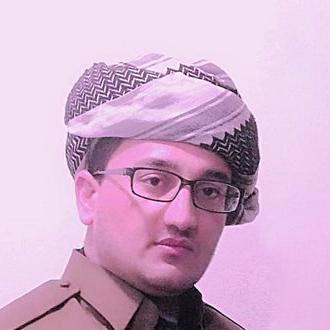
"The curriculum of the course I chose was quite liberal, modern and transcultural and the lecturers were renowned professors from around the world" - Yadgar Ismail
"The curriculum of the course I chose was quite liberal, modern and transcultural and the lecturers were renowned professors from around the world" - Yadgar Ismail
You can explore our campus and facilities for yourself by taking our virtual tour.
Course content
The English Literature MA will provide you with a deeper understanding of English literature’s rich past, as you develop key investigative research skills relevant to literary studies. You will study five compulsory modules, four of which will cover a range of texts and the fifth will be in preparation your dissertation.
Compulsory
- EN5601 - Reading, Research and WritingThis module aims to introduce or build upon research skills usually gained during undergraduate studies by honing your approach and technique to a standard required for postgraduate work. The module draws on research council frameworks in order to advance you to the standards of taught postgraduate research, particularly in preparation for the dissertation element. It will also provide practical preparation in English Literature research methods for those hoping to progress to PhD level work.
- EN5602 - Postmillennial LiteratureIn this module you will develop a detailed knowledge of contemporary literatures in terms of their contemporaneity, interaction with key themes such as trauma, identity, diversity, and the development of their genres or forms or influence in the field. You will also develop a sophisticated understanding of the socio-historical, cultural, geographical and theoretical frameworks used in the analysis of such literature in particular ideas pertaining to their contemporaneity qualities.
- EN5603 - A Literary DecadeThe Literary Decades module offers a contextual and historical understanding of selected dynamics of a literary period. The module adopts a historical and cultural approach to the literature of a decade, by considering a nominated period in British literary history, considering major texts, themes and historical events of significance relevant to such key texts that are selected to illustrate the aesthetic dynamics of the nominated period.
- EN5604 - Author(s) StudyThis module will allow you to develop a wide familiarity with the writings of the nominated writer/s [such as the Brontë sisters; George Orwell; J.G. Ballard; Katharine Mansfield and Virginia Woolf; William Shakespeare etc.]. You will also develop a sophisticated understanding of the socio-historical, cultural, and theoretical frameworks used in the analysis of the period in which the nominated writer/s were active aesthetically.
- EN5605 - DissertationThis module will enable you to undertake a substantial independent investigation of a topic, issue or design project agreed with the module leader and produce written dissertations that are supported by evidence, are scholarly, that present a high level of independent learning and an original contribution to knowledge in your chosen area.
This course can be studied undefined undefined, starting in undefined.
Please note that all modules are subject to change.
Read more about the structure of postgraduate degrees at Brunel
Careers and your future
An English master’s will equip you with a set of enviable skills which are vital for careers in publishing, print and electronic media, the culture industries and education.
Your skills will also be attractive to employers within sectors where accuracy in the written descriptive word is a central feature, including law, the civil service, advertising, marketing, financial services and business.
Above all, an MA in English Literature will benefit your own writing, critique and self-expression.
If, at the end of the course, you decide to continue your studies to doctoral level, you will have the essential research skills, and the opportunity, to join a flourishing research culture at Brunel.
UK entry requirements
- A 2:2 (or above) UK Honours degree, or equivalent internationally recognised qualification, in English Literature, Comparative Literature or Creative Writing.
- You will also need to submit a personal statement which directly addresses your motivations to study the course.
- We also welcome applications from applicants with backgrounds in other disciplines and will consider these on a case by case basis. If you do not have a degree in English Literature or Creative Writing then we may need to arrange a short call with you to find out more about your interests and motivations for a studying our MA in English Literature.
International entry requirements
If you require a Tier 4 visa to study in the UK, you must prove knowledge of the English language so that we can issue you a Certificate of Acceptance for Study (CAS). To do this, you will need an IELTS for UKVI or Trinity SELT test pass gained from a test centre approved by UK Visas and Immigration (UKVI) and on the Secure English Language Testing (SELT) list. This must have been taken and passed within two years from the date the CAS is made.
English language requirements
- IELTS: 6.5 (min 6 in all areas)
- Pearson: 59 (59 in all subscores)
- BrunELT: 6.5 (min 6 in all areas)
- TOEFL: 5 (min 4.5 in all subscores)
You can find out more about the qualifications we accept on our English Language Requirements page.
Should you wish to take a pre-sessional English course to improve your English prior to starting your degree course, you must sit the test at an approved SELT provider for the same reason. We offer our own BrunELT English test and have pre-sessional English language courses for students who do not meet requirements or who wish to improve their English. You can find out more information on English courses and test options through our Brunel Language Centre.
Please check our Admissions pages for more information on other factors we use to assess applicants. This information is for guidance only and each application is assessed on a case-by-case basis. Entry requirements are subject to review, and may change.
Fees and funding
2026/27 entry
UK
£12,125 full-time
£6,060 part-time
International
£20,400 full-time
£10,200 part-time
More information on any additional course-related costs.
Fees quoted are per year and are subject to an annual increase.
See our fees and funding page for full details of postgraduate scholarships available to Brunel applicants.
Scholarships and bursaries
Teaching and learning
Module teaching across the programme (lectures/seminars/tutorials) will take place in person on campus, and will be supported by the provision of asynchronous materials (e.g. lecture recordings etc.).
Other activities, including dissertation drop-ins, personal tutor meetings, assessment workshops, guest speaker events, and one-to-one tutorials may take place in person or online, as appropriate. We'll endeavour to take into account student preferences when arranging these activities, as well as other practical considerations, with an eye firmly on providing an excellent student experience at all times.
Students are strongly advised to purchase core texts from module reading lists, although copies are also available via Brunel Library.
Access to a laptop or desktop PC is required for joining online activities, completing coursework and digital exams, and a minimum specification can be found here.
We have computers available across campus for your use and laptop loan schemes to support you through your studies. You can find out more here.
The English Literature MA at Brunel is taught by world-leading specialists in post-1789 literature theory, each with an international reputation for publication, with their work informing the content of the course.
The curriculum is designed to enable you to revisit and reassess ideas and their relationships within and between the modules, running over two terms, offering an intellectual pathway to your dissertation of 15,000 words on a topic of your choice.
Lectures and presentations will give you an overview of a particular topic and provide material for evaluative discussion during the seminars where you will be encouraged to contribute, present your own interpretations and raise new questions for debate.
Should you need any non-academic support during your time at Brunel, the Student Support and Welfare Team are here to help.
Assessment and feedback
Your knowledge will be assessed using a variety of methods including written work (essays and a dissertation), oral presentations, seminar attendance and performance, and the organisation and planning of your dissertation.
Some of your assessments will be formative, providing you with feedback but not graded, to enable you to improve and work towards graded assessments.
Read our guide on how to avoid plagiarism in your assessments at Brunel.