
Overview
AI is increasingly part of how we interact with technology through conversational AI, intelligent assistants, AI agents, personalised systems and other emerging technologies. This creates new challenges: how should these systems communicate with people? How much control should users have? What happens when AI gets things wrong? And how can we ensure AI works effectively for different people and contexts?
Brunel’s MSc in Human-AI Interaction brings together Artificial Intelligence, HCI/UX and human-centred AI to address these questions. You will learn to research, design, prototype and evaluate interactive AI experiences, while developing the practical AI and technical skills needed to bring your ideas to life. The course is designed for students interested in both what AI can do and how people interact and work with it.
What is Human-AI Interaction?
Human-AI Interaction explores how people interact, communicate and collaborate with intelligent systems. The field brings together three complementary areas:
Artificial Intelligence
Understand the capabilities and limitations of AI and how it can support human goals.
HCI and UX
Understand people, their needs and how they experience and interact with intelligent technologies.
Human-centred AI
Design AI interactions around people, their capabilities, contexts and values.
What you will learn to do on the course
Throughout the MSc, you will explore emerging forms of interaction including generative AI, AI agents, conversational systems, multimodal interaction and intelligent interfaces, while considering issues such as trust, human control, accessibility, explainability, ethics and responsible AI. Across these areas, you will learn how to take a human-centred approach to:
RESEARCH
Understand people’s goals, needs, behaviours and contexts through human-centred research.
DESIGN
Explore how AI can appropriately support people and design interactions between users and intelligent systems.
PROTOTYPE
Turn ideas into interactive AI experiences using contemporary AI technologies and prototyping approaches.
EVALUATE
Investigate usability, user experience, trust, workload, accessibility, human control and the wider impact of AI systems.
Alongside human-centred research and design, you will develop practical experience with Python, AI technologies, interactive prototyping, data visualisation, and methods for developing and evaluating interactive systems.
Human-AI Interaction or Artificial Intelligence?
Both programmes engage with Artificial Intelligence, but they approach it from different perspectives.
An MSc in Artificial Intelligence primarily focuses on the methods and technologies used to create intelligent systems. Human-AI Interaction focuses on the relationship between people and those systems and how AI is experienced, understood, controlled and used in real contexts. At Brunel, you will therefore study AI alongside HCI, human-centred AI, user research, prototyping and evaluation.
If you're interested not only in what AI can do, but also in how people can effectively interact and work with AI systems, Human-AI Interaction offers that specialist focus.
Who this course is for
This MSc may be particularly suited to you if you are interested in AI and people, rather than AI technology in isolation.You may be interested in designing AI-enabled products and experiences, investigating how people interact with AI, developing intelligent interfaces, exploring responsible and inclusive AI, or conducting research into emerging forms of Human-AI Interaction.Students may come from backgrounds including Computer Science, AI, Engineering, Mathematics, HCI, UX/design and related disciplines.
Why study Human-AI Interaction at Brunel?
You will study Human-AI Interaction within a Computer Science environment bringing together expertise in Artificial Intelligence, Human-Computer Interaction, and human-centred AI. You will apply what you learn through practical design, prototyping and evaluation activities, while being part of Brunel’s wider postgraduate Computer Science and research community.
Beyond your taught modules, you will have opportunities to engage with industry and the wider AI community through guest talks, external events and other activities during your studies. You can also work towards a Microsoft Azure certification, complementing your MSc with an industry-recognised credential. You can additionally choose a two-year route with professional placement, providing an additional opportunity to apply your skills and gain experience in a professional environment.
You will join a truly international and diverse community, which has recently been ranked joint first in the UK and sixth in the world for ‘International Outlook’ by the Times Higher Education World University Rankings 2025. You will be taught by globally recognised experts in the computer science field, with nine academics in the department ranked among the top 2% of scientists globally (Stanford and Elsevier rankings 2024). Our department is also ranked ninth in the UK, and within the top 101-150 worldwide by the prestigious Shanghai global ranking of academic subjects 2024.
Frequently Asked Questions (FAQs)
Do I need to be an experienced programmer?
No. You do not need to be an expert programmer before starting the MSc, but you should be prepared to develop practical technical skills as part of the course. You will gain experience with programming, AI technologies and interactive prototyping alongside human-centred research, design and evaluation. If you are applying from a less technical background, you should check the entry requirements to ensure that you have the appropriate preparation for the course.
Is the MSc suitable for applicants from HCI, UX or design backgrounds?
Yes, provided you meet the course entry requirements and have appropriate preparation or be willing to engage with the technical elements of the programme. Human-AI Interaction draws on HCI, UX and human-centred design as well as Artificial Intelligence. Experience of understanding users, designing interactions or evaluating user experiences can therefore provide a valuable foundation for the MSc. You should also be prepared to engage with programming, AI and interactive prototyping during the course.
What kinds of systems or experiences will I design and prototype?
You will explore how AI can be used within interactive systems to address real human needs. Depending on the module and project, this could involve areas such as conversational AI, AI agents, intelligent interfaces, multimodal interaction, personalised experiences or other emerging forms of Human-AI Interaction. Rather than focusing only on what an AI system can do, you will consider the complete interaction: what the user is trying to achieve, what AI should contribute, how people and AI share control, and what happens when AI is uncertain or gets something wrong.
Is Human-AI Interaction the same as Human-Centred AI?
The two fields overlap, but they place slightly different emphasis on the relationship between people and AI. Human-Centred AI broadly considers how AI systems can be developed and used around human needs, capabilities and values. Human-AI Interaction focuses particularly on how people interact, communicate and collaborate with intelligent systems, including how those interactions are designed, experienced and evaluated around human needs. Brunel’s MSc draws on human-centred AI principles while giving particular attention to the design and evaluation of interactions between people and AI.
How does the professional placement route work?
You can choose to study the MSc with a professional placement, extending the course to two years. The placement provides an opportunity to apply the knowledge and skills developed during your MSc in a professional environment and gain relevant workplace experience. You will be responsible for securing a suitable placement, with support available from Brunel’s careers and placement services. Placements are subject to availability and are not guaranteed.
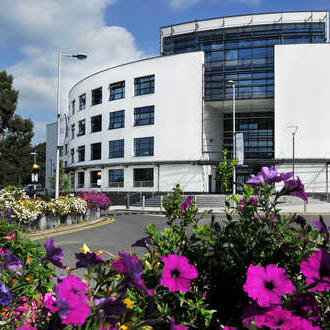
"Brunel was a natural progression from my undergraduate degree, and had a good campus, good location, and freedom." - Ravinder Basra
"Brunel was a natural progression from my undergraduate degree, and had a good campus, good location, and freedom." - Ravinder Basra
You can explore our campus and facilities for yourself by taking our virtual tour.
Course content
Compulsory
- Human-AI Interaction
The Human-AI Interaction module bridges the interdisciplinary fields of Human-Computer Interaction (HCI) and Artificial Intelligence (AI). It aims to provide students with a comprehensive understanding of the principles, tools, and methods of designing and evaluating AI systems that interact effectively with humans. The module provides an in-depth exploration of relevant theories, models and skills required to be able to select and apply appropriate methods for human-centred AI-focused projects to improve the user experience. This includes understanding the range of approaches and frameworks available for structuring the design of human-centred projects, and when and how to apply them to be beneficial to diverse user needs. The module also focuses on how to evolve human-centred designs using prototyping methods and software, an important part of which is learning about the various methods for evaluating designs to maximise the user experience. In addition, the module fosters core design, communication and professional skills essential for effective collaboration in modern multidisciplinary teams, while encouraging responsible innovation and ethical considerations.
- Interactive AI Development and Applications
The aim of this module is to develop understanding of knowledge, skills and tools to build interactive AI solutions that transform human interaction with technology, with a focus on promoting sustainable, ethical, and socially responsible innovation. It further focuses on the practical aspects and implementation of AI tools for interactive user experiences by revolving around understanding the dynamics of different AI-driven software, especially how to use and combine them to develop multifunctional pipelines, whilst also comprehending how to deploy and benchmark their outcome effectively. The module will also explore a spectrum of task-specific and domain-oriented applications, concentrating on implementing human-centric solutions by design, whilst encouraging that these are aligned with principles of inclusivity, equity, and long-term societal impact to foster positive change.
- Ethics and Governance of Digital Systems
This module aims to develop a critical understanding of topics related to the handling and governance of digital information in contemporary systems contexts. Such topics will include the way that networked and intelligent systems are designed and used; the motivations for their adoption; the substantive issues arising; and approaches to their regulation and governance. Examples from the public and private sectors will be used to illustrate these developments.
- CS3613 - Artificial Intelligence
The aim of this module is to introduce the key concepts, principles and fundamental methods of artificial intelligence, and to develop your skill in analysing of problem requirements, applying appropriate artificial intelligence methods to defined problems, and evaluating the effectiveness of the adopted approach.
- Data Visualisation
The aim of this module is to develop the reflective and practical understanding necessary to visually present insight drawn from large heterogeneous data sets to, for example, decision makers. Content will provide an understanding of human visual perception, data visualisation methods and techniques, dashboard and infographic design. The role of interactivity within the visualisation process will be explored and an emphasis placed on visual storytelling and narrative development.
- Research Project Management
This module aims to develop and deploy the skills necessary to design a scholarly piece of research work to address an identified problem area within the chosen field of study.
- Dissertation
The aim of the module is to develop and demonstrate advanced knowledge and skills in an agreed topic area related to the master's programme followed. As preparation for the dissertation, you will be given grounding in both quantitative and qualitative methods of data collection and analysis appropriate to conducting empirical and/or experimental research.
Optional
- Introduction to Python
The aim of this module is to give the students a comprehensive introduction to programming in Python. By the end of the module, students will have developed foundational skills in programming in Python, enabling them to write simple programs, manipulate data, and solve problems in their field of study.
This course can be studied undefined undefined, starting in undefined.
This course has a placement option. Find out more about work placements available.
Please note that all modules are subject to change.
Read more about the structure of postgraduate degrees at Brunel
Careers and your future
Where could Human-AI Interaction take you?
Human-AI Interaction develops a combination of skills spanning AI, user research, interaction design, prototyping and evaluation. These can support careers across areas where organisations are developing AI-enabled products, services and experiences, such as:
AI products and experiences
Product, interaction and experience design for AI-enabled technologies
UX and user research
Understanding and evaluating how people use AI products and services
Interactive and emerging technologies
Designing and prototyping new forms of intelligent interaction
Responsible and inclusive AI
Accessibility, responsible technology and AI governance
Research
Human-AI Interaction, HCI, human-centred AI and related doctoral research
UK entry requirements
2026/7 entry
- A 2:2 or above UK Honours degree or equivalent internationally recognised qualification from a Science, Technology, Engineering, Mathematics, Computing, Design/HCI, or other related field.
We welcome applicants with other qualifications and industrial experience (relevant to the subject area), who will be assessed on an individual basis. Such applicants may be required to attend an interview and/or aptitude tests.
International entry requirements
If you require a Tier 4 visa to study in the UK, you must prove knowledge of the English language so that we can issue you a Certificate of Acceptance for Study (CAS). To do this, you will need an IELTS for UKVI or Trinity SELT test pass gained from a test centre approved by UK Visas and Immigration (UKVI) and on the Secure English Language Testing (SELT) list. This must have been taken and passed within two years from the date the CAS is made.
English language requirements
- IELTS: 6.5 (min 6 in all areas)
- Pearson: 59 (59 in all subscores)
- BrunELT: 6.5 (min 6 in all areas)
- TOEFL: 5 (min 4.5 in all subscores)
You can find out more about the qualifications we accept on our English Language Requirements page.
Should you wish to take a pre-sessional English course to improve your English prior to starting your degree course, you must sit the test at an approved SELT provider for the same reason. We offer our own BrunELT English test and have pre-sessional English language courses for students who do not meet requirements or who wish to improve their English. You can find out more information on English courses and test options through our Brunel Language Centre.
Please check our Admissions pages for more information on other factors we use to assess applicants. This information is for guidance only and each application is assessed on a case-by-case basis. Entry requirements are subject to review, and may change.
Fees and funding
2026/7 entry
UK
£14,435 full-time
£1,955 placement year
International
£24,795 full-time
£1,955 placement year
More information on any additional course-related costs.
Fees quoted are per year and are subject to an annual increase.
See our fees and funding page for full details of postgraduate scholarships available to Brunel applicants.
Scholarships and bursaries
Teaching and learning
Teaching is typically delivered in person, on campus via lectures, seminars/tutorials, practical lab work, as well as directed self-learning. Where appropriate, other teaching methods will also be incorporated and guest lectures delivered by industry experts are typically provided. All learning is supported by our Virtual Learning Environments (VLE), Brightspace.
Assessment and feedback
The assessment includes a balance of coursework and examination (as detailed in the individual module specifications). Assessments range from written reports/essays through to an exam, design portfolios, practical coursework and programming exercises, according to the demands of particular modules and topic areas. Additionally, class tests can be used to assess a range of knowledge, including a range of specific technical subjects.
Read our guide on how to avoid plagiarism in your assessments at Brunel.
