
Overview
1st in London and 10th in the UK overall - Complete University Guide 2027.
Our Creative Writing BA course has been designed to inspire high levels of creativity, initiative and originality in the design, production, interpretation and analysis of creative writing along with a chance to develop interdisciplinary projects.
You will be taught the key genres of creative writing by some of the most talented and original writers working today. Between them, they’ve published over 100 books, produced countless scripts for TV, radio and film, and won umpteen awards. The teaching team includes renowned authors like Bernardine Evaristo, Hannah Lowe and Max Kinnings.
From week one you’ll write and interact with your peer group of creative writers. You will share ideas and give constructive feedback to others on their creative work.
In your first year you’ll gain a solid grounding in how to write fiction, drama and poetry, and study world literature. You can choose a variety of subjects in your second year such as journalism and screenwriting. In your final year, the Creative Industries module helps you consider your career options and shape your future. Your final year Special Project will allow you to specialise in your chosen field and choose from a wealth of specialist options.
We invite many successful authors to give guest talks covering different aspects of creative writing. Industry expert speakers include book publishers, screenwriters, poets and broadcasters. You have the advantage of Brunel’s close location to London, the literary capital of the UK. You’ll benefit from trips to the British Library, Shakespeare’s Globe and West End theatres.
Our BA in creative writing can be studied full-time over three years, four years with a placement year, or part-time over six years.
We encourage the placement year option. This time helps you to further prepare for the world of work and you’ll have a year’s worth of invaluable professional experience when you graduate. If you decide to go on a creative writing placement year, you could find yourself working at magazine publishers, film production companies, or even the London Screenwriters’ Festival. Some placements lead to jobs on graduation.
You’ll have the opportunity to get your work published before you graduate. At least one anthology of creative work is produced each year, curated and edited by our creative writing students. We run many literary events including performance showcases, film screenings, and a student-led e-magazine, so there will be many ways for you to share your creative work.

"Studying a variety of subjects and gaining work experience in different industries helped me build a unique stack of talents. " - Aldo Scott
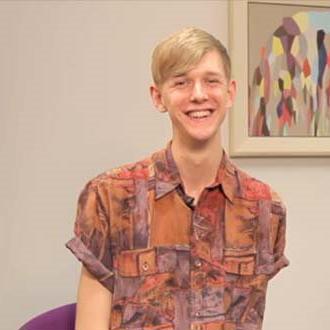
"Studying at Brunel has made me realise how much I enjoy writing and how after studying it for 3 years I don’t want to stop! " - Thomas Willet
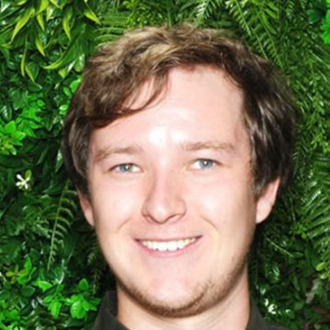
"The course at Brunel is full of lecturers that work (or have worked) in the industry, which is invaluable for learning what a writing career is really like." - Matt Luke
"Studying a variety of subjects and gaining work experience in different industries helped me build a unique stack of talents. " - Aldo Scott
"Studying at Brunel has made me realise how much I enjoy writing and how after studying it for 3 years I don’t want to stop! " - Thomas Willet
You can explore our campus and facilities for yourself by taking our virtual tour.
Course content
In the first year you will start building a portfolio of your creative writing. You will follow your interests in the second year and master the craft of creative writing in your final year. English is studied in all three years. Your final year major project is an in-depth study of a creative writing topic of your choice.
Compulsory
- EN1607 - The Writer's Toolkit
With the rise of social media and now generative AI, the core skills of our degree, reading and writing, have come under fire. Yet just as reading is not about passive reception of information, but rather critical engagement with what you have read, so writing is more than simply following a blueprint. Writing, on our course, is a form of thinking, it is where the critical faculties are tested and developed, and importantly, it is a form of human-centred creativity that the world desperately needs.
The purpose of this module is to enable English students alongside Creative Writers to develop a grounding in effective writing practices and core competencies of textual production. Students will develop an understanding of the different stages of textual production, from prewriting, research, planning and outlining, to drafting, feedback and editing, polishing and submission, as well as an understanding of core writing mechanics. This module will enable students to explore and practice differing conventions of textual production across academic disciplines and in the creative industries. Its focus ranges from non-fiction modes such as the academic essay, critical and reflective writing, to screenplays and fiction manuscripts. Any machine in the future will be able to put words together in some form of narrative, but this module trains you to become writers, with critical minds and creative practices, which is a very different thing.
- EN1606 - The Reader’s Toolkit
Most people take reading for granted, but active, well-informed, interpretative and critical reading is a highly advanced skill. And with the rise of AI and disinformation, it is one of the most important skills in the world today. This module focuses on the key skills of critical and close reading, as central to the study of literature, but also more widely to allow you to sort out truth from troll. The central aim of this module is to enhance and develop students’ engagement with primary and secondary texts as central to your critical thinking abilities. Students will learn how to analyse and interpret complex texts in various genres, making use of the established techniques and approaches of the discipline. They will engage with the idea of critical reading as a culturally-informed act that must be learned and developed. Teaching is shaped around the goal of developing students’ “reading resilience”, that is, the ability to read, discuss, and write about, varied and challenging texts with confidence. Through discussion, group workshops, lectures and individual tasks, students will become proficient in working with literary and rhetorical texts, learning skills that are essential throughout the degree.
- CW1600 - Fiction 1
This module is designed to introduce students to the core elements and skills necessary for writing fiction. Aided by close reading and discussion of fiction by published writers, students will develop knowledge and understanding of core elements of the craft, such as character, setting, plot, dialogue, as well as key skills such as understanding audience, showing rather than telling, and writing to a specified word-count and brief. Students will practice these core competencies and also learn how to workshop their prose, developing skills for the giving and receiving of constructive feedback to enable redrafting of works-in-progress. Students will reflect upon their inspirations, reading and the development of their craft.
- CW1601 - Poetry 1
This module is designed to introduce students to the core elements and skills necessary for writing poetry. Aided by close reading and discussion of poetry by published writers, students will develop knowledge and understanding of core elements of the craft, such as the poetic line, working in form and free verse, sound and voice, as well as key skills such as concision and redrafting. Students will practice these core competencies and also learn how to workshop poems, developing skills for the giving and receiving of constructive feedback to enable redrafting of works-in-progress. Students will reflect upon their inspirations, reading and the development of their craft.
- AH1XXX - Your Degree, Your Future
This modular block introduces students to the employability and career possibilities open to Arts and Humanities graduates, raises awareness of Brunel’s support services and placement preparation opportunities, and encourages early engagement with personal and professional development, including transferable skills. It also prepares students for progression to Level 5 placement and careers activities.
Optional
- EN1611 - World Literature
Brunel campus is a global majority campus with over 150 different countries represented and well over 150 different languages spoken. It is located in West London, one of the most culturally diverse places on earth, and is just down the road from Heathrow airport. Since its inception, postcolonial studies and diversity in general have always been at the forefront of our programs. This truly innovative module aims to introduce students to the study of World Literature, presenting key critical approaches and engaging with texts from contrasting cultural locations. Students will learn about rich and varied world literary traditions and forms; acquire theoretical perspectives; build a world literary critical vocabulary; engage in debates about the meaning and role of world literature and reflect on creative practice and literary production in world contexts.
- EN1610 - Literary London
Brunel is proud of its West London location and celebrates being a campus university in one of the most exciting cultural capitals in the world today. London is defined by its modernity, its complex history, its challenges, its diversity and, of course, by its global centrality. This module aims to introduce students to the study of the literature of London, introducing key critical approaches and engaging with texts from a range of cultural backgrounds. Students will learn about London’s rich and varied literary traditions and forms; acquire theoretical perspectives; build a literary critical vocabulary; engage in debates about the meaning and role of London in literature; and reflect on creative practice and literary production in relation to London’s diverse past and present.
- Creative Journaling
Journaling is one of the most widely practiced forms of creative expression in the world today. If we count things like blogging and social media posts as part of journaling, then surely journaling should be at the heart of any contemporary literature degree. Yet journals are not something you learn about by reading, but rather offer a form of self-expression, of practice as literacy. This module will introduce you to the practice of creative journaling. You will explore the different ways this practice can support your personal and professional development as creatives. You will critically analyse the creative journals of writers, musicians, and artists, and keep a weekly creative journal, experimenting with different approaches and techniques for documenting and reflecting on their creativity.
- FM1623 - Representation and Identity
Studying culture demands that we think about identity and, of course, representation. It’s important in the film and television industry to consider whose stories are being told, who is in creative roles behind the camera and how people are being represented. This module will explore identity politics and consider theory such as feminism, queer theory, postcolonialism and disability studies, among others. We will consider how certain identities are portrayed onscreen both historically and now.
This is a 15 credit module.
- Ways of Hearing 1
Studying English at Brunel is unique in terms of the context and location of where you are based. The English subject is located at the heart of the Department of Arts and Humanities and we share many joint degrees with subjects like Film and Television, Theatre, Creative Writing, Games Design and, perhaps unusually, Music. For over two decades English and Music have shared many common interests and often many students in common. This module offers you a unique chance to branch out and add listening to your critical and creative thinking toolbox. In a culture dominated by complex ways of experiencing and using music, this course teaches the core skills of listening to music with a discerning and sophisticated ear.
On this course you will develop a reflective mind and new ways to think and discuss music. You will learn to write about it with knowledge and depth, to understand how music is made; its forms and structures and to experience music from a diverse range of musical genres. This being Brunel University, you will engage in comparisons of approaches across a range of styles and genres, from Gregorian chant to Aphex Twin and beyond, understanding the function of the music and its context in society.
Compulsory
- EN2609 - Professional Life
When you leave university – what happens next? What are your career aspirations? How will you realise them? In this module, you will gain confidence and experience in using your unique-to-you interests and skills to stand out from the crowd. At its heart are four professional activities, which you will choose, complete, and reflect on. These could range from work experience in a field that interests you, to volunteering, learning a language, completing business or skills development courses, publishing a website, blogging, or gaining editorial or media production experience. You are encouraged to think creatively: providing that each activity is developmental for you and your tutor agrees, the sky is the limit.
- AH2700 - Placements in the Creative Industries
This modular block develops students’ understanding of employment pathways, professional requirements and recruitment practices relevant to Arts and Humanities degrees, while supporting them to evaluate their skills, experiences and development needs in relation to placements and employment. It equips them with the knowledge and confidence to plan and manage their career development strategically and prepares them for effective engagement with placement, freelance or employment opportunities.
Optional
- EN2612 - Genre Fiction
If you’re a fan of genre fiction – Detective, Gothic, Science Fiction, Fantasy, and all things in between – then this module is for you! Besides gaining an understanding some of the key thematic and formal conventions of these genres, and how these have changed over time and with respect to changing social and political contexts, you will get to grips with the critical public sphere that exists outside academic institutions. Beyond academia, there is a world of reviews, blogs, conventions, and festivals relating to books. Therefore, while this module will cover the academic study of genre fiction and require you to write a conventionally structured and referenced academic essay, it will also branch out to consider this wider context by looking at some reviews and debates from the public sphere and require you to write a review of your own.
- CW2602 - Fiction II
The short story is one of the most powerful and satisfying forms of writing to produce. This module focusses on writing and understanding intricate masterpieces in the short story form. We read a wide variety of powerful short stories together—by writers from across the globe, from the mundane and the moving to the strange and experimental— looking closely to help understand what techniques make them so effective, and how we can develop individual approaches to writing our own original stories in response. The exact structure changes each year, but some of the topics covered previously included: subverting and updating traditional fairy-tales; stories with unusual approaches to time; Weird Tales of the impossible and unexplainable; flash fiction; climate change fiction.
- CW2605 - Writing Genre
This module focusses on three popular and enduring genres - horror, science fiction, and fantasy - which provide endless fascination for readers and practitioners alike. We will explore these genres via lectures, seminars (including writing workshops) and the study of classic and emerging writers from each genre. At the end, you will have written a body of work in each genre, with a core understanding of their key features. The module has featured discussion of writers such as Stephen King, Chuck Palahniuk, Angela Carter, Gwyneth Jones, William Gibson, Octavia Butler, Gabriel Garcia Marquez, Brandon Sanderson, and more. Sub-genres and styles discussed include space opera, Grimdark, urban fantasy, utopian/dystopian fiction, cosmic horror, body horror, and weird fiction.
- CW2606 - Life Writing I
This module will allow you to explore a range of life writing practices such as memoir, autofiction, the personal essay, the lyric essay, confessional poetry and more in a safe and supportive environment. You’ll be inspired by a range of contemporary writers such as Rebecca Solnit, Ocean Vuong, Maggie Nelson, Patricia Lockwood, Nina Mingya Powles and others. You’ll consider the ethics of life writing such as writing about family, and draw on your own experiences, interests and passions throughout.
- EN2613 - Literatures of Inequality: Global Fictions
Contemporary globalisation has brought us cheap food, cheap clothing, and cheap goods, including the smartphone, tablet, or laptop you are probably reading this on – but it has also brought tremendous inequality. In this module, you will look at a range of twenty-first century fiction originating from Africa, Asia, Latin America, the Middle East, and the Caribbean, to explore diverse experiences of inequality in an era of globalisation. You will interrogate a range of novels, stories, and poetry in light of theoretical concepts drawn from world-literary theory and materialist feminism, asking whether and how socially committed fiction can challenge the overlapping oppressions of contemporary times.
- EN2614 - The Novel: The Nineteenth Century
The nineteenth century was an era of innovation. Technological invention, scientific breakthrough, geographical discovery, imperial expansion, the abolition of slavery, the rise of the middle classes, the emergence of mass culture, and an ever-stronger push for women’s equality. Within this culture, the novel – as its name suggests, a literary genre founded on newness – came of age. Through the chronological study of a representative selection of five texts, the module will introduce the key generic elements of the nineteenth-century novel, and chart changes in their deployment over the course of the century. Particular attention will be paid to Realism and Gothic. In addition to narrative form, a range of social and cultural contexts will be suggested as a means of accounting for, and understanding, textual features. Stress will be placed throughout on close textual analysis.
- EN2615 - Literary Movements: Modernism
Have you ever felt overwhelmed by everything that’s going on in the world? You are not alone! Written during the opening decades of the twentieth century, the texts we study on this module were processing a modern world that was changing rapidly and radically. There were new technologies and ideas, empires were in decline, religion was losing its hold, and established class and gender relations were disintegrating. Then the First World War happened, followed by revolutions, a global pandemic, economic depression, and the rise of fascism. Writers responded in different ways. Some, like TS Eliot, Virginia Woolf, and Katherine Mansfield, experimented with content and form, confronting topics that were formerly taboo or using language and structure that shattered convention. Others, including Daphne du Maurier, Dorothy L Sayers, and Christopher Isherwood, used more ‘realist’ styles to work through their anxieties and concerns. Examining novels, short stories, poetry, and experimental artistic manifestos – by these writers and more, and from diverse perspectives – we will explore a modern world in crisis.
- EN2616 - Literature and Revolution: Romanticism
The political events of the late eighteenth century – the American War of Independence, French Revolution, and Napoleonic wars – dramatically changed lives, ideas, and aesthetics in Britain. From the mid 1770s to the mid 1820s, the period we now call Romanticism signalled profound changes in the form and content of literature. Working in a range of genres, including the novel, pamphlets, poetry, and philosophical, satirical, and travel writing, Romantic writers responded to a set of urgent, ethical, aesthetic, and environmental changes. In the module we consider the ‘first generation’ (Wordsworth, Coleridge, William Blake) and ‘second generation’ Romantics (Shelley, Byron, and Keats), and important political writers such as Edmund Burke, Thomas Paine, Mary Wollstonecraft, and William Godwin. Alongside these now-canonical names we read a diverse range of women and Black writers who contributed just as significantly to key Romantic debates: Anna Aikin, Anna Laetitia Barbauld, Ottobah Cugoano, Ouladah Equiano, Hannah More, Ann Radcliffe, Mary Robinson, Ignatius Sancho, Mary Shelley, Helen Maria Williams, Dorothy Wordsworth, Phillis Wheatley, and Anne Yearsley
- EN2617 - Texts and Afterlives: Shakespeare
Shakespeare died over 600 years ago, but his works maintain their relevance, captivating readers and audiences worldwide. In this module, you will study Shakespeare at an advanced level, in greater depth, and with an emphasis on the types of study skills required for advanced critical work in the fields of ‘book history’ and ‘performance studies.’ Using advanced methods of analysis, you will explore early modern texts, both in their original contexts and in their subsequent manifestations in print. You will consider language, performance, and the visual layout of text – both in Shakespeare’s time and in the present day. Overall, you will gain an understanding and experience of the concept of the Shakespearean text as an artefact and art form, one constantly evolving through criticism, editorial intervention and performance
- EN2618 - Contemporary Fiction: Britain and Ireland
This module introduces students to a range of contemporary British and Irish fiction, developing knowledge of the variety and complexity of contemporary writing and its relation to social and cultural context. The module examines texts which employ a range of themes, forms, and styles. It asks what we mean by the term ‘contemporary’ and encourages analysis of the relationship between texts and the historical moments in which they are produced and consumed.
- EN2619 - Postcolonial Writing
Postcolonial writing often comes out of difficult circumstances. Its writers sometimes risked everything to publish what they needed to say. These are the new pioneers of Literature in English, whose works would inspire and define the writings of the future. In this module, we get to grips with key concepts encountered in postcolonial studies, which have been developed to investigate phenomena including colonialism and resistance, multiculturalism and globalization, racism, and Islamophobia. Using these, we will explore works by important and fascinating writers, whose texts show a variety of perspectives on colonialism and its legacies, including those of imperialists and the peoples they tried to suppress.
- CW2604 - Screenwriting I
The module introduces students to the professional practice and theory of screenwriting for film and television. Although the short film is the main focus of study, the classic, feature length narrative fiction film, television drama, and films from alternative and non- narrative traditions will also be considered. The module is substantially practice-based. All students will write an original screenplay to a maximum length of 10 pages. Students will also produce supporting documents, such as a Story Proposal, Beat Sheet, and Scene Outlines. The module also requires students to analyse films and scripts – including their own and contemporaries’ – from a screenwriting perspective. Students will produce analyses of key features of films and screenplays and write the screenplay for a short film.
- CW2603 - Poetry II
This module is designed to build upon foundational skills and knowledge acquired on the first-year poetry module. You will continue to write in increasingly exciting new ways to liberate the poet within. You will also expand your awareness of work that is being produced in the current world of UK poetry, the manner in which new mediums and technologies are being employed, and the manner in which this work might challenge previous conceptualisations and traditions in the field. In conclusion, you will acquire crafting tips while trying out traditional and innovate ways to write. There is no expectation of a house style. Your own approach to poetry based on what you will have learned is all that is required. Be excited by your own work, and I (Daljit) will be excited in turn to read it.
Compulsory
- Creative Writing Special Project
This module is double-weighted and is your chance to pursue your own creative project with support from a supervisor. You’ll meet regularly with your supervisor to plan, draft, and edit your work, and there will also be Zoom sessions to support your learning throughout that focus on planning, researching, carving out time to write and more. Some students write the opening chapters to a novel and submit this along with an industry standard synopsis, having researched potential agents and publishers. Others submit poetry pamphlets, screenplays, collections of short stories, illustrated children’s books, YA novels, interactive fiction projects and more.
- CW3604 - Creative Careers
This module is focused on your professional development capitalising on the unique and close collaboration between Creative Writing and Literary Studies at Brunel university and representing Brunel’s long heritage when it comes to professionally focused learning.
It will enable you to understand the creative economy and the ways in which people develop careers within it. You will be able to plan your own career after graduation, to identify your goals and write the documents you will need to achieve them. Members of the Creative Writing department at Brunel along with visiting speakers will help you to become familiar with the creative industries through which writers reach their audience. By exploring all areas of your professional development, we will enable you to make a career plan for the next five years, to identify the opportunities and skills you will need and to research the choices you will make in the immediate future.
Optional
- CW3605 - Fiction III
This module is designed to provide students with a comprehensive background in all aspects of contemporary fiction writing, from creative practice to publishing, as well as providing a creative grounding for longer future projects. Students will read and discuss a variety of novels and short stories, then put new techniques into practice in their own work.
- CW3606 - Poetry III
This module develops your advanced poetic practice and deepens your engagement with the contemporary poetry scene, whether your work is written for the page or for performance. By the end, you’ll feel confident expressing your voice in both settings - with a strong sense of rhythm, wordplay, tone and movement - and you’ll finish with a portfolio that’s ready for publication or performance.
- CW3607 - Screenwriting II
This module enables students to explore and develop the theory and professional practice of contemporary screenwriting. By the end of the module, students who participate in weekly assignments will produce a marketable pitch deck/series bible for a film or TV project, along with the first 15-20 pages of the script. The module is substantially practice-based and requires students to analyse screen works and scripts (including their own and peers’) from a screenwriting perspective.
- Life Writing II: Journeying the Self through Psychology and Expressive Arts
This module gives an introduction to the field of psychology, exploring the basics of human behaviour and mental processes, important contributions to the field of psychology and the different approaches and goals of the various therapeutic orientations. Additionally, the module will introduce students to the field of creative writing for therapeutic purposes, including personal practice while studying examples of writing that illustrate the links between creativity and therapeutic outcomes. Some dramatherapy and art therapy techniques will be used during the workshop, although the primary focus is creative writing.
- EN3622 - Literature, Culture, Society: The Victorians
Shaped by industrial revolution and radical social reform, the Victorian period was a time of enormous historical and literary change, introducing key values, institutions, and narratives still shaping modern Britain. Typical of Brunel’s innovative approach to more traditional period studies, this module examines three integral 19th century ‘case studies’, each focused on a specific aspect of Victorian literature and culture. Case studies may include ‘Working-Class Voices, ‘Crime and Sensation’, 'Victorian Black Lives' and ‘Women and Society’. Its aims are to explore some of the ways in which Victorian literature might encode or challenge particular cultural assumptions; to analyse the relationships between literary forms and social contexts; and finally, to consider how the knowledge of the period may contribute to the interpretation of texts produced during this time.
- EN3625 - Post-War and Late Twentieth-Century Literature 1945 - 2001
Brunel English has consistently been a national leader in contemporary literary studies for over two decades. We have a complex and increasingly global understanding of what contemporary literatures can and should mean. In this module we consider the period of the latter half of the 20th century starting with the Second World War which had a major impact on almost every aspect of 20th century life, with radical implications for society, politics, economics, and culture. This module confronts this shifting global context with a focus on both established and experimental writers, developing students’ awareness of Post-War and Late Twentieth-Century Literatures via a focus on fiction’s negotiation with history. The module foregrounds key sensibilities of this period through an initial discussion of postwar life and art, then moves forward to explore the emergence of the ‘postmodern’ condition. It concludes by examining the experimental fiction of various leading British writers, also considering the influence of late-twentieth century theorists, such as Jean Baudrillard, Fredric Jameson, and Judith Butler.
- EN3626 - Special Topic: Violence
When it was first launched the Violence module caused quite a stir with its combination of contemporary critical theory and inspiration from the Finnish phenomenon-based learning, leading to a feature on the module in the TLS. Violence, sadly, represents a shaping force in contemporary life, a site or mode of influence dominating government, society, culture, and the media. This module aims to develop students’ awareness of violence and its representations within modern culture, enlisting a variety of cultural materials, literary, visual, conceptual and technological. It asks a series of questions as regards violence and coercion as they surface in everyday lives, splitting its focus between conceptual understanding and textual readings. Part one, ‘Bioviolence and Biopolitics’, looks at biopolitical theories of power, force, violence, coercion and exclusion as introduced by philosophers such as Michel Foucault, Georgio Agamben, and Roberto Esposito. By contrast, part two, ‘Discourses of Coercion 2015-2020’, applies the theory to case studies taken from contemporary events, such as #Blacklivesmatter, Grenfell Tower, Coronavirus, Zombies and of course serial killers.
- EN3627 - Author Study: Jane Austen
Focusing on Austen’s work in relation to adaptation, this module explores the forms of fiction she inherited as a young writer – the novels of Frances Burney and Ann Radcliffe – and how she adapted these models to her own work and concerns. It then considers how Austen was adapted in her turn, in a number of extremely popular films and series, to think about how the late eighteenth century ‘courtship’ and marriage plots continue to be reinvented through to the contemporary period. Texts may include: Radcliffe The Italian 1796, Austen Northanger Abbey (1803/ 1818), Frances Burney Evelina, or the History of a Young Lady’s Entrance into the World (1778), Austen Lady Susan (1794/1871), Austen Pride and Prejudice (1813), Robert Z. Leonard d. Pride and Prejudice (1940), Simon Langton d. Pride and Prejudice (1995), Sharon Maguire d. Bridget Jones’ Diary (2001), Chris Van Dusen’s Bridgerton Season 1 (2020).
- EN3630 - Literature and Identity
This module explores representations of identity within a selected body of literature, chosen each year to reflect the Module Leader’s expertise and research interests. It introduces students to key debates in identity studies, enables them to recognise how these ideas are expressed and developed through literature, and develops their ability to apply theories of identity to texts such as plays, poetry, biographies, short stories and novels.
This course can be studied undefined undefined, starting in undefined.
This course has a placement option. Find out more about work placements available.
Please note that all modules are subject to change.
Careers and your future
A creative writing degree from Brunel is your passport to a wide range of career destinations within the literary and creative industries.
Our graduates are working in the arts, publishing, journalism, advertising, marketing and teaching. They have successful careers as novelists, journalists, screenwriters and travel writers. Others opt to follow Brunel’s career-focused MA in Creative Writing.
UK entry requirements
2026/7 entry
Please check our Admissions pages for more information on other factors we use to assess applicants within our grade range as well as our full GCSE requirements and accepted equivalencies in place of GCSEs.
A minimum of five GCSEs (grade C/4 or above) are required, including GCSE English Language (grade C/4) or GCSE English Literature (grade B/5)
Standard Offer: GCE A level BBB
Contextual Offer: GCE A level BCC
We apply a contextual admissions process for UK undergraduate applicants who meet one or more of our contextual markers – please see our contextual admissions page for more information.
Standard Offer: BTEC Level 3 National Extended Diploma DDM in any subject
Contextual Offer: BTEC Level 3 National Extended Diploma DMM in any subject
We apply a contextual admissions process for UK undergraduate applicants who meet one or more of our contextual markers – please see our contextual admissions page for more information.
Standard Offer: BTEC Level 3 National Diploma DM in any subject and an A Level grade B
Contextual Offer: BTEC Level 3 National Diploma MM in any subject and an A Level grade B
We apply a contextual admissions process for UK undergraduate applicants who meet one or more of our contextual markers – please see our contextual admissions page for more information.
Standard Offer: BTEC Level 3 National Extended Certificate Merit in any subject, with A level grades BB
Contextual Offer: BTEC Level 3 National Extended Certificate Merit in any subject, with A level grades BC
We apply a contextual admissions process for UK undergraduate applicants who meet one or more of our contextual markers – please see our contextual admissions page for more information.
Standard Offer: International Baccalaureate Diploma 30 points. GCSE English equivalent SL 5 or HL 4
Contextual Offer: International Baccalaureate Diploma 28 points. GCSE English equivalent SL 5 or HL 4
We apply a contextual admissions process for UK undergraduate applicants who meet one or more of our contextual markers – please see our contextual admissions page for more information.
Standard Offer: Obtain a minimum of 120 tariff points in the Access to HE Diploma with 45 credits at Level 3 in any subject
Contextual Offer: Obtain a minimum of 104 tariff points in the Access to HE Diploma with 45 credits at Level 3 in any subject
We apply a contextual admissions process for UK undergraduate applicants who meet one or more of our contextual markers – please see our contextual admissions page for more information.
Merit overall in any subject
If your qualification isn't listed above, please contact the Admissions Office by emailing admissions@brunel.ac.uk or call +44 (0)1895 265265 to check whether it's accepted and to find out what a typical offer might be.
Brunel's committed to raising the aspirations of our applicants and students. We'll fully review your UCAS application and, where we’re able to offer a place, this will be personalised to you based on your application and education journey.
Please check our Admissions pages for more information on other factors we use to assess applicants, as well as our full GCSE requirements and accepted equivalencies in place of GCSEs.
International entry requirements
If you require a Tier 4 visa to study in the UK, you must prove knowledge of the English language so that we can issue you a Certificate of Acceptance for Study (CAS). To do this, you will need an IELTS for UKVI or Trinity SELT test pass gained from a test centre approved by UK Visas and Immigration (UKVI) and on the Secure English Language Testing (SELT) list. This must have been taken and passed within two years from the date the CAS is made.
English language requirements
- IELTS: 6.5 (min 5.5 in all areas)
- Pearson: 59 (59 in all subscores)
- BrunELT: 6.5 (min 5.5 in all areas)
- TOEFL: 5 (min 4 in all subscores)
You can find out more about the qualifications we accept on our English Language Requirements page.
Should you wish to take a pre-sessional English course to improve your English prior to starting your degree course, you must sit the test at an approved SELT provider for the same reason. We offer our own BrunELT English test and have pre-sessional English language courses for students who do not meet requirements or who wish to improve their English. You can find out more information on English courses and test options through our Brunel Language Centre.
Please check our Admissions pages for more information on other factors we use to assess applicants. This information is for guidance only and each application is assessed on a case-by-case basis. Entry requirements are subject to review, and may change.
Fees and funding
2026/27 entry
UK
£9,790 full-time
£7,335 part-time
£1,955 placement year
International
£17,400 full-time
£13,050 part-time
£1,955 placement year
Fees quoted are per year and may be subject to an annual increase. Home undergraduate student fees are regulated and are currently capped at £9,535 per year; any changes will be subject to changes in government policy.
For the 2026/27 academic year, tuition fees for home students will be £9,790, subject to Parliamentary approval.
In England and Wales, tuition fees for home undergraduate students are subject to the Government fee cap. The Government has confirmed that this will be £9,790 for 2026/27 and £10,050 for 2027/28 (subject to Parliamentary approval).
From 2028 onwards, the fee cap is expected to rise annually in line with inflation. This means your tuition fees in future years may increase to reflect these changes.
International fees may change annually, by no more than 5% or RPI (Retail Price Index), whichever is the greater.
More information on any additional course-related costs.
See our fees and funding page for full details of undergraduate scholarships available to Brunel applicants.
Please refer to the scholarships pages to view discounts available to eligible EU undergraduate applicants.
Teaching and learning
Module teaching across the programme (lectures/seminars/tutorials) will take place in person on campus, and will be supported by the provision of asynchronous materials (e.g. lecture recordings etc.).
Other activities, including dissertation drop-ins, personal tutor meetings, assessment workshops, guest speaker events, and one-to-one tutorials may take place in person or online, as appropriate. We'll endeavour to take into account student preferences when arranging these activities, as well as other practical considerations, with an eye firmly on providing an excellent student experience at all times.
Students are advised to purchase core texts from module reading lists, although copies are also available via Brunel Library. In addition, academics will share samples of texts in the class so core texts may not be essential for all modules.
Access to a laptop or desktop PC is required for joining online activities, completing coursework and digital exams, and a minimum specification can be found here.
We have computers available across campus for your use and laptop loan schemes to support you through your studies. You can find out more here.
Our creative writing degrees are delivered by professional writers. This means you’ll be learning from staff who are publishing work and have high-level experience, knowledge and expertise in the creative industry. They'll support, encourage and coach you to become a brilliant writer.
Study will combine lectures, group seminar discussions, tutorials, writing workshops, practical performance sessions, group research sessions, guided independent learning, and field trips.
Should you need any non-academic support during your time at Brunel, the Student Support and Welfare Team are here to help.
Assessment and feedback
Your progress will be assessed via essays, coursework portfolios, journals, group practical exercises, individual and group presentations, and the final year project.
Read our guide on how to avoid plagiarism in your assessments at Brunel.
