
Overview
Meeting the increasing energy demands of growing populations and developing societies while reducing the use of fossil fuels are crucial challenges facing the global energy industry.
Please watch our short video interview with Dr Ali Badiei who leads this course, in which he gives more in-depth information about the course content and the student experience.
Brunel's Renewable Energy Engineering MSc gives graduates and engineering professionals interested in finding sustainable solutions to climate change and energy security the theoretical and practical skills needed to pursue careers in the growing field of renewable energy technology.
Along with a solid grounding in the core principles of energy production, you’ll get detailed knowledge of renewable energy technologies and systems, including solar, wind, tidal, wave, hydro, geothermal, biomass and hydrogen.
You’ll also look at the economic and environmental impact of renewable systems and at the legislative, planning and technical considerations of integrating them into the power grid.
We offer two study options. You can choose 1 year full-time or 3 years via our distance learning programme.
This course is accredited by the Institution of Mechanical Engineering (IMechE) and the Energy Institute (EI), which means your postgraduate engineering degree will put you on course to gain Chartered Engineer (CEng) status in the UK.
Throughout your studies you’ll have use of our state-of-the-art laboratory facilities and 24-hour access to industry-standard specialist software for engineering design at dedicated computer clusters on campus, so you’ll have the opportunity and equipment to explore ideas and tackle problems.
As the renewable energy sector grows, so does the need for individuals capable of planning, implementing and managing new renewable energy projects. Your Brunel MSc will give you those skills and put you on course for a rewarding career in the field or further research.

"Recognise your skill set, no matter what course you are doing, work out how you are translating that course to real life business." - Sachin Patel

"‘Being immersed in the vibrant and dynamic atmosphere of the city of London has broadened my horizons, exposed me to diverse perspectives, and provided unparalleled networking opportunities. Working in London as a Technical Sales Engineer at Naked Energy, a pioneering solar technology developer, allows me to thrive in the heart of innovation and collaborate with industry leaders, further enhancing my expertise and contributing to the transition towards a sustainable future’" - Ibrahim Walaman-I

"My passion for robotics and sustainable technology really came to life during my PhD at Brunel, where I focused on the intersection of advancing 3D printing and sustainable construction materials." - Dr Abdulrahman Albar
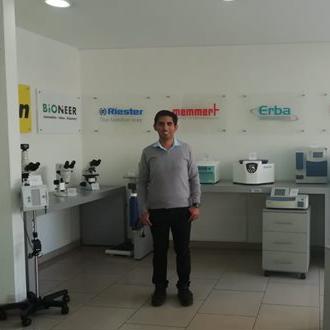
"As an international student, it was really important for me to study in a secure and comfortable place. My professors were always open to answer questions and guide me through my learning process." - Santiago Chaglla
"Recognise your skill set, no matter what course you are doing, work out how you are translating that course to real life business." - Sachin Patel
"‘Being immersed in the vibrant and dynamic atmosphere of the city of London has broadened my horizons, exposed me to diverse perspectives, and provided unparalleled networking opportunities. Working in London as a Technical Sales Engineer at Naked Energy, a pioneering solar technology developer, allows me to thrive in the heart of innovation and collaborate with industry leaders, further enhancing my expertise and contributing to the transition towards a sustainable future’" - Ibrahim Walaman-I
You can explore our campus and facilities for yourself by taking our virtual tour.
Course content
The course is designed to give graduates and professional engineers the knowledge and technical skills needed to pursue careers in the renewable energy industry.
Work for your renewable energy engineering degree consists of compulsory modules and a 15,000-word dissertation.
Compulsory
- ME5506 - Energy Conversion Technologies
- Demonstrate comprehensive knowledge and understanding of the advanced principles and practice of modern energy conversion technologies
- Demonstrate comprehensive knowledge and understanding of the processes for local energy conversion and utilisation in buildings.
- Systematically evaluate the appropriate techniques for the solution of engineering problems in this field, analyse, apply complex mathematical or technical solutions and physical principles.
- Environmental Legislation: Energy and Environmental Review and AuditThis module aims to provide awareness of legislation related to energy, environment and sustainability, to provide theoretical and practical hands-on training in conducting a site environmental review and audit, and to provide training on energy audit and management.
- Renewable Energy Technologies I - Solar Thermal and Electricity SystemsThis module aims to consider the principles of solar energy and its environmental impact, to provide an understanding of solar energy conversion technologies , to learn design principles of solar energy systems, and to gain knowledge in the criteria and methodology for performance evaluation of solar energy systems.
- Renewable Energy Technologies II - Wind, Tidal, Wave, HydroelectricityThis modules enables students to learn the principles for power generation technology and systems of wind, tidal, wave and hydroelectricity, to understand the energy conversion systems of wind, tidal, wave and hydroelectricity, to acquire design principles for power generation technology and systems of wind, tidal, wave and hydroelectricity, and to evaluate the criteria and methodology for performance of wind, tidal, wave and hydroelectricity energy systems and their environmental impact.
- Renewable Energy Technologies III - Geothermal, Biomass, HydrogenThis module aims to consider the principles of renewable resources including geothermal, biomass and hydrogen as an energy carrier and their environmental impact, and to provide an understanding of renewable energy conversion technologies.
- Renewable Energy Systems for the Built EnvironmentThis module aims to develop an appreciation of energy demand by buildings, to provide an understanding of main drivers for installing renewable energy systems in the built environment, and to provide an introduction to the integration of renewable energy systems in the built environment for the non-building services specialist.
- Power Generation from Renewable EnergyThis module aims to provide the knowledge and understanding of the principles of electrical services design and power distribution with an emphasis on local energy conversion, and to introduce the principles and practice of modern energy conversion technologies and their application in power generation for renewable energy applications.
- Principles inHeat and Mass TransferThis module aims to present theory and practical concepts of single and two-phase heat transfer, to extend the analytical study of heat and mass transfer and apply this to heat and mass transfer equipment, to apply fundamental fluid mechanics in practical designs for estimating frictional losses and for optimisation, and to ensure students are informed on developments in this area.
- DissertationThe dissertation aims for students to complete and report on a soundly executed and constructed programme of investigation, analysis and research containing original work.
This course can be studied undefined undefined, starting in undefined.
Please note that all modules are subject to change.
Read more about the structure of postgraduate degrees at Brunel
Careers and your future
Our graduates are working worldwide in senior technical and management positions.
The primary destinations are manufacturing industries, energy and environmental consultancy companies, energy advice and research centres, academia, and national and international non-governmental organisations.
UK entry requirements
A 2:2 (or above) UK Honours degree, or equivalent internationally recognised qualification, in Mechanical Engineering or Building Services Engineering with any relevant work experience. Other qualifications and relevant experience will be assessed on an individual basis.
Entry to this programme requires all students who are not nationals of the European Economic Area (EEA) and have temporary immigration permission to remain in the UK to obtain an ATAS certificate. If you are made an offer to join this course and you are not an EEA national, you will be required to obtain an ATAS certificate as a condition of your offer.
Applicants who will need an Academic Technology Approval Scheme (ATAS) Certificate. To find out if you will need an ATAS certificate, please visit this webpage: https://www.gov.uk/guidance/find-out-if-you-require-an-atas-certificate#when-you-need-an-atas-certificate.
The deadline for Admissions to make offers to applicants who will require an ATAS certificate is 31st July 2026.
International entry requirements
If you require a Tier 4 visa to study in the UK, you must prove knowledge of the English language so that we can issue you a Certificate of Acceptance for Study (CAS). To do this, you will need an IELTS for UKVI or Trinity SELT test pass gained from a test centre approved by UK Visas and Immigration (UKVI) and on the Secure English Language Testing (SELT) list. This must have been taken and passed within two years from the date the CAS is made.
English language requirements
- IELTS: 6 (min 5.5 in all areas)
- Pearson: 59 (59 in all sub scores)
- BrunELT: 6 (min 5.5 in all areas)
- TOEFL: 4.5 (min 4 in all sub scores)
You can find out more about the qualifications we accept on our English Language Requirements page.
Should you wish to take a pre-sessional English course to improve your English prior to starting your degree course, you must sit the test at an approved SELT provider for the same reason. We offer our own BrunELT English test and have pre-sessional English language courses for students who do not meet requirements or who wish to improve their English. You can find out more information on English courses and test options through our Brunel Language Centre.
Please check our Admissions pages for more information on other factors we use to assess applicants. This information is for guidance only and each application is assessed on a case-by-case basis. Entry requirements are subject to review, and may change.
Fees and funding
2026/27 entry
UK
£14,435 full-time
£14,400 distance learning
International
£24,795 full-time
£14,400 distance learning
For Distance Learning students, the tuition fee for 2026/27 is £1,200 per 15‑credit module. The full Distance Learning MSc (180 credits) therefore costs £14,400.
More information on any additional course-related costs.
Fees quoted are per year and are subject to an annual increase.
See our fees and funding page for full details of postgraduate scholarships available to Brunel applicants.
Scholarships and bursaries
Teaching and learning
Distance Learning students
You're not required to be on campus. All study materials will be accessible from your current location providing you with the flexibility you need to complete your course.
All other students
To ensure you receive the maximum support and have the greatest opportunity to reach your full potential the expectation is that you enrol on these programmes; attend in-person all teaching activities including examinations that are scheduled on campus. This will be the majority of all activities. However, where for pedagogical reasons alternative methods of delivery are used for activities you'll be notified and expected to engage with the activity at the time of delivery.
Laboratory Support
For modules with practical learning content, these will be delivered in-person on campus in the laboratories.
Assessment
Traditional examinations will be taken in-person on campus.
Access to specialist software
You'll have access to relevant engineering software on campus. You're also able to install software on your own personal laptop and connect to the Brunel License server through a VPN connection. This provides continued access to all services.
Access to a laptop or desktop PC is required for joining online activities, completing coursework and digital exams, and a minimum specification can be found here.
We have computers available across campus for your use and laptop loan schemes to support you through your studies. You can find out more here.
Our staff have national and international reputations for their research, publications and applied work. Many carry out much of their research in collaboration with major oil companies, plant and equipment manufacturers, leading industrial firms and governmental laboratories. This means that your education will be at the forefront of scholarship and practice, covering the most up-to-date industry knowledge.
Your course will consist of combinations of lectures, seminars, laboratory practicals, field work, coursework, self-study and individual research reports.
Distance learning students are supplied with a study pack of text books and CD-ROMs.
MSc dissertation projects are normally carried out over four months for full-time students or one year for distance learning students.
Should you need any non-academic support during your time at Brunel, the Student Support and Welfare Team are here to help.
Modes of study
1 year full-time
The taught element of the course takes place from September to April. From May to September, you’ll conduct an individual project and prepare your dissertation.
3 years distance learning
The self-study distance-learning programme enables you to conduct most of your studies at home, in your own time and at your own pace.
You've up to three years to complete the course, with students taking four modules in the first year, four modules in the second year and writing their dissertation in the third year.
You should allow about twelve hours each week for study.
You can sit your examinations either at Brunel or in the country where you are resident. We have an extensive network of organisations (universities, colleges and British Council offices) throughout the world that can provide invigilation services.
Assessment and feedback
Modules are assessed by combinations of formal examination and written assignments. Examinations are normally sat in May.
Distance learners have the option of sitting their exams at an authorized invigilation centre in the country where they live.
Successful completion of the taught modules allows you to proceed to the dissertation stage. To qualify for the award of the MSc degree, you must submit a satisfactory dissertation.
Read our guide on how to avoid plagiarism in your assessments at Brunel.