The Frail-LESS study (LEss Sitting and Sarcopenia to lower frailty in older adults)
We all lose muscle and strength as we get older (this is called sarcopenia) and this can affect how well we can do everyday activities. Reducing the amount of time spent sitting could help improve older people’s strength and balance, their ability to carry out everyday activities (e.g. standing up from a chair, walking and climbing stairs), and help them to maintain their independence for longer.
The aim of this research is to test a new programme to reduce sitting behaviour in older adults to improve their health and their ability to do everyday activities like standing up from a chair, walking and climbing stairs.
What the research involves
You will be randomly put into either the control group or the intervention group and will be in the study for 6 months. If you are in the intervention group, you will receive the Frail-LESS programme, which will include the following:
- An education programme that will tell you about the health risks of sitting too much and ways that you can try to reduce your sitting time.
- A device that you wear on your wrist that tracks your sitting and sends you alerts to encourage you to get up and move around.
- Sessions with a health coach who will help you in reducing your sitting.
- You will be able to join a Frail-LESS study support group, which will have other members in it from the study who will support each other in reducing their sitting.
If you are in the control group you will receive the Frail-LESS programme, but this will be delayed by approximately 24 weeks. We will take measures of strength, balance, muscle, sitting time, and your ability to do everyday activities at the start of the study and 3 and 6 months later. We will assess how many people we recruit for the study, how many complete the study and gather participants’ thoughts about the programme and measurements we take.
Meet the Principal Investigator(s) for the project
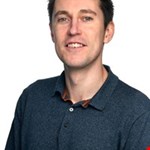
Dr Daniel Bailey - Dr Daniel Bailey is a Reader in Sedentary Behaviour and Health in the Department of Sport, Health and Exercise Sciences. He is Director of Research for the Department having previously been Director of the Centre for Physical Activity in Health and Disease. Dr Bailey's research investigates the relationship between sedentary behaviour and chronic health conditions, with a particular focus on non-communicable disease. This research includes the epidemiology of sedentary behaviour and associations with non-communicable disease risk, controlled laboratory studies examining the acute effects of breaking up prolonged sitting on cardiometabolic biomarkers, and the development and evaluation of interventions to reduce sedentary behaviour and increase physical activity in a range of population groups and long-term conditions including Type 2 diabetes, office workers, spinal cord injury, multiple sclerosis, Fabry disease and frailty.
Dr Bailey has been awarded multiple research grants from funding bodies and industry partners to support his research and has published many research articles in his field of research. He has delivered multiple conference presentations and invited talks across the UK and Europe and was Technical Advisor for the Qatar National Physical Activity Guidelines 2nd edition, 2021. Dr Bailey is Chair of the Chartered Association of Sport and Exercise Sciences (CASES) Physical Activity for Health Division and was Chair of the CASES 2024 Conference Planning Group. Dr Bailey was also a member of the scientific global leadership committee for the 8th International Society for Physical Activity and Health (ISPAH) Congress.
Dr Bailey has a wealth of experience teaching physical activity, sedentary behaviour and health topics at undergraduate and postgraduate level and uses innovative teaching approaches in his practice including research-informed teaching, bleneded and authentic learning, and flipped classrooms.
Related Research Group(s)
Health Behaviour Change - Development and evaluation of theory- and evidence-based health behaviour change interventions, across communicable and non-communicable diseases; evidence synthesis of behaviour change interventions.
Physical Activity in Health and Disease - The centre conducts interdisciplinary research to improve human health and performance through regular physical activity and exercise, and by limiting sedentary behaviour.
Health and Wellbeing Across the Lifecourse - Inequalities in health and wellbeing in the UK and internationally; welfare, health and wellbeing; ageing studies; health economics.
Partnering with confidence
Organisations interested in our research can partner with us with confidence backed by an external and independent benchmark: The Knowledge Exchange Framework. Read more.
Project last modified 09/03/2026